Redemption From Beyond II

A Three Part Novella

Jake was normally not the type to beat himself up. Steven’s letter left him with undeniable and painful guilt. He thought about all the times he hated Steven for his silence. Finding the owners of the jewelry pieces would at the very least give him something to focus on. Besides, this sort of sleuthing was right up his alley.

Tyler, Steven’s attorney, made two things clear: first, what Steven shared with him beyond what was in Jake’s letter was client/attorney privilege, and second, no matter who came around asking, Tyler knew nothing. Jake asked Tyler if he had any idea what the pieces were worth. Tyler said that the age, craftmanship, and size of the diamonds made them valuable; he estimated a few hundred grand. He suspected it wasn’t the monetary value Steven was thinking about when he reached out to Jake for help.

Jake cleared his schedule for the next few weeks. He didn’t think it would be wise to go straight to Germany. He’d start with some on-line research and see what came up. He had an alarm system installed at his apartment, just in case whomever was looking for the jewelry knew of his existence. Thieves stop at nothing and Jake wasn’t taking any chances.

Assuming Rachel Schwartz and/or Esther Roseman lived in Germany at some point in the last 50 years, finding them or their families would not be easy. Jake hoped that once he learned more about one of the two, finding the other or their family should not be that difficult.

Jake realized he was being cagey with friends; he trusted no one — not that anyone he knew would try to steal the jewelry, but that they might blab it to the wrong person.

Not knowing where to begin, he went to Facebook and entered the two women´s names. In fact, there were several of both with their names (also the same family name) living in or near Frankfurt. He didn’t see either woman in Rüdesheim.

It was time to reach out to Steven’s cousin Marie whom he hoped still lived in Berlin. Fortunately, Tyler was able to provide him with her contact information. When Marie got back to Jake, he found her to be very warm and personable. He was surprised to learn that Marie knew about him. She even relayed that Steven had hoped to someday marry Jake; obviously news to Jake. After speaking with her, he decided to take a trip to Berlin to learn more about Steven and his family. Hopefully, the information she would provide would help him in his search.

Marie picked Jake up from the airport and brought him to a hotel in the center of Berlin. She was fully aware of Jake’s motives for being there. She’d of course known Steven since he was a boy, but Steven and his parents did not visit Berlin often and Marie did not visit them in the States. Still, there were things spoken throughout the years that might be helpful to Jake. Marie was anxious to get to know someone who cared for her cousin.

They met over drinks later that evening. Marie found Jake to be personable and sincere. She told Jake that as children, Steven was always laughing and that he loved practical jokes. This was not the Steven he remembered. It made him smile to think that Steven was once lighthearted, even playful. Marie also shared that Steven’s father was not a likeable person. She said that most of the family stayed away from him. He was her father’s brother, but they were very different. Marie was aware of the war crimes and trials, but it all took place before she was born. Marie was 20 years older than Steven.

Jake wanted to tell Marie about the two pieces Steven’s father stole from the women in Germany. He was hesitant to jeopardize his goal of finding them or their relatives. Marie knew nothing of the town Steven’s father served in; in fact she didn’t seem to be aware that there were still people looking for survivors and relatives of victims. Jake didn’t understand how detached people could be; perhaps it was a survival tactic.

Being in Germany was very strange. He of course knew about the six million or more Jews who were murdered under Hitler’s orders during the Holocaust, but as a gay man, it was the knowledge of the thousands of homosexuals and suspected homosexuals who were tortured and killed. The idea that anyone could be murdered for their religious beliefs or sexuality was abhorrent to Jake. Beyond these groups, there were also people with disabilities, opposing political views, other religions (Jehovah’s Witness), and those labeled as Gypsies. More than one person marginalized or persecuted, was too many. For the first time in his life, Jake felt empowered to do something.

Jake thanked Marie for seeing him. He sincerely hoped that someday they’d have the opportunity to meet again. While in Berlin, Jake learned of the Arolsen Archives which is a mainly on-line organization that houses files and documents on individuals who were victims of Nazi persecution. The organization had a major presence in Berlin and Jake knew someone in the U.S. Department of State whom he hoped could make a connection. His hunch panned out.

Jake met with Eric Haverman at his office. Eric was one of Arolsen’s archivists and, as it turns out, someone who could be a big help in Jake’s search. Again, Jake was cautious about sharing too much information, however, considering Eric’s credentials, he was certain he could provide some background that might help him get to the two women or their relatives more quickly. It was clear that Eric could offer great guidance.

Jake decided to spend one more day in Berlin after meeting with Eric. Eric’s words were promising; any information could be helpful. Eric called Jake on his cell phone later the same day. He was fairly certain that Esther Roseman was alive and still living in Rüdesheim. Esther was 94 years old. She’d never been on Facebook and she had escaped from Auschwitz in 1944; she was 14 years old. Both of Esther’s parents died or were killed in the camps.

Jake asked Eric how he could contact Esther without invading her privacy. Eric told Jake that Esther had agreed to interviews in the past and that she might still be up for a conversation. Eric was willing to call her. Jake was impressed with how respectful Eric was; he didn’t pry or ask questions. Feeling hopeful and determined, Jake waited to hear back from Eric. He found himself thinking about Eric a lot. He seldom met men with such integrity and empathy.

The next morning Jake received a call that unbeknownst to him, would change his path for months to come. Esther’s daughter Tovah Schneider was currently living in Frankfurt. Fortunately, she spoke English and she was eager to learn about Jake’s reason for wanting to speak to her mother. Not knowing for certain that this Esther was the “right” Esther. He told Tovah that he was the friend of someone in the United States who might have some information about Esther’s parents and their home in Rüdesheim. It was not entirely true, but a rationale he was certain she’d later understand. He told Tovah that he was in Berlin and that he could be wherever she needed him to be as early as the next day.

Tovah told Jake that her mother was frail, but very sharp. She’d apparently spent her entire life educating people about the Holocaust: ensuring nothing of its kind would or could ever happen again. She would try her best to arrange a meeting within the next few days. She was also happy to accompany Jake as interpreter; Esther spoke very little English. That afternoon, Jake hopped a train to Frankfurt.

Tovah was able to arrange a meeting at Esther’s home the day after he arrived in Frankfurt. She told him that Rüdesheim was one hour outside of Frankfurt and that she’d be happy to drive him to her mother’s house and take him back to Berlin. Jake was certain she was concerned for her elderly mother, he would be too if he were her. She had also let Jake know he’d have one hour with Esther. At this point he wasn’t even 100% certain that she was the right woman he was looking for; one hour would be more than enough.

At 9:00 a.m. Tovah arrived at his hotel in Frankfurt. He was surprised to learn she was in her 70s. It made sense, but up until now, he hadn’t thought about it. She was very welcoming and she seemed eager to get to know him. They talked about Esther and her parents and their lives before she was born. She told Jake that her mother met her father at Auschwitz, but unfortunately, he didn’t survive the camp. Her mother escaped pregnant with Tovah, after learning that her husband had been killed. At the time, Esther did not know that he was more than likely killed in a gas chamber.

By the time they arrived at Esther’s home, he was certain she was the woman he was searching for. Esther was old and frail, but clear headed, she received Jake with open arms. After some tea and small talk, they began their conversation.

“Esther, it means a great deal to me that you were willing to meet with me. If you don’t mind, I’d like to ask you a few questions about your life before and after Auschwitz. I know your life’s work has been to help others who went through WWII and to help all of us better understand what it was like to be sent to the camps. I’ve read several transcripts from talks you’ve given and I have to say I am humbled by what you have been through.”

Esther spoke slowly, with great care. Tovah was a good interpreter; she was happy to add details and clarify when necessary. About 15 minutes into the conversation, Jake asked the question that would give him the answer he was looking for.

“Esther, when you were a young girl living here in this town before you took the train to Auschwitz, was anything of yours taken from you?”

Esther’s eyes teared up. She looked down, composed herself, turned to Tovah and said,

“When I was 14 years old, my mother gave me a diamond and jade necklace that she had received from her parents as a wedding gift. My mother was fairly certain that she and my father would soon be taken away — several neighbors had already disappeared. She told me that the necklace was very valuable and that it might someday help her purchase a house. My mother told me to hide it in a safe place and to not tell a soul that she had it. I hid it in a box under my clothing. Two days later, my parents were taken away. The night they left home, I was alone in the house. In the middle of the night someone came into the house, covered my eyes and told me to stay quiet. Minutes later, the man left with whatever valuables were left in the house, including my necklace. After having said goodbye to my parents, losing the necklace sent me into a very deep depression. I couldn’t tell anyone about the stolen necklace. I knew that when I saw my mother, she would be very upset. The town was small, but I couldn’t imagine who would have known about it and taken it.”

Jake took a deep breath. His heart was beating quickly. He took Esther’s hands, realizing he was trembling, and looked at her and Tovah,

“Tovah, please tell your mother I have the necklace. It’s waiting for her in a safe place in New York.”

Tovah gasped, “Are you sure Jake. I don’t want to break my mother’s heart. She has spoken to me of this necklace, but she let go of the notion that she might never see it again, a long time ago.”

Jake nodded and Tovah relayed the message to Esther. Esther stopped breathing, then sobbed with her head in her hands for several minutes; finally looking up at Jake with immense joy. She reached over to take Jake’s face in her frail hands.

Tovah shared what her mother said to Jake.

“You have made an old woman happier than you could ever imagine. I have no other words.”

Esther sat in silence for a while. Jake used this opportunity to speak to Tovah about Rachel Schwartz and where she might be. Jake learned that the Schwartz family lived in the house next to the Roseman’s before they were all taken away. Esther and Rachel were inseparable, even in the camps. Esther told Tovah that Rachel was raped by a Nazi soldier; they were told she was moved to another camp after she started showing signs of pregnancy. Tovah thought it would be best not to bring up Rachel in front of her mother. The old woman deserved some time with the news that her stolen necklace would be returned after all these years.

Yes, there will be a Part III. Thank you for staying with me.

Why write a story with the Holocaust as a backdrop? My mother’s mother was a Russian Jew who migrated to the United States in 1906, converted to Catholicism when she met my Sicilian grandfather in Brooklyn. She was blind, which explains how a Russian and Sicilian ended up together. She lived in the U.S. during the Holocaust; oddly, she never spoke of it to anyone. I was nine years old when she died. Jewish history has always been a fascination and the realities of the Holocaust remains a part of history I will never fully grasp.

State of Mind

I am sensitive. I’m not embarrassed about it or ashamed of it; it’s who I am — took lots of therapy to get here. Sometimes friends or acquaintances make a comment to me about it, as if I’m either unaware or hearing it for the first time. If I confront you because you have failed to respond to me or you have shown no emotional or empathetic support when I’m in need, that’s not me being sensitive, it’s you not being accountable for your bad behavior. Most of you out there are smart enough to know the difference. It seems impossible to address these issues with individuals lately, people are either incapable of looking within or they dismiss the issue as your problem and not theirs. My tolerance for this sort of behavior from a “supposed” friend is waning. We all have problems and insecurities. There are a few things I need to tell myself as I consider this reality. First, I need to be patient and remind myself that I am not the center of the universe. Second, I can sound judgmental and impatient when I speak my truth, and lastly, forgiveness after sincerity is the caring and compassionate way to proceed. If you find a friendship becoming too difficult to sustain, address it or walk away. Ironically, the friends who will read this and nod their heads, are not the friends I am speaking to.

“It seems a lot of relationships fail, because when tough times come around … People want to give up too easily (sic). The fact of the matter is every relationship is going to experience difficult times sooner or later. Don’t throw away a potential good lasting relationship just because things got a little hard.” — Bryan Burden

I agree with this quote, but I believe there are red line values and situations. For example, if you believe (for whatever reason) that homosexuals are an abomination (def.: An abomination is a thing or action that inspires disgust, hatred, or loathing due to being vile, wicked, or offensive.), that’s a red line.

Closure in Unexpected Places: A Martini Glass Story

I purchased a single martini glass for several hundred dollars this week. Before you judge me, let me explain. I was speaking with a friend of over thirty years about this; she pointed something out that I hadn’t thought much about, she said,

“You normally don’t attach yourself to things, so I know this martini glass means something to you, so the cost doesn’t matter.”

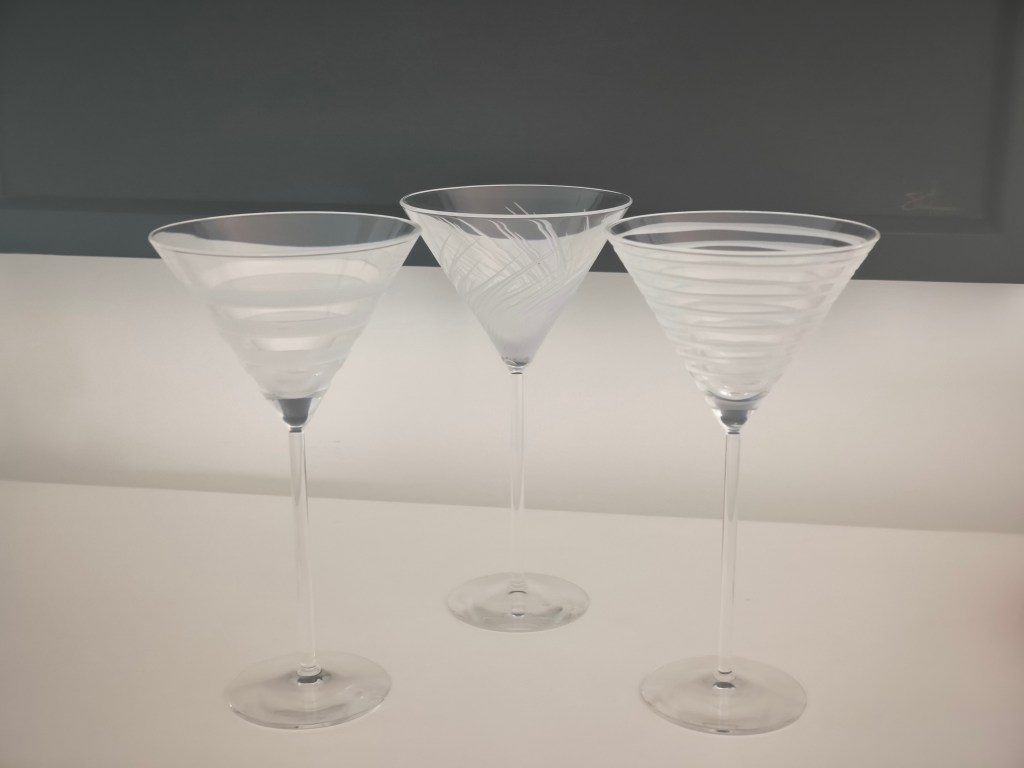
Yes it does; it means a great deal to me. The person who gifted me a set of four of these gorgeous Salviati Murano glasses is no longer with us. The two of us had the most complicated relationship of my life. It lasted 16 years and however twisted it was, it will reside in my memory for the rest of my life.

As with all relationships, both she and I had our own baggage. When I started working for her, I was young and naive. I did not report directly to her; therefore, there was a buffer between us — my immediate supervisor both protected me and shielded me from her darker side. Early on, I only got to experience the compelling and positive aspects of her narcissism — when the narcissist treats you as if you are the only one in the room. Praise, gifts, promises; all showered upon me whenever in her presence.

When anyone said that she was opportunistic or loved the spotlight, I would argue that it was difficult for women to stand out in a man’s world. I defended and deflected for a long time. As the years progressed, she and I became closer. I spent time with her at her country estate and she introduced me to celebrities, famous writers, and artists. If she needed something from me, it was always a gracious request. It took me years to realize that I had fallen in love with her. Not romantic love, but the love you might feel for someone you idolize.

People warned me not to get too close. I would either tell them they were wrong or I’d tell myself they were jealous. My supervisor had warned me as well, but he modeled similar behavior with her. I was promoted with salary increases several times; to the best of my knowledge, always merit based. In my 13th year of employment, my supervisor left his position and I found myself working directly for her. We had a honeymoon phase that lasted a few months. During this period, she pulled me off to the side at a party and told me that she loved me. I remained on a delusional cloud until the shit hit the fan. She had a personal situation in her life that made her angry and bitter. The softness faded and the edges became sharper. I started to see what others had warned me about.

I’d like to interject that she gifted the martini glasses to her executive team during a time of tremendous business success. We were at the height of profit and industry awards. I cherished those glasses; one because I’d felt I’d earned them and two, they were one of the most beautiful gifts I’d ever received. A few months after getting the glasses, I actually visited Murano in Venice where they were hand crafted. That trip made them even more special to me.

Returning to my final years working with this woman: I went back and forth between being blown away by her intelligence and power, to disgusted and bewildered. She started asking me to do things that I didn’t think were good for the business; nothing untoward or illegal, just not in our best interest.

I realize I’m being somewhat cryptic; I promise to explain why later. Life is not black and white and I have come to realize that living in the gray is not easy for me. I like things to be near perfect; neat and tidy and tied up in a bow.

When it became impossible for me to comply with her direction, I pushed back — not easy, she was a force and I was expendable. Of course I didn’t think so, but I knew from how she treated others, that I most certainly was. We traveled to Italy together for work. I didn’t need to be there, so I suspect I was being tested. Her loyalty test was beyond brutal and I failed. It was at that point that I realized if I didn’t resign, I would be terminated. I’d seen many before me go through similar trials. When we returned from Italy, I resigned. Sixteen years of passion for the work, compromise, falling in and out of love, and brutal disillusionment.

I’m fully aware that I was equally responsible for the disintegration of our relationship. I could have sucked it up, massaged her ego, acted as if all was honky-dory, but at the time, I was both in therapy and seeing a life coach. I felt as if the weight of the world was on my shoulders and I was finding it difficult to grin and bear it. I caved and my world shattered. That position defined me in every way. I withdrew, relocated, and reinvented myself. Survival mode can either break you or force you to see the world in a new way.

A couple of years after I left my position and my New York City life, this individual died in a tragic automobile accident. I took it harder than I imagined I would. No matter what my misgivings about my final months with her might have been, I would have never wished her to perish. That is why I chose not to name her in my story. I never had closure; therefore, I will never know what drove her to do the things she did and why she tossed me aside before I resigned. I couldn’t even bring myself to attend her memorial.

When I decided to relocate to Portugal, shedding 99% of my belongings was easy; I was seeking to start anew. One of the few gifts I could not walk away from was those martini glasses. They were the one part of that relationship I couldn’t let go of. I love these glasses, I love martinis, and I loved the former life they represent. Prior to leaving the United States, I shipped two boxes to my new address in Portugal. One of these boxes contained the four well wrapped martini glasses. Little did I know that they’d have to go through customers when entering Portugal. It took months and many telephone calls to finally locate the boxes. Because I did not have receipts for the contents, it cost me a small fortune to get the two boxes out of customs. When they were finally delivered to my home, one of the four martini glasses was broken. I wept openly and lost several nights of sleep.

I engaged in a failed search for a replacement glass. I contacted all of the other executive team members who had received the same gift; none of them still owned the glasses. I learned that Salviati only made a limited number, explaining why they were impossible to find. I gave up. I placed the three remaining glasses in a prominent spot in my new home. I have never used a single glass from the collection.

It’s been eight years since I placed those four glasses in that mailed box. I have checked eBay no less than a dozen times over the years. A few days ago, just for giggles and laughs. I looked on eBay. There it was, a single Salviati martini glass. The irony is that each of the four glasses has a different design and the one listed was the same glass that broke in the box that was shipped. I made an offer and after a bit of haggling, the glass was mine. It will arrive any day now and I will happily complete my collection. Early in my story I asked you not to judge me, I hope now you understand. I’m not sure why (and I may never know), but for me, this helps bring closure to an open wound. Sometimes an object can represent a time in your life, a person in your life, or a notion you’re hanging onto. These four glasses are all of those things for me. The challenge will be to keep them from breaking — they are extremely fragile. They mark a time in my life with tremendous growth and the ability to walk away when my integrity depended on it.

Is it true that everything happens for a reason? I would answer that sometimes it does seem so. The missing glass pictured above, will soon arrive.

State-of Mind

The story told here is non-fiction.

An individual I care about recently informed me that it was inappropriate for me to flaunt my lifestyle on social media. A part of me knows that I do not over-post. My intention has always been to stay in touch with people in my life that I do not see on a regular basis. When I moved to Portugal it seemed even more important to share my life experiences for the benefit of those in my circle of friends and acquaintances. But this comment shook me to my core. Perhaps a part of me thought I might be over-sharing or that people in my life that did not have the means to travel as I do, might feel that I am rubbing it in their faces.

I ran this by a few of my friends who told me to ignore the comment. They said that my travels inspire them and others. No one I spoke to seemed to believe that I over-post. But if I’m going to be honest, there are a few people in my orbit that I believe should pull back a bit on social media. Usually because they post on Facebook everyday and sometimes very superficial (i.e., I lost my keys and found them) posts. Or they post a different selfie daily. I feel very judgmental and that I might be a bit unfair about this subject, but still, it’s how I feel. And so, I have not posted about my travels or adventures in a long while. Last week a good friend said that I should go back to posting. He said that people like him missed seeing what I was up to. I heard him loud and clear, however, as I mentioned earlier, I was stung badly. I guess I’m searching for some middle ground. Perhaps I will use this platform for social sharing. I’ll figure it out.

“It’s very easy to be judgmental until you know someone’s truth.”

Kate Winslet

I hate proofreading, therefore, please excuse any grammatical or typographical errors.

Luck or Earned Success

People have called me a lucky bastard my entire life. If I’m being honest, I’m not quite sure how to take it. My friend Mark was told he couldn’t board a Cessna to the Maldives last year because the plane had a weight limit and they had met the limit. The plane went down on route and everyone was killed; Mark is lucky. I ask people why they think I’m lucky and they tell me it’s because everything comes to me so easily.

I beg to differ. First and foremost, I was born black. I was born blacker than any other black person within 1000 miles of my town. Second, I was born poor. I’m talkin’ about the kind of poor you never shake; like third world poor. And lastly, I was a foster child. Do you still think I’m lucky? Do you think the shade of black you are doesn’t matter?

Yes, maybe I was lucky that I was born in the good old U.S. of A.; a country where your skin color only matters if you need a job, or you want to live anywhere, or you want to marry anyone. Needless to say I had my struggles growing up. I want to tell you about all of my foster homes, but a few stand out.

The Mississippi department of Social Services decided that my single mother was unfit to raise me. She worked at McDonald’s and left me home alone a lot. I guess our neighbors heard me crying and reported my mother to the police. I was only two years old when I went into my first foster home so there’s not much I can tell you about it. Subsequent foster parents told me that I was one of 12 fostered children in that home — Social Services had to lock those people up because they were trafficking the kids. Fortunately, I was too young to even be groomed.

When I was five years old I ended up with this older couple that took me to New Jersey. They were nice people, but they were too old to take care of me and I ended up with people who were younger, but they only took kids for the money. Social Services figured out their scheme and shipped me back to Mississippi. My dark skin made it difficult to find parents for me.

When I was 12 years old I was brought to a nice house Outside of Atlanta, Georgia. I could tell these people had money because they had five bedrooms in their house, wood floors, and a couple of nice cars. It was a Caucasian family of four — their two children were not adopted. I liked this family and this house a lot. I realized the only way they’d ever adopt me, was if I behaved well and showed them I was worth having around. They were kind people from the start, not allowing me to do more chores than their own children. There were rules, but they were fair and easy enough to follow. I was actually happy for the first time in my life. But, it wasn’t all good and easy.

People stared wherever we went. Bonnie and Everett made it clear that Anne and Mark were their parents and I was a social experiment. I was meant to make them feel better about their abundant lives. I was fully aware of my role and I was determined to play the part well.

The first thing I did was ask Anne and Mark if they would call me Scott and sign me up to junior high school as Scott. They said they’d do it with no questions asked. I mimicked Everett’s every move so that I wouldn’t stand out; blending in was the only way to survive. When Anne took me clothes shopping, I picked out clothes Everette would wear. Lastly, I pretended to enjoy every dish prepared for the family. No signs of the food I was familiar with and I certainly wasn’t going to ask for it.

What I did ask for was writing utensils and notebooks. Anne was happy to purchase them for me. I was quiet, studious, and I stayed out of trouble — never mentioning my past and keeping my eyes on the future.

About a year after I joined the family, Anne and Mark told me that I should dress for a nice restaurant because we were all going to dinner in the evening. It seemed like an ordinary family get together, therefore, I didn’t anticipate what was to take place that night.

We were all seated and two bottles of bubbles arrived, one had alcohol and the other didn’t. Glasses were filled and the waitstaff left the table. Mark asked us all to raise our glasses. I had no idea what was going on, having never seen this sort of ritual.

“This is to officially welcome Scott into the family. That is of course if Scott wants to be a part of this crazy crew. Do you Scott?”

I was thrown off-guard; shocked really.

“Scott, what do you say?”

“Umm, ummm, yes, I would like that.”

“Well, Scott says yes, after some surprising hesitation, he agrees.”

Anne gets up from her seat at the table and runs over to hug and kiss me. Bonnie and Everett were coaxed by Mark to join her. This is what I’d always wanted, why wasn’t I thrilled? It didn’t take long to find out why my intuition was right.

That was one wild rollercoaster of a year. My last name was changed to Stanton and my new parents had to figure out how to hide their regret. Some friends stopped calling, others made excuses. Invitations to parties and dinners became less frequent. My newly dubbed siblings were suddenly distant.

For me it was an old, familiar story. I knew exactly why the honeymoon was over; I was once again alone; fighting for my right to exist. Anne and Mark tried. They said nice things, bought me nice clothes, they talked to me about piano lessons, soccer camp, and a racing bike. I could tell they wanted this arrangement to work, but I was cautious and dubious. I stayed in the shadows. I kept my head in the books. I focused on the prize.

By the time I started Harvard, my parents had adjusted to the hate and Bonnie and Everett barely tolerated me. I did everything I could to stay out of everybody’s way. I got a full scholarship based on my SAT scores and academic record. Diversity, Equity, and Inclusion (DEI) was not a factor, but I’m certain everyone assumed that DEI got me in. So once again, I had to work harder than anyone else to prove myself worthy.

I joined every club, competed in athletic programs, and I considered the things in life that were attainable. During my quiet moments I often thought about my birth mom: why did she give me up? Was she alive? Where did she live? I’m not sure why, but my biological father didn’t enter my thoughts; perhaps I was fed too much propaganda about black fathers.

I was sitting in Harvard’s main dining hall one day and a beautiful woman sat across from me. She said hi and asked me if I was enjoying Art History. I realized she must have been in the same class, but there were over a hundred students in that class and I had long ago taught myself not to look around or get distracted. She introduced herself as Claire.

“Nice to meet you Claire, I’m Scott.”

Claire noticed that I was socially awkward, but it didn’t stop her from talking. I listened, asked a couple of questions, and hoped she’d move on. Claire eventually stood up.

“Scott, it was nice meeting you, I’ll see you in class.”

I nodded and went back to finishing my sandwich.

For the next few weeks, Claire sat next to me in class. She was friendly, but not pushy; I remained somewhat distant. I was attracted to her, but the number of red flags made me very cautious. Claire was white, ambitious, outspoken, and attractive. Any sort of closeness was way too risky. I concentrated on Art History.

I noticed Claire’s absence for the next few lectures. At the start of her third absence, our professor asked if anyone had seen or heard from Claire. We all looked at one another and then I noticed everyone looking at me. Our professor asked me to stay after class; he once again asked if I’d see her. He told me that she had been reported missing a few days prior. I told him that I had not had any contact with her since the last lecture she’d attended.

That night the police came to my dorm room. They asked me if I would go with them to the Cambridge police station. They escorted me out of the dorm while several of my fellow students watched. At the station, they informed me that several students had reported seeing Claire and I together. I shared how we were acquainted, however, that did not seem to dissuade them. The media got hold of the story and I was vilified.

The police couldn’t actually charge me with a crime being that at that point Claire was only reported missing. Still, my photograph was all over social media and I was guilty in the eyes of a jury of my peers. In fact, the University was considering suspending me, I assume in order to show that they were being proactive about Claire’s case.

My birth mother read about the adoption story and figured out that I was her son. My mother was in a much better place, often wondering about me throughout the years. She did a bit of research and found me at Harvard. When I received her message, I was elated. I had long ago given up on any hope of finding her. My adoptive parents claimed that the records of my birth mother and birthplace were sealed.

We met at a coffee shop on campus the next morning. Her name is Cassandra. She’s smart and beautiful. She expressed no regret about her youth, having had a very difficult upbringing and very little opportunity early on in her life. She is currently an advocate for single mothers in Mississippi. Cassandra believed me when I told her I had nothing to do with Claire’s disappearance.

A few days later, Claire returned to campus. She had apparently met a guy a couple of weeks prior. They decided to take his boat out to sea; she failed to tell anyone where she was going. Once she did think about it, she was already halfway to the Caribbean with no cell service. When she arrived in Jamaica, she discovered family, friends, and the authorities were looking for her. Claire immediately flew back to New Haven and apologized.

What I found disturbing was that no one contacted me to apologize. All that I had known and worked for was in jeopardy at that time. I had no support from anyone except for my birth mother. I truly believe my parents and siblings thought that I was somehow involved with Claire’s disappearance.

Years later Claire did manage to find me and apologize. She had some lame excuse about being caught up in her homecoming and not knowing I was questioned by the police. For a time I had considered suing Harvard and the New Haven police department, however, Cassandra advised me to move on. She said that I should channel my anger into graduating and finding the right professional position.

Today I am a U.S. Congressman for the state of Georgia. My parents have often reached out to me, but I am guarded. Turning my back on them would come to no good. My brother and sister have their own lives; they have never shown remorse or interest and that’s fine with me.

Cassandra and I visit often. I credit her with being elected to Congress. She is often by my side for official ceremonies. I consider her opinions and advice in everything I do. Someday soon, I hope to introduce her to my future wife.

As a Congressmen I have fought for DEI; not because I am a product of its practice, but because I know and believe that the world is a cruel place for anyone who is different. Creating ways to ensure some resemblance of equality and fairness, is my life’s work.

By the way, please call me by my given name, Jamal Jackson.

State-of Mind

You might be thinking, “How can he write in the first person, as a black American male?” Truth is, I couldn’t possibly know what it’s like to be a black man in America. It’s all conjecture and creative writing, but isn’t that usually the case? Men writing female characters and vice versa. A straight writer writing gay characters; you get the picture. I’m angry about the current politicizing of DEI in the U.S.; politicians and citizens wishing to further divide the country along racial and ideological lines.

Being a minority in the U.S. is at a huge disadvantage on many levels. White men hold the power and they are afraid of losing it and they will do everything they can to keep it. Of course there are good white men and of course there are people of color who should never have been put in positions they weren’t skilled for; however, the numbers are disproportionate. Sadly, it has been this way since our forefathers won the revolution and wrote the constitution — all men are not created equal and they never have been. DEI is an woke attempt to level the playing field. As a woke white male, I support protecting the rights of individuals; further, I support any opportunity to ensure diversity, equity and inclusion in all aspects of life.

I’ve shared this before and I still believe it to be true. I applied for a position over thirty years ago, when affirmative action was the law in federally funded institutions. I lost out to a woman of color. At the time I was angry. I thought myself the better candidate. I soon after realized that I was not the best choice and that the administration at the university had done the right thing for many reasons. White men have had the advantage in the U.S. for centuries, why not ensure that everyone is given an equal opportunity to succeed.

I’m enjoying my stable life in Portugal; my home, Paco, my friends, and Portuguese/EU Politics (flawed, but progressive and working toward making life better for its residents). Dwelling on the rise of authoritarian rule in the U.S. is difficult, tragic and more than I choose to handle. Choose your platform and fight for what you believe in.

“One day our descendants will think it incredible that we paid so much attention to things like the amount of melanin in our skin or the shape of our eyes or our gender instead of the unique identities of each of us as complex human beings.— Franklin Thomas

Our Expectations Are All Out of Whack

Home delivery of liquor on my bicycle in Brooklyn when I was 17 years old, provided a teachable moment which has stayed with me my entire adult life. I walked into my house after four hours of peddling all around my neighborhood, carrying hard liquor for desperate alcoholics. Trust me, it made me grow up fast. My dad, who was rarely home early in the evening, asked me why I had that look of dread on my face. I told him that I had worked hard that evening for next to nothing in tips. My dad, who was very familiar with working for tips, reminded me that I was providing a service to customers who would learn to trust me and be able to rely on me in the future. He assured me that once that happened, the tips would come. He also said that I should learn to never expect a tip. He reminded me that the customer was paying for the product and that the delivery was included in the price. Tipping was not obligatory; therefore, whatever tips I received were an extra bonus and that the amount was entirely up to the customer. He said that I should be grateful to receive anything at all. My father was my guru; any advice was sage advice.

I ended up doing very well at the liquor store. I went on to work for tips at other times in my life; always recalling my father’s wise words. Humility goes a long way when one is performing a service. The bigger lesson here is that expectations are too often unrealistic and sometimes lead to disappointment. This has been a lifelong lesson. I’m not sure if it’s my hard head or sensitive nature, but it has been one of my greatest challenges.

People

My expectations of people have always been way too high and unrealistic. Starting with family, I won’t list my many disappointments because it will only cause anger and resentment toward me. I have learned that most people do not want to hear what you really think. Instead, let me say that these days, my expectations are very low except for one individual whom I know would step up to the plate should I need urgent care. I’ve discovered just how self-absorbed and judgmental family members can be. If I’m going to be honest, there are very few family members I would consider taking in.

Close friends I have known almost my entire life are in a different category. My expectations are high and will remain high. The bond created over years of life’s travails, makes for frank conversation, trust, and loyalty. Expectations are a given; break the trust and the friendship is gone. Unfortunately, I have lost two close friends in recent years over trust issues. One of these friends revealed an unacceptable truth about her hatred toward Muslims and the other took me for granted. Walking away from toxic people is necessary; I have no regrets. Relationships are not always meant to last forever.

Moving overseas has shifted my expectations of strangers. Portuguese people have been kind and warm toward me. Culture and my openness have played a role.

Places

Of all aspects of my life, adapting to new environments has been the easiest. Growing up in Coney Island is probably the main reason, anything after CI was an improvement. The amusement park which once attracted millions, was in decay and losing its allure when I was a child. I have always sought out a better place to live and my instinct has never failed me. Hence, one aspect of my life where expectations for improvement have been met. I think it’s almost better to start low and work your way up; although to be fair, there are parts of the world far worse than Coney Island. In fact, CI is currently going through a period of revival.

Travel is a category where I go from extremely delighted to overwhelmingly disappointed. My expectations have always been far reaching; the case of a big imagination versus lackluster reality. The one good thing that has come from this truth, is the appreciation of home. I can’t complain, I’ve been all around the globe and as a result, I have seen more than most and I have no regrets. I firmly believe that exposure to other parts of the world and other cultures, helps to better understand humankind; our faith, our understanding of how we are connected to the earth and each other, and how we see the future. My expectations for a better future are changing daily and not in a good way. I fear greed, climate change, and diminishing resources. I think humankind’s finest moment has passed. It makes me sad and of course, I hope I’m wrong.

Things

Material things hold less significance for me as I get older. My expectation for the length of time “things” should last has decreased. Appliances are not made to last anymore and technology is always evolving, making devices obsolete after a short period of time. When I moved to Portugal, I realized how easy it is to replace stuff — sometimes with even better stuff. I try not to get too attached to things. Artificial Intelligence will factor heavily in the future, but I do not fear it. I’m hopeful that we will find a way to use it to our advantage and to rein it in when necessary.

Insert your email address and hit subscribe to receive my most recent blog.

Future Travel

A couple of short local trips to Spain and parts of the Algarve coming up soon; an Iceland cruise by way of Northern Europe in May; Oslo, Norway with Paco for all of July (with visits from friends throughout the month); a much anticipated trip to the Puglia region of Italy in the spring of 2025. The United States sometime in 2025 is likely: Brooklyn, Florida, Portland, Maine, Maryland, and North Carolina. I can now fly direct from Faro to Newark, thanks to a new United route. I booked a Mediterranean cruise for October 2025 — it sails from Tel Aviv, (as I suspected it would be, this cruise has been canceled. I’m looking at other options, this time out of Lisbon; convenient and no airfare). I had little to no expectations; therefore, I am not disappointed.

State-of-Mind

When you live in a place with over 300 days of sunshine a year, rain becomes glorious; at least for me. We’re getting some much needed rain this week and I love it. Also, the kids are not in school for a couple of weeks, therefore, the neighborhood is deliciously quiet. I have this “guy” thing that applies to fixing things; I fixed it so that my new computer is synched with my printer/scanner. It only took four hours, but I’m patting myself on the back as I type. When it comes to technology, my expectations are extremely low. To my credit, I try everything before seeking help.

I’m currently hosting friends from the States. We are making memories.

Note from last week’s blog: I learned that electric buses beep when they are coming and going, so that people will hear them because they are so much quieter than gas powered buses. Oh well, good to know, but I still hate it. I feel the same way about the beeping sound you hear when trucks are backing up.

“You are your own worst enemy. If you can learn to stop expecting impossible perfection, in yourself and others, you may find the happiness that has always eluded you.”
― Lisa Kleypas, Love in the Afternoon

Please excuse typographical and/or grammatical errors. I promise you they occur quite by accident.

Humans Are Strange Mammals

The Travel Paradox

My last view (from my bed) prior to leaving the States

I am relieved to be home from a three week trip to the States. Ironically, I almost said, ” . . . three week trip home.” I did not go home, I am home, Portugal is home. We spend so much time making our homes comfortable and beautiful and then we travel someplace else.

In many ways returning to the United States during a pandemic was an insane proposition. My flight was cancelled, rebooked, cancelled, changed, changed again, and changed one final time. What should have been a seven hour direct flight turned into two stressful flights; the first in the wrong direction with a very tight connection — more like 17 hours. I had to be tested for COVID-19 prior to travelling, at my expense. It should be noted that the PCR test in the States was offered at no cost. COVID testing has become a big business with many charging as much $250; criminal.

Looking back, the four airports I travelled through were extremely busy — a plug for Amsterdam’s Schiphol Airport, which was by far the most efficient and user friendly.

I cannot help but wonder if I would have made this trip knowing what I know now. True, there are family and friends I wanted to see; I needed to see. It had been a long time and I lived in the U.S. for the first 59 years of my life. This trip took its toll on me mentally and physically like no other before it. I’m going to stop writing for afew days. My negative feelings about what I saw and experienced in the U.S. are skewed and time will help.

[An apology to friends and family: I imagine you grew tired of comparisons between Portugal and the U.S. For example, “I can get a latte and a pastry for two euros in Faro.” That must have sounded more like: wah, wah, wah and wah. My bad. Is it true people are no longer saying, “My bad.?”]

Some time has passed and I have gained some perspective.

One of positive things about travel was the renewed appreciation of my home. Whilst away, I thought a lot about Faro, Paco (my dog), and my apartment. After only a few days, I lamented about the rest I get in my own bed and the joy I get from hanging with Paco.

Of course I know that I think and say all of these things and by next week this time I will be thinking about my next trip and longing to be away again.

I didn’t take very many photos; living in the moment and creating living memories. No doubt, I am one lucky fella. Don’t be upset if you do not see yourself here, I chose these pics quickly — I blame jet lag.

Some of the highlights and pitfalls of my time in the States (not all fact, but a whole lot of opinion):

  • The non-U.S. passport line at JFK was a lot shorter; there is a first time for everything.
  • I oddly had little to no jet lag going west.
  • The old Penn Station was like entering hell without warning. I’m still suffering from PTSD — Posttraumatic stress disorder (PTSD) is a psychiatric disorder that may occur in people who have experienced or witnessed a traumatic event such as a natural disaster, a serious accident, a terrorist act, war/combat, or rape or who have been threatened with death, sexual violence or serious injury (Google).
  • New York City is not the same with Broadway gone dark and that’s just a fact.
  • People get angry with you when you’re nearby, but have no time to see them. Please don’t be mad at me.
  • The food in New York City is better than anywhere I have ever been (must be the competition).
  • Brooklyn Bridge Park is absolutely incredible and should not be missed — what a gift to the people of Brooklyn and the city of New York.
  • There is no bed like your own bed.
  • May is the best month of the year for good weather in the northeast (mostly not hot and humid).
  • I understand why they say you can never go home again.
  • No one gets you the way your siblings do.
  • Charlotte, North Carolina has exploded (I went to university there).
  • BBQ should only be eaten in the south.
  • Downtown Boston is not easy to navigate since the Big Dig. I almost missed my bus back to New York (plug for Flexi Bus; easy and inexpensive way to travel).
  • I’ve been writing this blog for three years and much to my chagrin, friends actually said this, ” . . . so what is your blog about?”
  • Not everyone is happy that I was able to get the J&J vaccine in Brooklyn. Doesn’t matter, I’m glad I did.
  • I spent way too much time throughout my travels, thinking about quarantine weight.
  • I refuse to travel back to the United States during this pandemic; I know we’re all hoping things will improve soon.
  • I thought turning your data off on your cell stopped you from roaming. A cell phone bill for hundreds of euros let me know that I was wrong. I’m certain cell carriers and cell phone manufacturers are in cahoots regarding this issue. My iphone has to be on airplane mode to avoid roaming charges. I can assure you that unless I have dementia (do I?), that will never happen again.
  • You know I have a lot more to say, note my restraint.

A Minha Casa

Now that I have been home for almost a week, I can sit back and reflect on the significance of this last visit to my place of birth. People I know and love have lots going on; they’re frenetic, preoccupied and manic. That doesn’t mean they love me or think of me any less. What it does mean, is that I need to be patient and understanding. All I ask in return, is the same consideration

I painted stenciled blue birds on my solarium floor on my first full day home. No doubt I was seeking peace and tranquility. Hoping to squash that PTSD.

I cancelled my trip to Lyon scheduled for next week. Too much COVID-19 testing and complicated travel. Businesses blaming everything that goes wrong on this virus is getting old.

I have tickets to Bristol, UK in July — who knows if that will happen. It’s only been postponed four times. Stockholm in August, Toulouse in September, London and a European cruise in October, and a long awaited trip to five Asian countries in January 2022. Cuba moved to February and the planning continues. I keep telling myself it’s okay to plan, even though it’s a bit insane. Humans are strange after all.

Missing in Italy

Sometimes I shake my head wondering: did this really happen?

Advanced Italian Cuisine
Alma, an Italian Cooking School outside of Parma, Italy
Education Fee's

I’ve waited for quite awhile to tell this story. It’s a rather sensitive matter, therefore, I will use almost all fictitious names to protect those involved. There are people in this story who were supportive, sympathetic, and brave and then there are the rest. I should start by saying that the entire matter was surreal for me. As I went through the motions and experienced it, I felt as though I was on the set of a movie shoot; none of it seemed real, and all of it bizarre. What I know for certain, is that it happened and it changed me.

Searching for a Needle in an Italian Haystack

It was an ordinary day at The International Culinary Center (ICC) in New York City when I received the call. At the time, I was School Director and Dean of Student Affairs. The year was the early 2000s. I had worked with others to create an Italian cooking training program in Italy. Students would start their training at ICC and then travel to Alma in Colorno, Italy for the final six weeks of their training. I had traveled to Colorno (by way of Milan) several times. Our relationship with the staff in Italy was solid and the student experience was exceptional. I was proud to be a part of a very unique cooking school experience. Most of the students were in the 20s and 30s; very mature and focused.

We did several rotations a year and enrollment was better than expected. I was the administrator-in-charge of the program; however, there were over ten faculty and staff members doing the real work of executing the experience. The cost of the complete course was close to $50,000 and because part of it was overseas, there were many moving parts. My father was born in Italy; in many ways, it felt as if I had come full-circle in my Italian heritage. While I worked with others to create the program, I learned a lot about regional Italian cooking, its rich history, and I got to try every dish taught. In addition, I was a proud judge during finals in Italy on several occasions.

Francesca (her real name) was my contact person at Alma. What we were about to experience created a bond and lifelong friendship born out of a terrifying situation. Francesca’s call about one of our students in Italy, continues to make me anxious all these years later. There are deeply felt emotions that are never lost and never leave us.

“Chris, I need to tell you something, but I don’t want you to worry too much.”

My body tensed and I stayed quiet and I listened.

“One of your ICA (at that time we called the program Italian Culinary Academy) students has disappeared.”

Francesca was not an alarmist and she took care of nearly any incident on the Alma campus, so I knew this was serious. Sal was gone for two days and no one had heard from him. His passport and toothbrush were still in his room and there appeared to be no foul play. Administrators at both schools agreed that he had probably met a girl and he was with her on a sun drenched beach. Sal’s friends and classmates didn’t believe that was the case and this caused great concern. Apparently, there were witnesses to an argument outside of a bar the night before he’d gone missing; in fact, the last time Sal was seen. The argument was between Sal and several locals. Some students speculated that the argument was over a Russian girl from the bar, but no one was certain. Francesca and I agreed that Sal’s parents should be informed. She was also going to call the Colorno carabinieri (local police).

I quickly booked a flight to Milan, packed a small bag, and headed for JFK. Alma had a car pick me up in Milan and I attempted to rest my eyes and calm my brain on the 2.5 hour drive to Colorno. It had been 16 hours since hearing from Francesca and by this time, I imagined all sorts of horrible scenarios. Growing up in Brooklyn during the 60s and 70s made me tough, street smart, and terribly jaded. Film and murder mysteries didn’t help.

Riccardo (head of the school) and Francesca met me at the school when I arrived. There was no news from Sal and everyone was thinking the worst. Sal’s parents were on their way from the States and Francesca was arranging their accommodations. Jet lag was helping make a bad situation untenable; my thoughts toggling between despair about what might have happened to Sal and dread concerning meeting his parents. A living nightmare and nowhere to hide.

Francesca drove me to the police station for a conversation regarding next steps. I sat with several carabinieri officers asking every question I could think of. Francesca was interpreting for me and I could tell she was exhausted and worried. The carabinieri would not confirm or deny a street argument or that there might have been a Russian girl involved.

After hours at the police station and talking with students, I headed for my hotel room to close my eyes. Francesca agreed to contact me with any news.

There was one particular bar not far from the school that was popular with the American students attending Alma. Colorno is a very small town and everyone knows everyone. There were rumors among the students a number of Russian woman were available for hire and that Sal might have owed money to one of the handlers of these woman. Administrators at Alma seemed genuinely surprised to hear that prostitution was taking place under their noses. My mind took me to dark place; imagining Sal buried six feet underground somewhere outside of Colorno.

Sal’s parents arrived the evening of my first day, however, they did not show up on campus until the following morning. By then, I had slept a few hours and I was more prepared to meet with them. Alma was very sympathetic to their anxiety and did everything possible to make them comfortable. Looking back, I was actually quite surprised by their calm and decorum. They too spent time with the local police. They also took several students close to Sal for lunch and tried to better understand where he might be.

At some point at the end of our first full day, we all met to discuss what we might do next — parents intentionally left out. Alma seemed reluctant to contact the press, for fear the school’s reputation might be harmed. I believe we were secretly hoping Sal would turn up on campus behaving as if he’d done nothing wrong.

As time passed, the street argument became more of a factor; all involved were called in and questioned by the police. The carabinieri were convinced that there was no there there. I started to feel as if there might be a cover-up and Sal’s parents were skeptical as well. Although his parents and I were in communication throughout the day during early days of the incident, I felt fairly distant from them; detached. They were understandably frustrated, tired, and concerned.

On the fourth day, none of us believed Sal would just reappear. If he had run away with a girl or decided to bail from the program, he would have taken his passport at the very least. We were all fairly certain foul play of some sort had taken place. The Italian state police were brought in after Alma’s administration began to feel as if the local police were not doing enough. Word got out to the press and just about every local and regional news outlet was covering the disappearance. When word got out that an American student was missing and there was speculation that the Russian mafia might have been involved, a search party was dispatched and the rivers and lakes in the area were dredged. I silently hoped Sal would call us to say that he’d see the reports of his disappearance and wanted to let us know that he was fine and that he was sorry for all of the trouble he’d caused. That didn’t happen, but all I had was hope.

I wasn’t sleeping very well and couldn’t help thinking that this would probably be the last class studying at Alma. One incident, completely unrelated to the cooking experience could threaten the viability of a program we worked on for two years. The pubic relations machine at both schools was working hard to highlight how positive the Alma experience was and that this was an unfortunate one-off situation. Sal’s parents were angry that the Italian police and government were not doing more to locate their son; we were mindful that they alone could potentially raise enough concern to shut us down.

His parents decided that a trip to the American Embassy in Milan might help get the Italian government to take this more seriously. I regretfully volunteered to drive them to the embassy. They sat together in the back seat; Sal’s father consoling his mother most of the way to Milan. Over two hours in a vehicle with someone crying hysterically is not easy for the person at the wheel. I didn’t say much for fear of saying the wrong thing. I tried my best to be supportive and reassuring. I didn’t think the people at the embassy would help, but it wasn’t my son who was missing.

When we got to the embassy it was a well-guarded fortress. I dropped them off as close as I could get to the entrance and parked the car. Just as I arrived they were being escorted in. The guards told me that only the parents would be allowed. I called for Sal’s father and he walked over and apologized. He knew that I would be staying in Milan that night and flying back to the States the next morning. It had been a full week since Sal had gone missing and there was nothing more I could do in Italy. Sal’s father agreed to call me if they needed anything and we said our goodbyes. I felt very sorry for Sal’s parents and I was exhausted.

I recall making a call to Gary, ICA’s president, that afternoon and becoming emotional on the phone. The fear of learning that a dead body was found was becoming more and more real. Gary, as always, was extremely supportive and grateful. He and the rest of the staff at ICC were hoping for the best. He asked me to remain calm and to get home safely. The administration at Alma was also very supportive and assured me that they would do everything possible to find Sal. I flew back to the States the next morning.

Time passed and still no word from Sal. His parents stayed in Italy for a couple of weeks and then returned home when hope of finding him had diminished. They became angry, resentful, and blamed both schools for gross negligence. They claimed that we had placed their son in an unsafe environment. Sal’s brother publicly posted a scathing letter, claiming the school was completely negligent. Threats of a lawsuit were being bandied about. The students in Italy had gone on with their studies hoping to complete the program. I had all but given up hope.

Graduation at Alma was scheduled a few weeks out; I knew it would be best for be to return and attend. When I arrived on campus, the students, whom I had stayed in contact with, greeted me warmly. They all assured me that the ICC was not to blame for Sal’s disappearance. We all wondered if this great mystery would ever be solved. I met with the local and state police for an update — there was none. Still much speculation that there was foul play, however, the guilty party or parties, had not revealed themselves. I returned to New York having lost quite a few pounds and feeling like I’d let a lot of people down.

Thanksgiving came and went. Each day brought less talk of Sal’s whereabouts. My emotions had gone from remorse to sadness to anger; acceptance was not within reach. Then, out of nowhere, shorty before Christmas, a call from Francesca in Italy, Sal had been located. He had joined the French Foreign Legion. Apparently, when you join, you leave behind the material world and those you once cared about; some join to escape their lives. Sal somehow managed to slip a note with his parents telephone Number to an Asian guy who was leaving the Legion and had agreed to make a call. It was the best Christmas gift of my life.

There are several takeaways from this life event that are forever etched in my brain. First, Sal’s family never apologized for their treatment of the two schools. They blamed us for Sal’s disappearance for months and when he turned up, not one of them came forward to acknowledge they were unfair and had hurt several good people. Lastly, when Sal left the French Foreign Legion he did not contact me to explain himself, apologize or thank me or the ICC for trying to find him. Oddly, I didn’t care. It bothered others at the school and it made several people in my life angry, but I had something far more important to me, I had peace-of-mind and Christmas that unfortunate year.

Disclaimer: This incident occurred over ten years ago, therefore, I cannot swear by every detail outlined in my accounting of the story. Due to the seriousness of the situation and my own personal involvement, I can only vouch for my own recollection of what took place.

Flag of legion.svg
The French Foreign Legion Emblem

Filtering Yourself

Photo by Retha Ferguson on Pexels.com

Keeping your mouth shut these days is harder than shoving a passel of hogs into a tiny hog pen . . . at feeding time. I’ve been around for quite some time and I’ve never experienced anything like what we’re seeing today. Division, unrest, widespread racism, anger, pandemics, extreme climate change, and the list goes on. Every generation speaks of times in their lives when major changes caused emotional disruption; however, I would argue that what is happening now, has to be up there in the top five.

Regardless of the rank and strength of the impact, these are challenging times. If you have a heart and an opinion, you are feeling it with an intensity that can cause quite the verbal eruption. Some would say that speaking your truth is healthy and necessary and others regard it as dangerous. People in both camps exist in my world and will continue to be a part of my life. I have been notoriously vocal my entire life, except when I’m quiet. So why the contradiction?

What it Feels Like

When I have something to say, it feels like fire in my belly and a vice squeezing my skull. It’s not pleasant and there are very few ways to release the pressure.

Having opinions is a good thing. Speaking your mind is a way of expressing your thoughts and feelings. It allows others to get to know you better. It’s also a way to remain free, free of thoughts weighing you down. Keeping it all bottled up can destroy your already compromised organs.

The conversation I have with myself about whether or not to speak-up is getting easier as I mature. There was a time when remaining quiet was not even an option; today, I employ this method of self-preservation, more often than not.

The Process of Deciding When to Share

Yesterday, I reposted a blog I wrote on Racism last year. I know it will anger some of the people in my life who will disagree. In the blog I call myself a passive racist; I believe it to be true. I’m ashamed of the number of times I have stood by and listened to people disparage black or brown people and said nothing. At the time I disagreed, but I didn’t want to rock the boat or cause a scene. I was dead wrong. I cannot turn back the clock, however, I can behave differently and call people out when I see and hear racial bias.

Sharing my political point of view has been difficult because of the current climate. These days it’s difficult to have a civilized conversation about politics. I’ve been told I have no right to share my opinion because I no longer live in the States or that the only reason I’m a left leaning liberal is because I’m gay — both rediculous.

What to Share

Choose wisely. Carefully consider what to share with others and when to share it. The last thing I want is for people to say, “There he goes again, mouthing off about something.” That can happen easily if you’re not careful.

Lately, I wait until I’m truly passionate about something before I put it out there. This seems to be more effective. The response I get on social media can be very telling and I’ve been paying attention. People are tired of politics. Those that feel very strongly, on either side, are not giving up, nor should they. I’m certainly not giving up. What I am doing is being more deliberate about when and how I state my opinion.

There are many people out there who do not want to hear it. They are in denial about the existence of problems in and with society. To those people I say, turn off your social media news feeds and television. You you don’t want to hear it, telling me or anyone else to shut up is not going to be effective. If you want to bury your head in the sand, then refrain from coming to the surface.

Some of us feel, me included, that in order for positive change to happen, we must have the converstaion.

Reactions and Responses

When you share in a public forum, you must be prepared for backlash. For me, having people agree with me is not necessarily what I am hoping for. I enjoy a good debate or argument. Tell me why you feel or think the way you do and back it up with facts, I promise to do the same. I have admitted to being wrong on more than one occasion and I have also been known to change my point of view. In addition to learning something in the process, a good argument can be a lot of fun; stimulating and enlightening. So why are so many adverse to partaking in a good debate? These days it seems that some would prefer to walk away from a relationship, than engage in a discussion. I think that’s sad.

Losing Friends & Family

Losing people in your life may be the most difficult outcome of being honest with your thoughts and feelings. Before you speak or write or video what’s on your mind, you should consider the toll it may take. Are you willing to alienate people in your life that have meant something to you for a long time?

I recently had this situation tested in my personal life. My politics have pissed people off for a long time; however, because of where the nation is politically today, people are more wedded to their point of view than ever before. It’s unwise and wrong for me to fault anyone for their beliefs, whether I think those beliefs are based on truth or not. My choice is to find middle ground and recall what made that person special to me.

Going Forward

I have learned that that staying silent is impossible. Repressed thoughts or feelings eventually surface; when they do, the longer I allowed them to fester, the more toxic and harder they are to rein in.

The bottom line is comfort. For me, if I’m not strong in my convictions and resolute about where I stand, I cannot speak out. There are moments when I feel that my time is better spent working on my own self-worth; exercising my ego and feeding my brain. I have to be certain I know what I am talking about before I spout off. I have to fact check myself and do my homework. Then and only then, can I speak my mind.This is the way for me to defend myself, debate and walk away with pride. Self-empowerment is mighty strong and an effective tool for healthy living.

I Am Strong | Sick and Sick of It

Traveling to Cascais, Portugal tomorrow; see next week’s blog. First trip since lockdown.

Right Where I am Supposed to Be

Accept, Adjust and Adapt

img_5535

There have been many life lessons learned over the past couple of months. I can’t speak for those of us who were/are in quarantine with others and in fact, I cannot speak for those spending this time alone; I can only speak for myself. Clearly, this is and has been a unique experience for all of us. I have been alone in a foreign country since the lockdown began and it is surreal at the very least.

It’s difficult not to be confused about exactly what is happening with COVID-19. It depends on who you’re watching or reading and what you choose to believe. There is a reason most people no longer have faith in the media or their government. I only allow myself a few minutes of news a day. It doesn’t matter when you turn on the television, it’s one big loop of sensationalism and half-truths. For the most part I choose to read a couple of sources and form my own opinion. I do what I have to do to stay within the law as we battle the unknown. Since fear is a major motivator for government and the media, I refuse to get sucked into this toxic vortex. I rely on facts as much as possible and I leave speculation to others.


Once You Discover Who You Are . . .

When you’re alone with your thoughts, you come to realizations and you make choices. Do you dwell on the negative? Do you get angry? Do you find yourself escaping? What mechanism do you use to cope? You probably have an arsenal of weapons on hand to deal with reality. Choosing healthy tools is the best way to go, however, that’s not always possible. So how do decide the route to take? First, do you know who you are?

There are things I have discovered about myself that help me develop the tools I need and make the right choices:

  1. I do not like for anything to interfere with a good night’s sleep (about 7.5 hours).
  2. I do not like paying for my bad choices the next day.
  3. I do not like how it feels when I beat myself up.
  4. I love how it feels to be well rested.
  5. I do not like how my stomach feels when I have overindulged.
  6. When I have the discipline of going to the gym five or six times a week, I never contemplate not exercising. When that option is not available, one out of two times, I will not exercise. Even writing this down helps to motivate me.
  7. There are times when I’m stressed and concerned and in complete denial about my state of mind.
  8. As I get older, I have less tolerance for many things.
  9. Food has become my primary motivator.
  10. Having a pet helps with self-discipline.

It all seems pretty straightforward and normal. So why am I still uncertain?


Tools & Rewards

One of the tools I frequently use is the weighing of pros and cons. Yes, that second Marguerita would taste really good with my Mexican food, but what price would I pay? When I do this simple assessment, nine out of 10 times, I will decide to pass on the second cocktail.

I live for rewards. I find them to be a positive way to live a healthier life. If I do blank I get blank as a reward. This has been my MO for a long time. During this time — the lockdown, I have noticed this happening more often. If I complete my language lesson, I can read my novel for an hour. If I climb the stairs in my building for 30 minutes, I can have some chocolate and on and on. It seems to be the only thing that motivates me, but it works.


What Matters Most

What matters most in my life has been the greatest lesson learned during this time. I thought about this prior to the virus, but sorting it out has become a much greater priority. My family has always been important to me and that will continue until I die. A trip to the States this week was unfortunately cancelled. Now that I am a resident of Portugal, I cannot fly to the States at this time; my legal address is here. I need to be certain that I am okay with this situation for at least the next five years. Selling an apartment in Faro is not going to be like it was in the States — I sold my last three apartments in less than a week. In Portugal, your place can easily sit on the market for up to two years. That’s fine, it just means planning a bit further into the future.

The good news is that I have come out of this knowing that living overseas is definitely what I want and remaining overseas is a certainty. I have come to realize that there is another move left in me and it will more than likely be Italy. I ultimately want to be where my father was born. I am Italian after all. Now that I have my father’s birth certificate, I can begin to look into dual citizenship. The coast of Croatia is also a possibility — all options are currently open. It’s a big world out there isn’t it?


Noticing Changes 

It seems that people are more grateful now than they have been for a long time. Grateful to others, grateful for their own good health, and grateful to be alive. I remember how people in New York City were after 911. I rode the subway watching strangers who would have never considered giving up their seats, stand for older people or the disabled. I saw people smile at one another for no other reason than to show gratitude and solidarity. This was a New York City I could love. Unfortunately, it didn’t last. We slowly slipped back into our everyday, former routines.

I suspect the same thing will happen with this pandemic. People will be more grateful for a short while and then we will all go back to “normal.” Even if we have to socially distance ourselves from one another for a long while or wear masks when we get a haircut; we humans adapt pretty quickly. If we’re conscious of our nature, is it possible to change? I think it is very possible. Your new normal can be based on what you learned from past experience. If you took up running while in quarantine, then continue to run. If you started eating healthier foods, keep it up, if you called people you care about more often, and so on.

The hardest thing for me has been isolation. I enjoy being out and about. I’m not sure it’s in my nature to spend a lot of time at home. I currently do not have a lot of choice and I’m hoping that will change sooner than later.

Life Goes On! | Change my life quotes, Go for it quotes, My life ...


Growing Up With Broadway

Too shy to be on stage, but happy to watch and dream.

​​”I got a feeling there’s a miracle due gonna come true, coming to me. Could it be? Yes it could. Something’s coming. Something good, if I can wait.” – West Side Story

I was watching an interview with Dame Judi Dench, an actor for whom I have nothing but respect and admiration. She was asked about her favorite medium and she replied, “The stage.” When pressed for a reason, she explained that it meant a great deal to her that in order to see her perform on stage, people had to actually go out and purchase a ticket and then they have to actually go to the theatre. She wanted to perform her best for these people because they truly made an effort — makes a great deal of sense to me. Watch Dame Judi perform “Send in the Clowns,” and you’ll see and hear why she’s a national treasure.

60 principais fotografias e imagens de Judi Dench - Getty Images


The Impact Theatre Had on My Development

I grew up in Brooklyn, New York with Broadway as my playground. My father was an Italian immigrant with a blue collar job, but he loved the theatre. My mother, on the other hand, barely tolerated it. Her indifference made no difference to me.

There was a time when I would have chalked my infatuation with Broadway up to my sexuality — that was societal brainwashing. Obviously, people of all sexual orientations, ages, races, and cultures have an equal love of the theatre and for good reason.

My first Broadway show was The Wiz. It is an all black version of the Wizard of Oz. My father took me to see it for my ninth birthday. Stephanie Mills played the lead and she was brilliant — a performance I still consider to be one of the best I have ever seen. The show blew me away; over 50 years later and I still hear the songs in my head. I believe my life lessons mainly came from theatre. The visual spectacle helped me to escape the reality of my own unfortunate childhood.

The second play I went to see was A Chorus Line. There are a dozen themes in this play and each of them spoke to me. I may have been 12 years old when my father took me. I remember my father wiping tears from my eyes during the performance. He had huge, strong hands and I loved when he did that. “At the Ballet” hit me hard and I was never good at holding back my feelings. I wonder to this day if my dad realized I knew I was gay and how ashamed I had been; I hope he knew.

Dozens of shows seemed to have been written with me in mind; at least that what I thought. What it said to me was simply that there were more like me out there and for that I was and am, grateful. It was a lonely world, but at the theatre I felt safe and understood; I still do.

While other teens were saving their money for clothes, video or baseball games, I saved for the theatre. Back then TKTS was a real bargain. I recall seeing Broadway plays for less than $10. It’s unfortunate that young people today, for the most part, cannot afford Broadway theatre tickets. I know there are programs designed to expose young people to the theatre; however, like most things these days, theatre is big business and only the elite can afford it. Fortunately, there are regional theatres all over the States that are much more affordable than the Great White Way (Broadway).  —

In my early twenties I met a New York City couple who attended Broadway shows weekly. They were members of the Theatre Development Fund (TDF). As educators, Ann and Aaron were able to purchase a group of ten tickets at a large discount. Their circle of friends included dozens of people who would buy tickets from them on a first-come first-served basis. It took a lot of time and energy to organize the selling of these tickets and they did it without taking a dime for themselves. We had mutual friends who brought us together often and over the years we became very close. Aaron passed away at age 95 not too long ago. Ann has dementia, but we had a Skype call a few months ago and there were moments where she was her old self; funny and smart. My friendship with Ann and Aaron started at the theatre, however, it extended far beyond that for over 30 years. The common denominator was our love of the theatre; for a long time our lives revolved around shows and eating out. I’m fairly certain I would have only seen a fraction of the shows I saw had it not been for Ann and Aaron; two of the loveliest people I have ever known.


Times Square in the 70s and 80s

70s times square | Tumblr

The Theatre District (Times Square) in the 70s and 80s was a pretty scary place. In fact, when I was a teenager, a stranger pulled a knife on me only because I was walking in his path. There were sex shops everywhere and drugs sold on every corner. However, that’s where the Broadway theatres were and nothing could keep me away. I would get a ticket for a show and tell my mother I was going to a friend’s house for dinner. It was a secret world I was reluctant to share. I worked hard for spending money and I didn’t want my mother to know where my money was going; unfortunately, she often took money from me, charging me for room and board when I was a teen. I guess it taught me to be fiercely independent and for that I am grateful.

Times Square today is not what it once was, it has lost it’s grit and unique appeal. I’m afraid Disney has cleaned it up and made it shiney and safe for middle America. It’s probably for the better, but I can’t help being nostalgic. It’s become overcrowded and commercial and no longer appealing to me.


Meeting a Famous Composer

The following is a secret I’m not sure I have ever told. I haven’t shared this because I was closeted for many years and I was ashamed of the life I lived prior to coming out. Today, I am way past worrying about being judged.

When I was a young man I went out on several dates with a Catholic priest named Peter — I often wonder what became of Peter. I was a minor, but I knew exactly what I was doing at the time. There may have been an element of the forbidden fruit, but I’ll leave that for another blog. This priest led a double life in New York City and some of his friends were famous in the theatre world. Peter was young, attractive, and flirtatious. He knew how much I loved Broadway musicals and he surprised me by taking me to the home of a world-renowned, Greenwich Village composer. I remember walking down to this composer’s sub-street level apartment and shivering from head-to-toe. I knew at the time that this would be a memory I would hold onto for life. There is a part of me that would like to be more innocent and less jaded.

Peter knocked on the door and this larger than life man invited us in. I recall a large piano in the center of a small living room. There were Broadway show posters everywhere and most of them were his shows. I’ve had natural highs many times throughout my life, however this one, sent me soaring. I could not speak for fear of saying something stupid. I accepted a glass of wine and blushed over his shameless petting. Up to that evening I had never had a stranger show me that much attention, let alone someone famous. Peter knew it was harmless and he knew that he was the one who’d be taking me home.


And Then There Was This:

Stephen Sondheim

I had the great pleasure of meeting Stephen Sondheim when I was working in Student Affairs at Marymount Manhattan College in New York City. He is, hands down, my favorite composer. I cannot imagine what my life would have been like without his music and lyrics. This is not hyperbole, I mean every word of it, he is like no other songwriter alive or dead. The MMC theatre department brought him in for a Master Class. I normally do not approach celebrities because I know that no matter what I say, I’m going to sound stupid and behave badly. But in Sondheim’s case I made an exception because of the direct impact he had had on my life.

I asked one of our professor’s to introduce me and she said she’d be delighted. I shook his hand and I said, “Thank you for the many times your music has spoken to me and brought me joy.” Sondheim held my gaze for a moment and said, “It’s been my pleasure.” If there is a God, he resides inside the heart of that man.

Many songs featured in musicals were moving and played a role in my life; however, none as much as “Being Alive.” Raul Esparza played the role of Bobby and sang it in the 2007 Broadway production of Company. These are the lyrics:

Being Alive
Someone to hold me too close.
Someone to hurt me too deep.
Someone to sit in my chair,
And ruin my sleep,
And make me aware,
Of being alive.
Being alive.
Somebody need me too much.
Somebody know me too well.
Somebody pull me up short,
And put me through hell,
And give me support,
For being alive.
Make me alive.
Make me alive.
Make me confused.
Mock me with praise.
Let me be used.
Vary my days.
But alone,
Is alone,
Not alive.…

Coincidentally, a 90th birthday tribute to Stephen Sondheim aired a couple of days ago. What a gift to all of us; you can watch it on Youtube:  #Sondheim90Concert 


Theatre’s Impact on Me Today

Broadway and the West End, by way of musicals and dramatic productions, will a destination for me for as long as I can travel. It’s like a dangling carrot I can never imagine going away. These plays speak to me in ways no one can. It’s as if the writers are inside my head and my heart. Whether it is a time of happiness or sadness, I turn to lyrics and dialogue for hope and consolation. It seems unfair that there are many people in the world who will never experience Broadway the way I have. I have to assume that people in other parts of the world have their own Broadway; it is in that truth, I find pleasure.

www.astep.org — A not-for-profit organization designed to introduce and connect underserved children to the arts.


“So much of me Is made of what I learned from you. You’ll be with me Like a handprint on my heart.”  — Wicked

A Wicked Story

A number of years ago I was in a relationship with a Spaniard living in Zaragoza, Spain. Alejandro would travel to New York to see me as often as he could. Alex’s plan was to move to New York to be with me when he finished med school. We shared many things in common, however, one of the many things we joked about was his disdain for musical theatre. I would tell him that I was seeing a musical and he would just laugh and tell me to have fun. I have a good friend who invested in Wicked and she invited me to the opening on Broadway; certainly one of the most exciting nights of my life. We attended the after party at Tavern On The Green in Central Park and I got to sit alongside Sarah Jessica Parker, Carol Burnett, Michael Hall and many other big stars. I was euphoric, star struck, and in many ways it felt magical.

I called Alex to share the experience and he said, “Honey, if it’s that good, you have to take me.”

A couple of months later, Alex told me he’d be coming to New York for his birthday and to spend some time with me. I was able to get center orchestra seats for Wicked on his birthday. I made a reservation at a restaurant I knew he would enjoy and kept it from me until the day of the show.

When I told him over dinner, Alex was excited because he’d heard a lot about the show and he knew how much I had enjoyed it. I was fully conscious of his feelings about musicals, but in my heart-of-hearts, I knew this musical would bring him over to my side. Throughout the performance I would glance over and see Alex smiling from ear-to-ear and every so often he’d squeeze my hand or bump knee. His tears and laughter throughout made it even more special for me. During a long standing ovation, Alex whispered in my ear that this was the best birthday of his life. He grabbed my head, turned it with both hands and planted a big kiss on my lips. I was out of my mind elated.

As we continued to stand and applaud, a woman sitting behind me with her ten year old daughter, tapped me on the shoulder and screamed above the applause, “My daughter did not have to see that.”

Of course I knew she was referring to the kiss. Understandably curious, Alex asked me what she’d said. I told him and that’s when I saw his Latin temper unleashed. He held nothing back; letting this woman know what he thought of her and her biased, toxic rage over a kiss. I said nothing. I watched and listened to this man defend our love to this vile stranger. I knew that I loved Alex, but that moment, that night, that unbridled valour, sealed the deal forever.


Times Square Today

Dialogue With Yourself


Here’s how the conversation might go on any given day:

5:15 a.m.:  Good morning! Where’s Paco (dog)? Paco! Paco! Come and say good morning because I have to get up to pee. Did I set up the coffee last night? You need to brush your teeth. Hey Paco, good morning, what a good boy, yes, yes, yes, yes. No tongue, I told you no tongue. Okay let’s get up. What are you going to do today? I need to blog. It’s Monday, I need to start my blog, but what the fuck do I write about (I have a potty mouth when I talk to myself)? Call Angie to wish her a happy birthday. Oh shit, my back hurts. Stretch stupid! Paco are you hungry? Shit, I didn’t set up the coffee.

Later the same morning:  It’s 11:00 a.m. and I have accomplished absolutely nothing. What is wrong with you, go for a walk.

6:00 p.m.:  You didn’t get everything you wanted to get done, done, but it’s 6:00 p.m. and time for a cocktail. Good stuff? Cheap stuff? Oh what the hell, go for the good stuff.

9:30 p.m.:  Did you floss? I don’t remember flossing? I should floss. I should go to bed. Goodnight Paco.

2:00 a.m.:  get up to pee but don’t wake up. Crap you’re up. Why aren’t those pumpkin seeds helping my prostate? I’m sweaty? Why is it hot?

[Talking to your pet is more like talking to yourself and that’s a good thing.]

“We actually talk to ourselves silently all the time. I don’t just mean the odd “where are my keys?” comment – we actually often engage in deep, transcendental conversations at 3am with nobody else but our own thoughts to answer back. This inner talk is very healthy indeed, having a special role in keeping our minds fit. It helps us organise our thoughts, plan actions, consolidate memory and modulate emotions.” (The Conversation, May 3, 2017)

It’s not like people have not written about this topic before, it’s just that it’s very personal and I want to add my two cents. We all process these kinds of things differently. Some people have always talked to themselves and could not imagine any other way of life. The other end of the spectrum is those who believe you have to be clinically insane to carry on a conversation with yourself. Like most things, most of us are somewhere in between. In order to prepare yourself for this behavior, you have to be:

  1. Willing to accept that it’s okay; normal even.
  2. Open to whatever comes out of your mouth.
  3. Prepared to answer back.

Give it a try, after all, what have you got to lose. Don’t worry, we’re all crazy and the sooner we accept that . . .


Out Loud Conversations

There was a time when I would not have considered having an out loud conversation with myself. I would have been way too self-conscious and afraid that I might do it in public. Now, I couldn’t care less. I’m fairly certain that at this stage in my life I’m not going to humiliate myself. But if I’m in a car and I’m by myself, I’ll probably have a little talk. Things like, be careful, don’t go too fast, what are you forgetting — you see where this is going.

When you live with other people and you’re unsure about something, you can just casually mention stuff in passing. When you live alone there is no one around to run things by. So why not ask yourself? The answer is more than likely inside that brain somewhere. When you’re bold enough to practice this behavior, you’ll notice a higher level of self-esteem and a certain pride in your own independence.

Trust in yourself is important for this practice. Do you believe in your own words? Do you practice what you preach? Do you follow your own advice?

Singing to yourself can be very calming. I had a boss who sang gospel songs to herself all day long and she was very centered. So much so that I resented it. I honestly didn’t realize she was doing something healthy for herself. Don’t be your own worst critic — this isn’t a live concert with a sophisticated sound system, belt it out.

Have you noticed that people on the street and in their cars all seem to be talking to themselves these days? Most of them are on their cell phones. Bluetooth devices have made it easy to speak hands free. Now it looks like we’re all talking to ourselves, making it easy to do so with judgment from most.


What People Might Think

We humans care way too much about what people think of us. It’s not an easy thing to dismiss or ignore. Have you noticed how many older folks just don’t care. It seems to be something we learn to do over time. When you’re working on providing for your family or building a career, it has to matter. Still, there are things you can do that make little difference to anyone else; talking to yourself might be one of those things. When you come to the realization that what others think no longer matters, it is extremely liberating.


The Benefits

A good exercise might be to give it a try. Talk to yourself out loud for a solid week and see how it feels. Are you able to respond? Have you worked out any unresolved issues? Do you feel better? I’ve never been one to feel lonely, but my guess is that if you acknowledge what great company you’re in when you’re in your own company, you’ll feel better and make better decisions. Gaining more self-esteem and holding your head high only makes you more attractive to the world. Tell yourself, “Shoulders back, chest out, stand tall and be proud. Show the world who you are.”


When Something Good Becomes a Habit

Humans have a lot of bad habits; I won’t name mine here, but if you’re curious, every blog post reveals a few. The thing is, we can have good habits too. Do it once and it’s just a one-off, do it twice and it’s a repeat, do it many times and it becomes a habit. Make talking to yourself a positive habit (like going to the gym, dressing up and eating superfoods).


Is talking to yourself ever harmful?

Talking to yourself is often associated with mental illness, but that is rarely the reason for or cause of self-talk. However, there are some situations where self-talk may be an indication of a psychological problem.

When self-talk is accompanied by self-harm — for example, striking yourself or cutting — then it’s a sign of an emotional problem, Dabney said. As well, if you are engaging in self-talk that involves repetitive phrases, mantras or numbers, and this type of self-talk is disruptive to you or difficult to stop, that can also be an indicator of an emotional problem. In either case, speak to a qualified medical professional for a proper assessment. (Huffington Post, Is it Normal to Talk to Yourself, August 23, 2019)


collage photo of woman
Photo by Andrea Piacquadio on Pexels.com


Next Week:  Growing Up With Broadway