Tag: experience

  • Doing the Right Thing

    Image result for do the right thing quotes


    I’m not sure when it was that I started feeling the pressure of doing the right thing. I do know two things:

    1. I spend way too much time thinking about this. The right thing for me or for others; I think about both.
    2. When I do the so called “right thing,” I sometimes spend time wondering if the right thing was the best thing.

    Breaking down the issue, I think I can safely assume that #1 will never go away. There comes a time when you just have to accept who you are and what you can or cannot change. I live with a lot of guilt:  gay guilt because I was closeted for the first 28 years of my life and I lied to a lot of people; Catholic guilt, having been raised Catholic and forced to spend too much time with authorities from the church; sibling guilt, being in the middle of 10 whole, half and step siblings; and DNA guilt — I am certain that I got the guilt gene, perhaps more than one.

    When you put it into words, no wonder you find it overwhelming. Fortunately, I have found a way to tuck most of it away in little boxes that I can set aside and keep closed.


    Gay Guilt

    If you truly believe that people no longer care if you’re gay or straight or transgender or how you define your sexuality, do not read any further or even better, read with an open mind [There are actually people who have said to me, “Things are different now, nobody cares anymore. Right.]:

    I count myself as one of the lucky ones because I came out at 28. I know gay men well into their seventies who are still closeted. I cannot imagine that kind of pain. So when I talk about doing the “right thing,” I mean what is right for you, not what others think is right for you.

    I continue to feel that people look at me differently because I am gay. I know that I have family members who have very little to do with me because of my sexuality. Anyone who says they don’t care is lying to themselves and others. Yes it makes me stronger and more determined to be my true self, but it can also sometimes make you feel as if you’re living on an island. The messages on television and magazines have changed, however, we continue to live in a heterosexual world and I cannot imagine that changing anytime soon. Navigating that world can be exhausting and troublesome.

    What does doing the right thing look like for you straight or closeted folks?

    1. Show some interest, ask questions.
    2. Ask to be a part of someone else’s world. My brother asked me to take him to a gay bar about 10 years ago and I was pleased and excited to show him a part of my life.
    3. Read articles and books on the subject matter.
    4. Be an ally whenever possible, it truly matters. It’s the reason we have come so far.
    5. Just be with someone who needs you, often that’s all they need.


    Catholic Guilt

    If you were raised catholic (I cannot speak for other  religions) there were clear messages about the sins of the world. I went to Catholic Catechism and was basically taught that it wasn’t evil to think about someone of the same sex sexually; however, it was a sin to act on those thoughts — how’s that for a scary and confusing message. Too many mortal sins to worry about when you’re Catholic. A clear way to push someone into swearing off (sorry) one’s religion.


    Sibling Guilt

    I have a number of half brothers and sisters and I have a step brother. I have a good deal of guilt about being a brother and not having a closer relationship with several of my siblings. We tend to want to spend time with people we connect with and we don’t always connect with our siblings. In some cases, it might be their spouses or partners that are problematic. Nobody wants to be put in the middle, therefore, I personally do not confront siblings about their problematic partners. Then there are partners that are more pleasant to be with than your siblings, best to stay away from that one. It’s difficult not to feel alienated and judged when you receive feedback about something said about you by a family member. The right thing for me is usually distance; stay clear of conflict, it’s painful and impossible to mitigate. Is this the right thing to do or is it the smart path? I admit there are times that I choose the easy way out.


    Baby I was Born This Way

    This is not just about sexuality . . . telling someone that you were born this way is often an excuse for explaining away a personality flaw. For example, I have a relative who is a compulsive gambler. He claims that he was born with a gene that makes it impossible for him to stay away from gambling. I can’t argue whether or not there is such a gene, however, I do know that when someone has a gambling problem, there is a way to get help and overcome the addiction. In some cases you have a choice about whether or not you care to address the problem. I am sympathetic about addiction (I have my own), but I also know that if you care about yourself and the people around you, you can seek help. For me, admitting that you need help and getting help can be the definition of doing the right thing.


    Miscellaneous Guilt

    The guilt one feels which cannot be named. This kind of guilt causes self-doubt, anger, pain, loss, poor decision-making, unhappiness, regret, and so on. You have to ask yourself difficult questions about why you feel guilty. Guilt is often an indication of a problem you may be having around a moral dilemma; did I do something wrong? How do I make it right? If you are the kind of person who lives life without guilt, well then, you needn’t concern yourself with it’s symptoms. Unfortunately, I am not one of those people.


    What is the Right Thing?

    The “right thing” is different for each of us. We each have our own moral compass, our own values, and our own personality. Most of us know the difference between right and wrong; that might lead one to believe that doing the right thing would be easy, but we know it’s not always easy. When making big decisions, consequences are usually at play. Dealing with those consequences, is usually a better alternative than doing something that might not be right, which usually comes back to bite you in the ass.


    A short story:

    Many of us can recall a situation at work where the environment became toxic and difficult to endure; this has been a lifelong issue for me. For reasons too complicated to outline here, I tend to link employment with self-esteem; specifically personal failure. Rather than admit the time had come to walk away, I stayed and endured a great deal of emotional instability and pain. In several cases, I stayed for years. What this does to one’s physical and psychological well-being cannot be measured; however, the damage was greater than I care to admit. Had I cleared my conscience and walked away sooner, I might have saved myself from having several surgeries and the work of repairing a lost sense of self.

    I am aware that doing that repair work is part of life and growth; however, I also believe that we often do damage that is beyond repair (i.e, divorce, in my case). Another life can be greatly impacted by your deceit.

    What I have learned is valuable for me:  think about possible outcomes before making a big decision; think about how it might impact others; think about the worst case scenario; and think about what is right. Some people just go with their gut feelings. That may work sometimes, but I have found that my gut is not always right. I may be so wrapped up in the desired outcome, that I’m not thinking about the process. The way we go about achieving a goal is as important as winning. You might not be happy with yourself if you got to goal by hurting people or being dishonest — we don’t always know the truth about ourselves and we have to face that truth.

    “You know you have made the right decision when there is peace in your heart.”

    — Unknown


    Thank you Linda Halasa (a good friend) for proofreading this week. I will be reblogging next week due to family visiting Portugal. The following week will coverage of Eindhoven, Netherlands.

  • Flashback Experience


    “Existence is no more than the precarious attainment of relevance in an intensely mobile flux of past, present and future.”

     — Susan Sontag


    img_4616
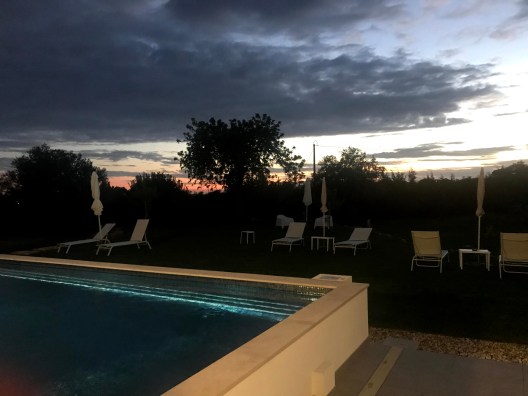
    Mercedes Country House in Faro — where the tasting took place.


    I need to feel relevant. Whether or not that will happen today, is yet to be seen.

    Working at the French Culinary Institute in New York City occasionally afforded me the opportunity to taste and evaluate dishes prior to a restaurant opening or before a new seasonal menu was released. Last week I received a call from Miguel, the owner of Mercedes Country House, about a new restaurant opening in downtown Faro. The name of the restaurant is Shiraz.

    Shiraz is owned by Mr. Thomas, born in Iran, lived in Germany for many years, and currently resides in Portugal. Mr. Thomas has a restaurant in Cascais and he recently purchased and remodeled a space in Faro. Miguel and Mr. Thomas are friends and Miguel suggested that the tasting take place at The Mercedes House where there are guests who know good food and there is plenty of parking. I’ve had Miguel’s cooking several times, Miguel knows food. Miguel insisted that I meet Mr. Thomas.

    I was happy to meet him because Faro does not have very many non-Portuguese restaurants. There have been a couple of new and trendy restaurants recently; it is obvious the landscape is changing. I imagine it has something to do with an influx of tourists from all over the world. It is obvious that people visiting Portugal love Portuguese food, especially the fresh fish, but variety is essential for vacationers. Shiraz will be an Asian restaurant; that’s a really good thing.

    I thought I would have an opportunity to interview Mr. Thomas, but he unfortunately did not get to sit down at the table until the end of the tasting and I did not think it would be fair or appropriate to monopolize his time. I’ll do a piece about him and the food at Shiraz after it opens.


    The Tasting

    Mr. Thomas’ curry is not a typical curry. Curry is usually thickened with cream, however, Mr. Thomas’ curry is thickened with onion. I’m pleased with any alternative to cream. His delicious curry is flavorful, but it does not overpower the fish. Mr. Thomas has not yet decided which fish he will feature with his famous curry sauce. By the way, I love that he prefers to be called Mr. Thomas.

    There were at least ten tasters sitting at one large table. Fish is a tricky dish to evaluate due to different likes and dislikes when it comes to texture and taste. Individuals usually have very strong opinions about the fish the prefer or dislike. What I found most interesting about this particular tasting panel, was the diversity of the panel; visitors from several countries were asked to participate. Early on in my tenure at the French Culinary Institute I met Julian Alonso a graduate of the school. He was the Chef de Cuisine at The Sea Grill at Rockefeller Center. He taught me that the fish I disliked, I disliked because when I ordered that fish, it had not been prepared properly. I sampled five or six different types of fish that day that I would have never ordered from the menu. Chef Julian’s dishes were all exquisite. One dish after another changed my way of thinking about fish. I went into this tasting keeping Julian’s words in mind.

    We started with mackerel and went on to taste, spider fish, sea bass, grouper and ended with prawns. All of the dishes were served with basmati rice and curry. The objective, with all things being equal, was which fish paired well with this particular curry sauce. It would be unfair to give away my favorite, however, one or two of the types of fish I sampled, did stand out.

    We were each asked to complete an evaluation form, rating each dish on a scale from one to ten, ten being the highest score. I must admit that all of my scores were high, save for one — no matter what anyone does to mackerel, I cannot bring myself to enjoy it.

    The dishes were paired with a delicious Portuguese Vinho Verde. The name Vinho Verde refers to the lush green landscape where the wine is produced.


    Shiraz

    We were not asked our opinion about the name of the restaurant, however, I will weigh in. What I like about the name is two things:  first, I love wine made from the Syrah grape (sometimes a blend), and second, the name conveys, albeit in a subtle way, that Iran was the inspiration for the restaurant. Having not spoken to Mr. Thomas about this matter, I should reveal that I am only speculating.

    Map of Shiraz, Fars Province, Iran

    Iran
    Legends of Syrah’s origins come from one of its homonyms, Shiraz. Because Shiraz, Capital of the Persian Empire (modern-day Iran), produced the well-known Shirazi wine, legends claim the Syrah grape originated in Shiraz and then was brought to Rhône (Wikipedia).


    The menu is, of course, extremely important when designing a restaurant, however, the name of a restaurant is equally as important. Give a restaurant a name people do not understand or cannot pronounce, and they will not come.


    Feeling Relevant

    The School of Management, Hospitality and Tourism has an impressive campus located close to the Ria Formosa in Faro. One of the offerings at the school is a highly regarded culinary program. I attended a beautiful event at the school and I had an opportunity to taste the food prepared by the students. It was my understanding that school was not in session, however, several students volunteered to prepare the sit-down, multi-course dinner. The food was terrible. And I mean all of it. It’s been over a year so my memory is not 100%, but I believe dessert was edible. I thought that because of my work in the culinary industry, I could help. I didn’t think it was appropriate to bring this up on the night of the event, so I waited.

    I wrote the the event organizer and shared my disappointment about the food. She informed me that she had already received numerous complaints. I asked her who I could speak to at the school about volunteering to help with the curriculum. She implied that I should contact the head of the program, but I probably would not get very far. Being bullheaded and persistent, I decided that I would give it a try. I wrote to the culinary department and after a long wait, I received a brief email telling me that the person I needed to speak to was on vacation and that my email would be forwarded to him. I was told that I would hear from him when he returned. Weeks went by and I heard nothing. I wrote several emails and no reply. I spoke to a couple of Portuguese residents of Faro about my frustration; they told me that they were not surprised. I was basically informed that people here were very proud and they do not welcome outside help. I believe there is an expat influence that is changing that. For now, I just have to accept that this school would rather not have me as a volunteer.

    I will be showing up at the hospital sometime in the next few weeks. It is my hope that they will welcome me as a patient relations volunteer; if not, I’ll move on to the next thing . . . until I feel relevant.

  • Letting Go Can Be Difficult

    It’s been a difficult week of reflection. I imagine some might say that every week in one’s life is difficult; however, I would argue that there are times in one’s life when thoughts are more negative, more self-critical, and harder to sort out. Sometimes the yin & the yang seem out of balance and it has more to do with your brain doing a number on you than anything else. Rebooting only works some of the time. Sample thoughts like:  am I enough? What do I want for my future? What role am I playing in somehow making the world better for others? These are all normal thoughts for those who think and have a conscience. For me, at least at this point in my life, what I choose to let go of versus what I hang onto, is taking up more thinking time than usual.

    I know that I write about “letting go” often. At different times in my life, letting go has been my biggest challenge. There are numerous reasons that this particular defense mechanism is important to me. When I have something weighing on my mind, it tends to be all consuming. I find it difficult to focus on other things in my life and it disrupts my sleep and interferes with my desire to be in the moment.

    Getting older has been a gift in a way, in that maturity has helped me put many things into perspective. Things such as what is most important in life and why hanging on to things or people we cannot change, is destructive. When you have a fair amount of success “letting go” of a thing, an idea or a person, it helps you to see how freeing the process can be.

    At one point in my life I was quite certain that I could never live outside of New York City. I could not imagine leaving the people and experiences I loved most. I forced myself to relocate by telling myself that I could always return to NYC if that’s what I truly wanted. Because most of us can adapt to almost anything, once I was in my new environment, I was able to see the benefits of being in that place. We tell ourselves that we’d miss certain “things” and that’s why we should remain. Then there is that other voice that tells you that if you leave, you are running away from something. In my case the theatre was keeping me in New York. I have always loved Broadway and could not imagine living far away from the Great White Way. In reality, even though I left New York almost seven years ago, I have returned to New York to attend the theatre every year. Now when I get tickets for a play, I am much more thoughtful about what I see and because I’m making a special trip, Broadway has become even more precious to me.

    [I could go off here about how Disneyfied Broadway has become; however, I think it’s best that I spare you the rant. It only forces you to be more selective about what you choose to see. Most things can be traced back to the almighty dollar.]

    Now that I am living much closer to London, I feel as if I get to enjoy a bit of both theatre meccas. The point is, when you care a great deal about something, it should not prevent you from letting go of something else; one does not preclude the other. There were of course factors tugging at me to remain in New York; I cannot same the same for Maine.

    People are more complicated and that presents greater challenges. I met an older woman here in the Algarve who was originally from Ireland. She lives about 30 minutes west of Faro. She’s worldly, smart, loves food, and we got along fairly well. At one point in our friendship I realized that she was putting me down quite a bit. It was subtle, but she would often be condescending or passive aggressive. She a tiny woman, however, she’d raise her voice to speak over me or she’d tell me that something I felt or vocalized, was nonsense. I decided that I did not have to tolerate such behavior just because she’s older. I spent a good deal of time on a letter explaining how I felt. I thought a letter would be more effective because she could read it and consider my words (I know a lot of people prefer in-person conversations, but I believe that particular method is sometimes better as a second step). In the letter, I was careful not to generalize and I was clear and kind. I told her that I cared about our friendship and that I was hoping she would consider changing the way she sometimes treated me. One has to be very careful not to use absolutes in these situations. She responded fairly quickly, however, she did not acknowledge the contents of the letter. She basically told me that she was leaving town and that we would speak when she returned. I accepted her email as a positive sign. I thought this would give her time to consider my words. Obviously, it goes both ways and I was willing to listen and alter my behavior as well.

    And then nothing happened.

    It’s been eight months and I am not caving. This is the letting go moment when I say to myself is this woman worth my time and consideration? I tried and failed. There are times in your life when you just have to walk away and cut your losses — sound a little harsh? I think it’s a defense mechanism I have developed over time. The former me would get all worked up, make an angry phone call or send an angry email. I would beat myself up for saying anything at all in the first place. Then at some point I decided that if in fact I was going to be true to myself, I would have to come clean and say something. Keep in mind that when you are living in a foreign country, there are a limited number of people who speak your language and truly understand your culture. This sort of empathy is important for social interaction. I do enjoy having people around I can share experiences with.

    Image result for truth quotes

    Journaling your feelings helps when putting situations and interactions into perspective. It provides the ability to step back and process.

    One of the things that I have started doing is to cultivate good relationships and show gratitude for those that are nurturing and positive. For example:  I have been in the process of getting a tooth implant for a year. There have been complications that are too boring and tedious to discuss here. Through it all, my dentist and her assistant, have been patient and supportive; I am beyond grateful that I found them. I’m a month away from getting the actual tooth, which I know will improve my life — chewing is essential. I have a visit today and I plan to bring flowers to both my dentist and her assistant. I’ve known them long enough now to know that they will not misinterpret this gesture. They will know that I am showing them my gratitude. Letting people know that they have had a positive impact on your life and that you do not take them for granted, is essential for building strong relationships. Replacing hurtful and toxic relationships with rich, fulfilling ones, helps in the letting go process. For some people it’s almost like getting over the loss of a pet, some people go right out and get another. It’s not something I personally can do, however, I do appreciate that for some people it is a way to let go.

    By the way, I am not advocating for simply dismissing people in your life. Communicating, giving people a second chance, making sure you did not misinterpret someone’s behavior or words, and being aware of your own behavior, is very important. Letting go should happen when all else fails and the level of toxicity or pain is hard to bare or out of balance.

    Practice, Practice, Practice

    At times the thought of walking away from a relationship is much too difficult to even consider. It might be a parent, a sibling, your boss, a long-term friend; you get the point. In a case like this, you might have to let go slowly. Putting distance between yourself and another can be a good first step. If you normally speak to someone daily, you can try skipping a call here and there. If you go out every Friday night, you can suggest cutting back due to schedule conflicts. This is not dishonest. There is nothing wrong with protecting someone else’s feelings or being kind. Some people have no sense of self and others cannot see what is right in front of them.

    What Happens When You Walk Away

    A friend once told me that when you walk away from someone or something, the shadow (memory) of that person or thing is left behind. This will have a lasting impact. She used a wart as an example:  if you have a wart on your hand for 20 years and you have that wart removed, your memory of that wart will be so strong it will feel as if it’s still there. If you choose to let go of a relationship, you will occasionally think about that person; in this way, you’re not totally letting go, but is it possible to completely erase someone from your mind and would you want to. If you believe as I do, that all of our life experiences and relationships are necessary in order to grow, then embracing that they were a part of your history and therefore, a part of who you are at this moment. It’s better to be grateful that you one, have the ability to learn from a person or thing and move on, and two, that our past leads us to the present.

    Grieving Loss

    Sometimes letting go of a person might be the best recourse; however, be prepared to grieve the loss. Even if the relationship was highly toxic, if it’s been a big part of your life for a long time, you will miss aspects of it:  routine, company, validation; whatever it might have been, you will lament the loss. Allow yourself the time to grieve and know that when it’s over, you will be far better off. Congratulate yourself for taking care of yourself and for enriching your own life.

    Side Bar:  I have been enjoying a new show on Netflix called Terrace House. It’s a reality show, however, what makes it different is that it takes place in Tokyo and you get a sense of Japanese youth and the culture. I find myself laughing a lot and wanting more. Check it out.

    https://www.imdb.com/title/tt7776244/

    A Kitchen Accident on Thursday

    Thursday evening I decided to have a big salad for dinner. It was a beautiful night and I wanted to eat out on the terrace facing the water. I opened a local red wine I had not tried before and I noticed the bottle seemed heavier than usual. I thought that maybe it was larger than the normal 750 ml and I did not think about it again. I poured a glass and put the bottle in the refrigerator on the side door. During the warmer months I refrigerate red wine so that it will last longer. When I’m drinking it, I take it out about 30 minutes prior to pouring so that it’s just a little cooler than room temperature.

    After dinner I decided to have another half glass instead of dessert. I opened the refrigerator to retrieve the bottle and the entire shelf went crashing down. There was wine everywhere; the walls, the cabinet doors, the refrigerator — everywhere. The cabinet doors had just been painted last week and I was concerned that the wine would stain the doors. I acted swiftly and cleaned the cabinets first. Next, when I started picking up the large pieces of glass I discovered that the bottle of wine was not larger, but thicker. This explained why it was so heavy. Two things happened to my new kitchen:  first, the bottle put a chip in the tile floor below the refrigerator and second, the refrigerator shelf cracked in six different places. The cleanup took me over an hour and I was sweating from head to toe. I walked into the living room, sat down and thought about the incident. It started with:  why did I have to put the bottle into the refrigerator? I was fully aware that this was about to become a “let’s beat the shit out of Chris” session. I decided to practice what I preach and to let it go. I showered, read a bit, and went to bed. I slept like a baby. My kitchen is no longer in pristine condition and that’s okay. It’s sort of like the first scratch on a new car; you just have to accept that it happened and move on.

    2b688f9e-0838-4d39-8e7a-13751439cfd1

    e2c5d226-9cf1-46d6-b672-812700da2cd0
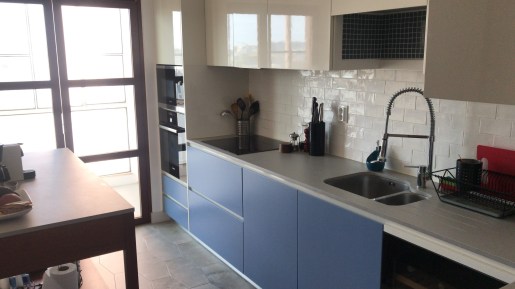
    My new urbano azul cabinet doors; they survived the crash without red wine stains.
  • Co-workers Pushing Your Buttons

    I hated several of my co-workers with a passion . . . no doubt they knew it.


    Now that I no longer have co-workers, it’s been easier to step back and examine their impact on my life . . . then and now.

    Keeping in mind that my thoughts are completely one sided and that time may have altered my perception, I believe that my personal experience with co-workers is fairly universal. I acknowledge that I played a part in the dynamics of these relationships. When money and power are entered into the equation — as they are in the workplace, people behave in certain predictable ways; and some unfortunate, despicable ways.


    The Leadership

    Setting the tone for office politics and co-worker relationships is essential. When you have a leader that plays favorites, gossips, and fraternizes, you’ve got a big problem. It gives everyone else permission to behave badly. In fact, I would go so far as to say that it encourages bad behavior. I have had supervisors who were exemplary leaders and one or two who were poor role models; I preferred the former.

    When a leader decides to fire people because he or she doesn’t like their smile, or the color of their socks, or the sound of their voice; this creates fear which in turn pits staff against one another. You have an atmosphere with a whole lot of anger, resentment and anxiety. When this person is the owner of the business, it’s almost impossible to change the environment for the better. When you have a leader who is working for an owner or a manager who is in a mid-management position, you can at least practice some sort of evaluation process which can lead to termination. Individuals who cause chaos in the office or pit people against one another should not be permitted to remain in the organization (even if they’re good at their jobs). Unfortunately, all too often, they are permitted to stay and make everyone miserable. I left my last workplace seven years ago and a couple of these people are still in the same positions; in one case the individual has even been promoted. I think it’s to the detriment of the organization and it validates my decision to resign.


    Jealousy

    Jealousy rears its ugly head way too often in the workplace. It can cause people to do some very hurtful things and be bad for business.

    • outright lie about workplace incidents
    • sabotage a co-worker(s)
    • leak sensitive information
    • force unwelcome policies
    • create secrecy
    • ruin joyful occasions
    • the use of a lot of sick time


    Rumors

    As a manager, I found dealing with the rumor mill to be one of the most difficult issues to tackle. People can be very cruel and unkind. My MO was to try to ignore it as much as possible. The problem is that perception is reality and a lot of people base their perceptions on gossip. When they’re hearing it, they’re not always aware that it’s gossip and they can, in turn, create a lot of problems.

    Rumors are spread for many different reasons. Sometimes a lie is told in order to prevent a promotion or to do irreparable damage to a co-worker’s reputation. The bad news is that even intelligent people sometimes get involved in this kind of foul play.

    Stopping a rumor in its tracks and speaking truth to a lie, is the way to proceed. If the rumor is true, it should be dealt with appropriately.


    How to Deal With Rumors in the Workplace

    Nine Ways to Get Rid of Workplace Gossip Immediately


    Stupidity

    Let’s face it, there is a lot of stupidity going around these days; in truth, since the beginning of time. Not the same as intelligence or a lack of intelligence; stupidity is one’s refusal to acknowledge truth when it’s right in front of their eyes. People make excuses for behaving badly and attempt to take down as many people as possible in the process.

    I worked with an African-American individual who cried racism whenever she didn’t get her way. She was a loud, angry, obnoxious person who thought she was entitled; I can’t tell you why she felt this way. She would complain to anyone who listened and she used human resources as her weapon. When you have someone who threatens litigation, it makes for a toxic and fractured work environment. Staff will leave rather than fight for their rights; this unfortunately, fuels the culprits ego and empowers them to continue to push their weight around. You can replace the claim of racism with sexism, ageism, sexual orientation, and other marginalized groups, and find individuals who use the threat of lawsuits and public exposure to get what they want. It’s a real shame because legitimate claims are either ignored or discounted, as managers spend their time dealing with false claims. This work environment is a cyclone of fear and mistrust, and everyone gets caught up in the storm.

    Side note:  I think it’s a very bad idea for human resources staff to report to the owner or president of a company. Loyalty and trust will be justifiably questioned by staff.

    scenic view of thunderstorm
    Photo by Amol Mande


    Ways to Rise Above and Thrive in a Bad Work Environment

    • Always have an exit plan. If you have a way out, it makes it easier to put up with a good deal of bullshit.
    • Document everything. If you’re ever wrongfully terminated or accused of false wrong-doing, documentation will come in handy.
    • Use every minute of your vacation time. Being a martyr and working when you should be refueling will only lead to worse conditions. Bad managers do not reward staff for working through their vacations, they take for granted and exploit in any way possible.
    • Take sick time when you need a break.
    • See a therapist. Find someone who will help you keep your sanity.
    • Leave when it’s time to go.

    Too often the person who resigns is viewed as someone who is either running away from hardship or escaping termination; it’s an ugly part of our culture. Self-preservation is a very important way to remain healthy and all that really matters is what you think of yourself. As I have said before, “What others think of you is none of your business.” Attributed to RuPaul and others.

    We are living in a time when our world leaders are creating chaotic and deplorable work environments and in some cases, living environments. This, unfortunately, empowers people to behave badly and then justify it. It feels like change has to take place before it will improve. Waiting it out seems to be our only option. Never give-up hope.

    Your thoughts?


  • Human Behavior is Complicated


    Studying human behavior has always been a fascinating pastime for me. I majored in sociology in college and the question was always:  how does the behavior of others apply to me and what am I going to do with a sociology degree?


    behaviour
    noun
    noun: behavior
    1. the way in which one acts or conducts oneself, especially towards others.
      “he will vouch for her good behaviour”
      synonyms: conduct, way of behaving, way of acting, deportmentbearingetiquetteMore

      • the way in which an animal or person behaves in response to a particular situation or stimulus.
        plural noun: behaviours; plural noun: behaviors
        “the feeding behaviour of predators”


    I admittedly spend too much time trying to figure people out; individuals and groups alike. I make the same mistake over and over again; I usually believe people will react the way I do. We all know how ridiculous that assumption is. We’re raised differently, we learn from different people and we all have a different moral compass. If you think you’re more trustworthy or “right” than the next guy, that’s a huge mistake and it’s bound to get you into trouble.


    Family

    Whenever I write about my family, I am concerned that I will alienate or offend someone I care deeply about. So once again, I will not mention names. Except this one time:  My niece Nicole is close to giving birth to twins; very close. This is a very positive “family” happening and from where I’m sitting it appears that all of the people around her are excited for her. This will of course change the dynamic of Nicole’s immediate family and I consider myself a part of Nicole’s immediate family. Because of Nicole’s positive energy and desire to be a mother, the behavior I am observing and the words I have been hearing, have been upbeat and anxious anticipation, “When will they come, what will they be like, and how what sort of mother will I be?”

    I am looking forward to the joy this boy and girl will bring to the family. My sister and her husband will be wonderfully loving grandparents, my nephew will be a terrific uncle and my niece will be an exceptional mother. Observing all of this from Portugal will be joyful and sad; sad because I am thousands of miles away. Thanks to modern technology I will be able to have frequent contact and I will be meeting my great niece and nephew in Baltimore this coming December. Although this experience is not new for me, never having had my own children has made having lots of nieces and nephews, very special.

    The behavior of family members mattered more to me when I was closer in proximity; moving overseas has helped me put their love into perspective. It sort of always goes back to how being human makes us all different and trying to appreciate where the other person is coming from.


    Friends

    My close friends are all very different and I love that about them. I have not heard one of my friends disparage another one of my friends; this is important to me. They each know how much I love them and they are also aware of how much I love and admire my other friends. It’s been very important to share my appreciation for them and to show them how grateful I am to have them in my life. What I have observed in my friends is respect, admiration and loyalty. I’m not sure it would be fair or reasonable to ask for anything more than that.

    I have also learned that when a friend behaves in a way that disturbs me, it is essential to share my feelings as soon after the incident as possible; waiting is unfair. Friends deserve clear communication and a great deal of consideration. Remember to listen. Also, remember to be loving and forgiving.


    Strangers

    When I observe strangers, it is usually through a non-judgmental lens, unless they do one of the following:

    • fail to clean-up their dog’s poop
    • behave cruelly to animals
    • verbally or physically abuse their partner/child/friend in public
    • speak loudly on their cell phone
    • act extremely intoxicated or tripping out on one drug or another
    • display a weapon in a threatening manner
    • publicly display signs of racism, prejudice, anti-semitism, anti-homosexuality, anti-individuality, anti-freedom, hate or disregard for humanity.


    Internal Dialogue

    Here are some of the things I say to myself when I am observing human behavior:

    • She talks and talks and talks and doesn’t listen to a word anyone else is saying.
    • If he leaves that pile of shit on the ground, I am saying something.
    • Why does she wait until the moment she is getting on the bus to take her money out to pay? She’s been standing at the bus stop for 20 minutes.
    • Who does he or she think they are?
    • Why doesn’t he just stay home?
    • Where does this person come from?
    • How can I make it stop?
    • I need to get away from here.


    Why I Need to Stop 

    Just observing human behavior is fun; however, attempting to figure out why people say or do the things they say or do, is just plain unhealthy. We are so often wrong for the simple reason that we cannot be inside someone else’s head; it’s just not possible. Sure you may know someone a long time and their behavior may be somewhat predictable, but people do often surprise us and sometimes the surprise is positive.

    What I’d like to more often, is ask why. Why are you raising your voice? Why are you pointing your finger at me? Why are you angry right now? I think if I ask because I’m genuinely interested, the response will enlightening. It’s important to not be patronizing or passive aggressive.

    “Rob, I’m not sure what’s happening today, but you seem upset about something; can you tell me about it?”

    “Trish, I’m not sure you whether or not you realize this, but your voice is louder than it usually is right now. What’s up?”

    “Mike, some of the words you’re using are hurtful. I wanted to let you know that I’m confused about why you are saying these things to me.”

    “Sue, what am I doing right now that is making you angry? I promise to just listen and hear you.”


  • South Wales in August


    Not everything in life can be explained. Why I have always had a desire to see Wales is not something I can easily put into words. Not unlike my father’s birthplace in Italy, I have dangled Wales in the corners of my mind for decades; like a treat I was savoring for another day.

    Moving to Portugal made Wales an easily attainable adventure and I was ready.

    I decided that August would be a good month for my getaway; it’s hot in Faro and I thought it might be cooler in Wales. I was hoping for some rain since I was certain it would be quite awhile before we had any rain to speak of in southern Portugal. I looked at airlines and Flybe had an inexpensive flight to Cardiff, the capital, in both directions. I hate to be negative and bitter, but I’m fairly certain I will not be flying Flybe again — they nickel and dime you, charging you for your seat and everything else that is not part of the aircraft. They informed me at check-in that my bag was larger than the regulation size and I had to pay 98 Euros (total both ways) to check it. I bought this particular “small” bag because I thought I had learned my lesson after flying RyanAir. What pisses me off more than anything, is that airlines continue to report record profits and they never lower their prices. I guess that’s what’s called capitalism and we have no choice but to just watch the airline CEOs make millions off the backs of the average Joe and Josephine.

    Back to Wales. I decided on an Airbnb for this trip, thinking I could have breakfast and lunch in my apartment. I was able to rent a one bedroom .5 miles from the city. It was a modern flat with a queen size bed and an owner who was very hospitable. Mike provided great tips for dining and excursions. The place cost me less than $100 a night and a hotel room would have been twice that.

    My friends in Cardiff told me that the weather would have been better in June, however, I did have two beautiful days and I felt fortunate.

    The apartment in case you’re interested (click for details).

    My flight was delayed nearly two hours forcing me to take a taxi to the apartment (it was after midnight and the city bus wasn’t running and I couldn’t find an Uber nearby). Fortunately, the apartment had a lockbox so I didn’t have to wake the owner. Thank goodness for cell phone flashlights or I’m not sure how I would have gotten in. It was 1:30 a.m. before I got to go to bed on my first of four nights. Once again, I will never fly Flybe again if I can help it.

    After a solid seven hours sleep, I ventured out for coffee and a bite to eat. Mike told me about a Portuguese bakery just around the corner from the Airbnb. I was in a neighborhood called Adamsdown (see below) and the bakery was Nata & Co on Clifton Street. The coffee and pastries were excellent and I felt as if I had never left home.

    History of Adamsdown (history everywhere you turn in Wales)

    In mediaeval times, Adamsdown lay just outside the east walls of Cardiff and was owned by the lords of Glamorgan. The area may be named after an Adam Kygnot, a porter at Cardiff Castle around 1330 AD. The Welsh name Waunadda derives from (g)waun (a heath or down) and the personal name Adda (Adam). This name appears to be a recent creation, and there is no evidence that Adam Kygnot was ever called ‘Adda’. Y Sblot Uchafis the Welsh name of Upper Splott, a farm that stood on the site of the later Great Eastern Hotel (demolished 2009) on the corner of Sun Street and Metal Street (the very spot where my Airbnb was located.)

    According to an 1824 map, Adamsdown was largely a 270-acre (1.1 km2) farm. A replacement for a prison which was located on St Mary Street opened in the area in 1832, and a cemetery in 1848. In the following year, an outbreak of cholera affected the area. As the cemetery became full, it was converted into a park. In 1883 the “South Wales and Mounmouthsire Infirmary” was opened at a cost of £23,000. Many were refused from the hospital, such as those with infectious diseases and women in the advanced stages of pregnancy. In 1923, the hospital became the Cardiff Royal Infirmary. Source:  Wikipedia.


    My new friend Rachel was picking me up at 2:00 p.m. so I decided to stay close to my apartment. Clifton street had some great thrift shops and a good deal of local color. I was able to buy two great novels for under three quid (slang for one pound sterling). I also found a fully stocked grocery store and was able to shop for the apartment; beer I never drank and snacks.


    img_4411-1
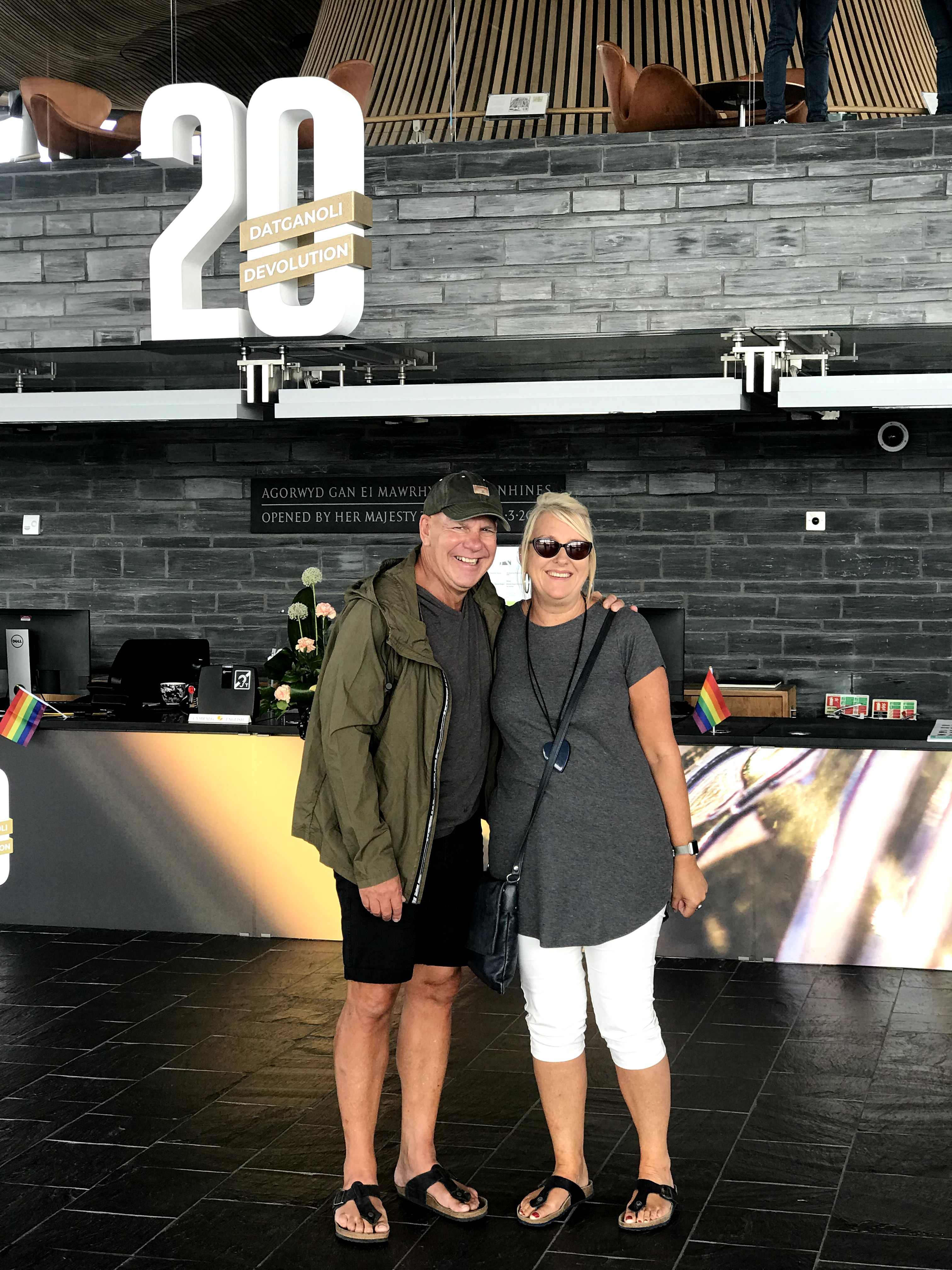
    Rachel and I in our matching Birkenstocks; same color even and totally by accident. She’s a pip.

    Rachel pulled up to retrieve me at exactly 2:00 p.m. and off we went on our adventure. I only met Rachel a few weeks ago sitting by a pool in Albufeira. Cardiff had already been booked and she was happy to show me around and cook me dinner. This is why they say there is no such thing as a coincidence.


    I spent my second day just walking around Cardiff, seeing the sights, and enjoying the weather (75 degrees fahrenheit).

    My last full day in Cardiff was meant to be an organized tour of the Gower Peninsula. The tour was cancelled because there were not enough people signed up for it. It would have been an eight hour tour because four hours would be traveling to and from. I think it would have been cancelled due to the weather anyway. It was a rainy, low visibility day.

    [Gower or the Gower Peninsula is in South Wales. It projects westwards into the Bristol Channel and is the most westerly part of the historic county of Glamorgan. In 1956, Gower became the first area in the United Kingdom to be designated an Area of Outstanding Natural Beauty. Wikipedia]gower peninsula fullday south wales tour from cardiff

    I guess it just wasn’t meant to be this time. I had just met my new friend Rachel’s husband Mark at their place for dinner the day after I arrived. Mark felt that by staying in Cardiff, I wasn’t getting a true sense of what Wales is like. Cardiff is a fairly modern city and in many ways, it resembles many other cities. He offered to take me to Brecon and the hillside about 45 minutes from Cardiff. Let’s face it, a private tour is always better than a group tour. Sometimes I believe I was just born lucky. Despite the poor weather, we drove through beautiful hills and quaint towns and we got to walk around a bit. And the best part was stopping for a truly authentic pub lunch. I ordered fried fish and I couldn’t have been happier. Mark shared a good deal of Welsh history throughout the day and I got to talk American politics — a perfect day.


    Places that I got to visit in Cardiff and enjoyed immensely:

    Cardiff Bay

    The Port of Cardiff

    Cardiff Market

    The National Assembly for Wales

    Caerphilly and Caerphilly Castle (Rachel gifted me some Caerphilly cheese which I brought home. It’s even better than cheddar).

    Penarth and the Penarth Marina

    Bute’s Castle

    National Museum Cardiff (museums are always free in Wales)

    Many Arcades in Cardiff Centre

    The Rainbow Casino (should have stayed away)

    City Hall

    Cardiff Castle (I believe I visited four castles — all amazing)


    There was more to see, but I only had three full days on this trip. It’s a very walkable city and the people are a pleasure to talk to. It was also a fairly diverse city; certainly rich in history. I will return to Cardiff someday.


    My two favorite restaurants in Cardiff Centre:

    Thai & Asian Delish Café

    This Thai food booth at The Central Market blew me away. I had the Thai coconut milk and chicken soup; creamy, smooth, spicy and delicious.


    Elgano Italian Restaurant 

    I’ve had a lot of pasta’s in my life and I have to say this one ranks in the top 10 (see below). I also had mussels in a garlic and tomato sauce and they were very disappointing; flavorless in fact. The owners were a husband and wife team. He was rushing around, acting very pretentious and she was sincere. I watched the husband spill wine on a customer because he was going too fast and not paying attention — you can tell I didn’t like him. They were, however, from Italy and the food was authentic. Maybe the husband was in the kitchen and the waiter was just some random Italian guy; I don’t know for sure. Click on the name of the restaurant above if you plan on going or you’re just curious.

    img_4462
    Tagliatelle with shrimp, radicchio & a creamy spicy tomato sauce
  • Finding the Right Balance/When Loneliness Strikes/An Act of Kindness — Reblog

    man walking on train rail
    Photo by Chinmay Singh on Pexels.com


    Hard to imagine doing anything these days without feeling some guilt. An overwhelming number of articles, television shows, religious authorities, relatives and so on, telling us what’s good for us; who knows what’s best anymore. Truth be known, most of us know what’s good for us. We don’t need a know-it-all “expert” to share their opinion on how to live. Lately, I find myself almost offended by every Tom, Dick or Harry who tries to influence my next thought.

    And it’s not just experts weighing-in. Social media are awash with opinionated people who get angry when you challenge their opinion; I’m not making this about politics mind you; I’m talking about every day thoughts, opinions or advice. It’s terrific that people are willing to share their good fortune or experiences, but one needs to accept that not everyone cares or wants to know. As a blogger, I think about this every day. I’m fully aware that a reader can skip over a line, disagree with a thought, or challenge an opinion. In fact, I welcome it. Like anything else, there are appropriate boundaries and we’re all guilty of occasionally crossing them. The art of discourse is a lost art and I for one would like to champion its return.

    You have to find a balance between what you listen to, who you listen to, and listening to the voice within.


    Loneliness

    As trite as it sounds, I enjoy my own company. I’ve always secretly been critical of people who claim to be lonely — I just didn’t relate. Truth is, I woke up at 5:00 a.m. this morning feeling very much alone. The difference is that the Atlantic Ocean lies between me and all the people I love. I didn’t imagine this move would be any different than any I have made in the past, but yes, it is far from the same. When you can’t just jump in your car and see someone in a few short hours, that’s a huge difference. The feeling didn’t last long mind you. I thought about a number of friends and family members who will be visiting soon and I felt better. I also thought about how I take those I care about for granted and of course, I now have a better understanding of what it’s like to be alone.

    Lots of lessons here and many ways to cope. Revealing these thoughts to you is a first step. When friends and family told me that I was brave to make a move like this, I shrugged it off. I still don’t consider it brave, but now I know what they meant. So the next step is to search for meaning. I have been trying to protect myself from feeling love, empathy and sorrow. If I live in the moment and fully experience these feelings, what will they teach me and am I ready to learn?

    Here’s what I know:

    1. Loneliness is temporary.
    2. There is truth and meaning in the exploration of our feelings.
    3. Strangers can help fill a void.
    4. Memories are powerful.
    5. Loss of any kind hurts.
    6. Accepting your truth is to be fully aware of who you are.
    7. You may not always like what you learn, but you have to forgive and embrace.
    8. You have to put yourself out there.
    9. Be prepared for change.
    10. Books can be delicious company.

    Prologue:

    I wrote this piece a few hours ago and decided that a cloudy, muggy day is a great day for the mercado (market). I walked in and the first face I saw was Myriam’s. I met Myriam my first week in Faro. She was born in Venuzuala, but she has lived in the States and still has family there. In fact, she just returned from visiting her daughter in Miami. Myriam lives about 30 miles away in Tavira and she has not been in Portugal very long. She manages a Brazilian owned coffee shop in the Mercado — great coffee by the way. Her warmth and smile were what I needed today, but what she shared with me, I needed even more:

    Myriam asked me how I am adjusting to life here in Portugal and I told her what I was feeling this morning. She said, “I want you to read what I posted on Facebook this morning.” Reception is bad at the mercado and we both just about gave up on logging onto to Facebook and then this appeared on her home page:

    La soledad espeligrosa y muy adictiva. Una vez que te das cuenta de cuánta paz hay en ella, no querrás lidiar con las personas.

    – – Paulo Coelho (click for wikipedia biography)


    Translation:

    Lonliness is very addictive. Once you realize how much peace there is in it, you will not want to deal with people.

    Me:  Enough said.


    4e5e1028-a246-41c9-a4a3-0e00db30457f
    Friday on the beach with a good book and the sound of the ocean.


    When you’re looking for reasons to be grateful and there it is, staring you right in the face:

    As is to be expected . . . I’ve been second guessing my move to Portugal. I don’t mean that I lie awake at night regretting my move or wondering, “What did I do?” What I mean is that this is still very new (10 weeks) and I sometimes ponder if this huge change was the right thing to do. I think it’s perfectly natural to wonder and then this happened:

    I bought a piece of artwork that needs framing and I asked a friend here if he knew of a frame shop. Funny thing here in the Algarve, when you type “frame shop nearby” into Google, it only lists a select few options. I’m not sure I understand why, but perhaps that will be another blog. Of course Pedro knew of a place, Pedro always knows. He didn’t know the name of the shop, but he pulled out a map and pointed to where it was. The smart thing to do would have been to take a picture of the map; however, I am not a Millennial (not by a long stretch) and so I often forget that I have that option — there is a probably an app that will link the map location with the type of shop and tell you the name of the shop, but alas, I wouldn’t know how to find that app.

    I did, however, set out to find the frame shop. I got the general vicinity right (I could feel it) but after 15 minutes of going back and forth on the same three streets I finally gave up and went into a hair salon to ask for directions. The owner knew instantly that I was not a customer (stop laughing, it’s not that funny). I asked her if she spoke English and like most Portuguese people, she responded, “A little.” I joke about this because most people hear will respond that way and then speak beautiful English. I’m not yet at a place in my studies where I can even attempt to have a conversation in Portuguese. I asked her if she knew where the frame shop was and she seemed disappointed. Then she shouted to someone in the back room of the shop. A young woman stepped out and asked me what I was looking for. I told her and she said, “Come with me.” At this point I thought we’d step outside and she would point toward the shop. That is not what happened, instead, she crossed the street (I followed close behind sort of amazed) and then she crossed a second street (I was baffled), then she turned left and then right and there we stood in front of the frame shop.

    As I said, earlier, I have been daydreaming about life back in the States; however, today I realized that I am home. I’m not sure I could be living in a friendlier, more welcoming place. A small act of kindness was all I needed for a lot of reassurance.

    As my friend John always tells me, “Palms up to the universe.”

  • The Power of Your Smile

    “Always wear a smile because you never know who is watching.” Gracie Gold


    I want to smile more. I do. One would think that this would be an easy goal, but trust me, if you’re not inclined to smile, deciding to do so, just like that, is a difficult objective. I was born cynical, but coming up in my world, how could I not be. I also believe this is one of those nature/nurture arguments. Was I cynical because of my genetic makeup or did growing up in a tortured household make me cynical. For the purpose of this piece, let’s call it a draw and say that both factors are the cause. The point is, I have to work at smiling and how do you get to Carnegie Hall? Practice, practice, practice.

    “Love yourself for who you are, and trust me, if you are happy from within, you are the most beautiful person, and your smile is your best asset.” Ileana D’Cruz

    Some Ways/Places to Practice Smiling

    • Tell yourself to smile every morning. You can do it when you’re brushing your teeth. It won’t take any more time out of your busy day. Soon it will be as routine as brushing; you won’t even think about it.
    • Add a little caveat to practicing your smile:  make it so that you cannot smile unless you add something you’re grateful for. For example:  this morning, before I brushed my teeth, I thought about how grateful I was that I slept well and then I smiled.
    • Practice while you’re doing something mundane — like when you’re on the treadmill at the gym or while you’re riding in a bus or on the subway.
    •  Look straight into a mirror and keep smiling.
    • Practice with a friend or family member. Let them tell you what they think of your smile and accept the feedback. Is it genuine? Too broad? Too big?


    Be Your Own Motivator

    I have a friend whom I met at a gym in Portland, Maine. He was struggling on an abdominal machine near where I was working out. He saw me watching him and asked me if I knew how to use the machine. I hopped on and did a few reps (gym lingo for repetitions just to show you how cool I can be). Chomba is from Zambia, he studied in Europe, he’s in his 20s and he’s quite a specimen; naturally I was pleased to show him how to use the machine correctly. Like any normal man, I preened and walked away triumphant. A few days later I saw him using the same machine and he was smiling ear-to-ear. Honestly, Chomba has the most genuine and beautiful smile I have ever seen. I noticed him using the very same machine on a regular basis. I finally approached him and asked him if he used any other equipment at the gym. He shared a big laugh and thanked me for showing him how to use the machine. I said, “Chomba, because I always see you on this ab machine, I am naming it the Chomba Machine.” From then on I when I would see him I would ask if he had done his ab reps on the Chomba machine that day.

    Weeks went by of just saying hello in the gym and I thought it was time to become friends outside of Planet Fitness. I approached him and invited him over to my place for dinner. I was having a dinner party and I thought he’d be a great addition to my guest list. Chomba was delighted and came to my place with a nice bottle of wine. Everyone at party fell in love with him. He’s the kind of person who lights up the room and makes everyone feel special. That night I learned that he was a motivator working out of Boston. His firm was hired by companies to motivate their staff (Chomba if I’m getting this all wrong I apologize). What I loved more than anything is that he did not boast about his work or his life. We had to poke and pry before he came clean. Chomba is a modest fella. By the way, Chomba models now and always stays in touch. I’m grateful for his candor, his loyalty and his beautiful smile.

    What Chomba has taught me is invaluable. Essentially, you can be your own motivator. You can do what he does, but in your own head. You can get yourself charged-up and energized whenever you feel yourself needing a little boost.


    Experiment

    Having been a sociology student in college, I often love to go back to my roots and do human interaction (behavior) experiments. I like to occasionally spend the day smiling all day just to see how people respond to it. I also enjoy seeing if it affects my mood.

    I have to say that I get pretty amazing results:

    • People almost always smile back.
    • It sometimes feels like you’re waking someone up and suddenly they seem to come alive.
    • It makes me feel lighter.
    • The results make me want to do it more often.
    • Sometimes it makes strangers laugh; especially when I smile really big. I’m thinking, they must think I’m crazy, but who cares.
    • There is a reason for the saying “A smile goes a long way.”
    • I am in the middle of a very frustrating experience with an upgrade to my apartment. The person responsible for getting the work done has been slacking off and it’s sort of driving me crazy. The project began 14 months ago. I decided to give him an ultimatum knowing that he might walk away from the job. Instead, when I saw him I smiled. It appears that is not what he expected and I believe he may be close to finishing the job. Yesterday, I received a call from a man who will hopefully complete the job this week.


    Current Mood

    One of the interesting things about blogging is how your mood and thoughts change as you work through a particular thread of thoughts. I woke today in a non-smiling mood. You may relate to what I’m feeling, except that I don’t quite know what I am feeling. What I do know, is that I don’t feel like smiling. I had an interaction yesterday that was troubling and it’s still on my mind. I’m pissed to put it bluntly.

    I am going to work through these feelings and thoughts by forcing a smile and see where it takes me . . .

    The next day:  the left home for a bed & breakfast about 90 minutes away. Sometimes it helps to be away from your familiar environment. I found myself smiling just as soon as I boarded the train.


    Smiling is one of those things you can do to brighten your day and/or someone else’s day, and it cost nothing! Nada! Zip! Zero cents! In fact, studies have shown that it’s good for you too.

    The act of smiling activates neural messaging that benefits your health and happiness. … The feel-good neurotransmitters — dopamine, endorphins and serotonin — are all released when a smile flashes across your face as well (4). This not only relaxes your body, but it can also lower your heart rate and blood pressure.Jun 25, 2012


     There’s Magic in Your Smile


    img_4342
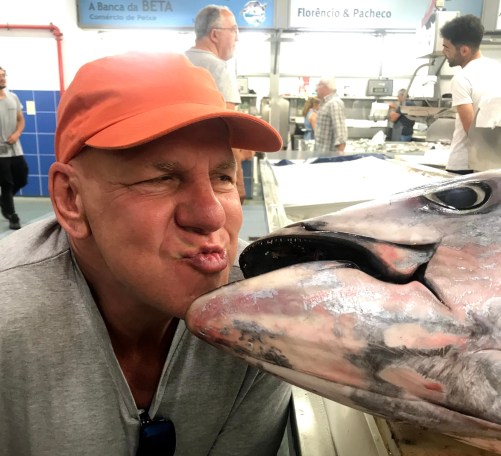
    Definitely more of a kiss than a smile, but we’re both happy 🙂
  • Dying With Dignity

    monochrome photo of statue
    Photo by Alain Frechette on Pexels.com

    There has been a great deal written about euthanasia; the dying process, survivors, and the law. Society has made tremendous progress with more states and countries passing laws that give individuals the right to decide when to die. When I was a teenager I saw a film titled Soylent Green (1973), and although the premise was disgusting (humans turned into food), it had a profound affect on me. In the film, when it was time for people to die, they were placed horizontally on a comfortable bed where filmed images of nature played all around them and soothing music could be heard in the background. I believe they were given a pill and soon after, they would gently fall asleep and die peacefully.

    I wondered why this was not an option for all of us at that time and I continue to feel strongly that we all have a right to choose when and how we wish to die. Strictly my opinion and you certainly do not have to agree. Again, it’s about the freedom to choose.

    Euthanasia is the termination of a very sick person’s life in order to relieve them of their suffering. A person who undergoes euthanasia usually has an incurable condition. But there are other instances where some people want their life to be ended.
    I have twice in my life been asked to assist individuals in dying. On both occasions I found a way to help without actually doing the deed. Hospice is a true gift and certainly an option when an individual is nearing the end of life. If you’ve never been on morphine, trust me, the feeling of euphoria is ever present. It provides a way to see death through peacefully. However, the ability to walk, drive, or travel by boat or plane to a place of your choosing, where you can be assisted in choosing precisely when your life should end, is hopefully becoming a reality in more places. There are now eight states in the United States where assisted suicide is legal; Oregon was as early adopter and most recently the state of Maine made it legal. It’s sort of like the legalization of marijuana, slow and steady.
    There are also many countries that have legalized assisted suicide:  Canada, Belgium, the Netherlands and Switzerland, to name a few. I have started to think about where I would want to go if I knew that I had only a short time left and that I might be a burden to those who love; a game changer for me. I do not want anyone to ever have to change my diaper. I know there are a few people in my life who would tell me that they would gladly do it; however, whether they would do it or not is irrelevant — if I can help it, it’s not happening. Because I have not travelled everywhere in the world (so much of the world to see while I am healthy), at this point I would probably travel to Switzerland for assistance. The natural beauty of the country and the gentleness of the people, would make it a more beautiful experience for me. And yes, I do see the end of one’s life as a beautiful thing. Not a tragic or untimely death;  I mean the point at which one becomes at peace with the knowledge that death is inevitable and part of the life cycle.
    So why does this topic make so many people uncomfortable? If someone you love is dying and they want to discuss assisted suicide with you, you could show them how much you truly care for them by listening and being open to this option. Here I go “shoulding” on you. Obviously, if you can’t handle the topic, you should not engage. On the other hand, attempting to talk someone out of it seems selfish to me.
    I’ve already planted a couple of seeds with people I am close with, just in case it ever comes to this. I will seek support from those I know will be there for me. I would probably not share it with those I believe would judge me or try to talk me out of it.
    Reading and Resources:
    I will be sure to consider a more upbeat topic for next week, although, I am close to taking a few weeks off.


  • Living With a Lie

    “There are only two things. Truth and lies. Truth is indivisible, hence it cannot recognize itself; anyone who wants to recognize it has to be a lie.” Franz Kafka

    My mother’s lies taught me two things:  First and most harmful, it was acceptable to lie, and second, secrets are impossible to keep.

    I had a beautiful half-sister who died a horrible premature death several years ago; she was in her mid-forties. In fact, it was her birthday a couple of days ago and it was the anniversary of my brother Anthony’s death. My sister Grace found him with a needle in his arm on her birthday. She was already far gone by then and I’m certain, finding her (our) brother lifeless in her own home, must have sealed her fate.

    No photo description available.
    Gasha to my left

    My sister Grace or Gasha (the way we spelled it), as she was known to close family, was a troubled child. She wore thick glasses and was labeled “four eyes” by her siblings and peers. We also called her monkey because of her button nose; kids can be mean and her brothers and sisters were the cruelest of all. I am not claiming innocence; in fact, I may have been the worst culprit. Perhaps it was the secret I held onto that drove me to cruelty.

    My parents argued a lot; in fact, they argued night and day. My father would come home from work at midnight and my mother would dig in her hateful claws. Having been exposed to this behavior early on, I worked hard to tune them out and fantasize about a quieter world that I knew existed elsewhere. My memory of their relentless rage goes back to pre-school and a time when I was too young to understand the complicated world of adult anger. One particular memory is vivid because it involved a lie I did not understand at the time; I may have been five or six years old.

    Many angry words were exchanged during one very loud shouting match and most of those words were as difficult to comprehend as a foreign language. For some reason I held onto something my father said, “Grace is not my child.” At the time I thought it was odd for my father to say such a thing and so, I dismissed them from my thoughts. Every so often I found myself daydreaming and reflecting on these words. As I grew older and more inquisitive, I wondered why my father said this to my mother. I looked at my sister differently because of what my father said. I naturally wondered who her father might be, if it were not my father. I was not aware of an affair my mother had with her first husband while she was married to my father.

    When I turned nine, there was a lot going on around me; my only living grandparent passed, my mother was divorcing my father and marrying my stepfather, and I was repressing my sexuality (I remember having some strong feelings toward one of my mother’s male friends). My mom and I would occasionally spend quality alone time together — rare because she had seven children. On one of these occasions, I decided I would ask her about Gasha. My mother had a way of drawing me in as a close confidant and then shoving me away. I can’t blame alcohol because she wasn’t a drunk, but her father was an alcoholic and physically abusive; perhaps it was his influence. As a child I longed for the kind of closeness where you felt honest love and affection — not likely to get it from my mother, but I never stopped trying.

    We were sitting on her bed watching an old black & white film and she was running her fingers through my hair. I may have been as happy at that moment as I would ever be with my mom.

    I looked up at her and said, “Ma, who is Gasha’s father?”

    My mother pushed me to the edge of the bed and said, “Where do you get these ideas?”

    I told her that I had overheard an argument she had with my father a few years earlier and she told me that I was imagining things.

    “Who would Gasha’s father be if it wasn’t your father? Honestly Chris, I worry about you.”

    I wanted to believe my mother, so I let it go . . . until a few years later when this happened:

    I was having dinner with my father at the restaurant where he worked. Our meals were very special to me and we always spoke openly and earnestly. I’m pretty sure I was in my teens at this point. I had accidentally seen my parents marriage license and came to learn that my mother and father didn’t marry until I was three years old. I’m not sure why, but it didn’t bother me. My dad told me that they couldn’t marry because my mother’s first husband was in prison and there was a law about divorce and incarceration back then. He said that they married as soon as they legally could. I shrugged and decided this would be a good time to ask about Gasha. I sort of tricked my dad and acted like I knew for certain that Gasha was not his biological daughter.

    When I asked him who Gasha’s father was he said, “Joe is her father, but I adopted her and so she’s my daughter now. How did you know about this? Did your mother tell you?”

    I shared that I had overheard an argument between the two of them when I was a kid and he grabbed my face and squeezed my cheeks; something he did to show affection. He hardly ever said anything negative about my mother and I wish I could say the reverse were true.

    When I asked him how she ended up with Joe while married to him, he said, “Your mother has always been a bit wild.”

    Truer words had never been spoken. Now that I knew my suspicions about Gasha were true, I had to consider what this meant for my relationship with her, how I felt about my mother lying to me, and whether or not I should share the truth with Gasha and our siblings. I knew early on that it would not be fair to share the truth with her. It was my mother’s place to tell her the truth. I was tormented by the lie. I did not approve of my mother’s infidelity and I could not understand why she denied the truth all those years ago. In my mind, I could never truly trust my mother again — in truth, I doubted her always. I’m also certain that I felt betrayed by my mother and it has had an affect on every loving relationship in my life.

    My mother did eventually tell Gasha who her biological father was. I’m not sure when or where it happened. My brothers and sisters found out at some point as well. It seemed to me at the time that no one cared about the indiscretion or the lie. I questioned my own reaction to it:  had I made too much of it? Did it really matter? As an older adult I am obviously still questioning the lies I faced as a child and young adult — there were many others.

    I recall often looking at Gasha and wondering who she resembled. When she would behave a certain way that was odd to me, I would explain it by considering who her father was or was not. Gasha had a severe eating disorder and made several bad choices in her life. She was angry, she isolated herself from those who cared about her, she refused to acknowledge her disorder, and she trusted no one. I cannot help but wonder if the knowledge that she was conceived during a torrid affair, had had a huge impact on her life and her ability to cope. Knowing her biological father was willing to allow my father to adopt her, must have tormented Gasha throughout her life; her self-worth was shattered.

    My mother had a very complicated relationship with her and Gasha was resentful of the way she saw my mother treating the rest of us; she seemed to always feel slighted. I was aware of both the way she was treated and the way Gasha perceived it. I had conflicting feelings about my sister. There was a part of me that believed she didn’t belong and I’m not proud of those feelings. At the same time, I felt sorry for her.

    Gasha’s downward spiral was difficult for me to watch. She married trailer park trash and she had a child with him. Freddie shot himself in the head early on in their marriage. I remember visiting her in Knoxville, Tennessee and thinking that there was hope that she’d come out on top of all the drama in her life. Unfortunately, I was wrong. Bulimia took hold of my sister in her early 20s and never let go. All four of my mother’s daughters suffered from some sort of eating disorder as a result of my mother’s obsession with weight. Gasha lived in complete denial — the disease and the consequences of starving one’s body of nutrients destroyed her life. Her two children suffered the most; watching her abuse herself on a daily basis, had to be impossible to observe. Out of respect for my niece and nephew, I will refrain from commenting on their current lives.

    The question is, was it the lie that destroyed Gasha’s life or was it her personality and the circumstances of her illness? I guess we’ll never know for sure. What we do know is that shielding her from the truth all of those years was not productive or right. If her biological father had stepped up and assumed his role asher father, might she have been stronger and felt more loved? I have to believe she would have embraced her father and adjusted to her circumstances. After all her two oldest sisters had the same biological father. But after being adopted by my father, Gasha, was instead forced into a situation she did not ask to be in and was prevented from being with a man she might have loved. I’m not a psychologist, however, I am fairly certain that Gasha was thrust into a situation that would have caused anyone pain and anxiety. It was a lot for a young person to take on and in truth, she had to endure the ramifications of this terrible lie, on her own. It’s a small miracle she was even with us into her forties.

    When faced with the reality of a difficult truth or keeping a secret, always go with the truth. As hard as it is to share that secret and cope with its consequences, that reality is far better than living a lie.


    “When you check your own mind properly, you stop blaming others for your problems.”

    Thubten Yeshe