I Thought it Was the Scotch She Wanted

17 years old, naive and eager to please. Pimping myself out on the streets of Brooklyn for tips and a piece of pie.

Before you judge me, read my story. I claimed to be 18 years old, but I’m pretty certain Mr. Park knew I was lying. Back in the 70s you could sell and drink liquor at age 18. Back in the 70s there were a lot of things I could do that I cannot do now. I wasn’t quite 18, but I would be soon enough and I wanted the job badly. I altered my baptismal certificate by changing 1959 to 1958. Desperate measures . . . I was moving out of the house and I would have rent and college tuition to pay. Mr. Park said he’d give me a chance to prove myself; however, he’d made it clear that one slip-up and it was over. I’m certain he was fully aware of my actual age.

One would think that my mother’s all night poker games in the basement and the endless parade of drag queens and alcoholics, would have made me a jaded teenager, but in fact, I was quite naive; dense even. Bensonhurst was far enough away from Manhattan, that what went on globally was clearly not happening in Brooklyn. The only thing driving me at the time, was the desire to get out of Brooklyn.

The neighborhood liquor store was across the street from the subway station and although not hidden, it was somehow safe territory for the local alcoholics. The Park’s were Korean, very friendly, and way smarter than the rest of us. I recall Mrs. Park schooling her husband on how to talk to customers. I pretended not to understand, but I was intrigued by their culture and language and at times, I felt more a part of their family than my own. And to be truly honest, the meals they brought me were delicious.

My job was to stock the shelves and make deliveries. Having delivered groceries in the neighborhood for two years, I knew the streets and the people fairly well. I was the kid from that huge family on Marlborough Road. I was polite, shy, and fortunate to have inherited my father’s charm. In early days, I kept my head down and my mouth shut. I was surprised to learn how many customers wanted booze delivered to their door. I imagine some people didn’t want to be seen going in and out of the liquor store on a regular basis and others just didn’t want to carry the bottles home. Still others I came to learn, were clearly shit-faced when I arrived with their refill. I would imagine some started the evening thinking they’d just have a shot and ended up clearing out their liquor cabinet. I encountered a good deal of binge drinking and abuse, not me, the alcohol.

There were a few characters I delivered to several times a week and others, nightly. The only day we were closed, was Sunday. Trust me, if it wasn’t against the law in New York State to sell from a liquor store on Sunday, we would have been open. Thinking back, it didn’t make sense that you could open a bar and not a liquor store. There was this one customer, I’ll call him Mr. Taylor, Mr. Taylor ordered a bottle of Smirnoff vodka every night of the week. He was very quiet and always tipped me 50 cents (often a 50 cent piece). I suspect he was a raging alcoholic and afraid that if he ordered more than one bottle, he’d drink it all. I’m not judging, but that’s a lot of vodka. I worked at the liquor store for several years and Mr. Taylor seldom if ever, missed a delivery. Then there was Miss Greene. Miss Greene opened the door wide enough to stick her hand out, grab the vodka, pass me two dimes and then close the door. The stench from her apartment always made me a bit dizzy. After a year of delivering to Miss Greene on a regular basis, she offered me money to do her a monumental favor. More about that later.

There were these two very friendly men who lived in the same apartment, but they were never there at the same time. One of the two flirted with me quite a bit and once even answered the door wrapped in a bath towel. I looked up, but avoided direct eye contact. He was a big tipper, his partner was not. I always hoped the flirty one would be there to accept delivery, unfortunately it was mostly the bad tipper who usually showed up at the door. There was clearly either trouble in paradise or they had an open relationship, I’ll never know the truth.

I had dozens of regulars, but I think it was the Flannagan’s I most enjoyed. Very few customers invited me in. With most, niceties and a quick handoff was the norm. The Flanagan’s were different. This Irish couple considered me part of the family. There was usually a snack offered up and always a sweet kiss from Mrs. Flanagan. They were in their sixties, always laughing and carrying on and genuinely interested in my day. I knew they drank a lot because I kept inventory. They loved scotch, but oddly only Mr. Flanagan smelled of alcohol; Mrs. Flanagan smelled sweet (over 40 years ago and I can almost recall her scent). Mrs. Flanagan always answered the door. Mr. Flanagan was usually in his Easyboy. I remember seeing him fairly bruised-up a few times; he’d clearly fallen, inebriated and broken most of the time. Sometimes there was a third person, usually a man, usually drunk. I would be introduced as “the son.” Keep in mind this all took place in the matter of minutes, I had always other deliveries to make. I knew when they’d cashed their social security check because my tip was always doubled.

As months went by it became clear to me that Mrs. Flanagan was developing quite a crush; her lips often lingered on my cheek and her hands sometimes wandered to my chest. I would squirm away from her clutches thinking it was all very innocent; however, there was one time when she went too far. On this particular delivery, Mrs. Flanagan was more pissed than usual. It might have been during the Christmas holidays, as if she needed an excuse to imbibe. She came around her kitchen table and moved toward me. I backed myself up against the wall and put my hands up in front of me. She pushed herself on me quickly and before I could stop her, her tongue worked its way into my mouth. Mr. Flanagan warned her to back off, but she persisted. I did not say a word, pushed her off of me and ran out, this time without a tip.

I waited days for the Flanagan’s to place an order. I didn’t feel threatened by Mrs. Flanagan because I was clearly stronger and I knew I could resist her advances. I did feel guilty. I thought that perhaps I had led her to believe that I wanted her affection. When the door opened, it was Mr. Flanagan standing there with cash in hand. He said hello and quickly passed it to me. I started to reach into my pocket to give him change and he replied, “Keep it,” he then closed the door in my face. I didn’t see or hear Mrs. Flanagan that day. The tip was five and change; way larger than usual. Future deliveries to the Flanagan’s were mostly transactional. Mrs. Flanagan usually came to the door; kisses and invitations to enter were a thing of the past. I was both relieved and saddened by the state of affairs. I guess that $5 tip was guilt money.

I would often return from a delivery later than usual and the Parks would want to know why it took so long. Mrs. Park especially loved gossip and she’d try to squeeze information about our customers out of me. I made it a game. I’d be cagey at first, tease her a bit, let some time go by, perhaps a couple of deliveries, and then when I’d see she was about to explode from anticipation, I’d share a bit; perhaps what a customers apartment was like or who answered the door, Mrs. Park was jealous that I got to see a small part of their lives. I never did tell the Parks about Mrs. Flanagan, that was my secret, never to be told — until now that is.

I never did learn the first names of most of my customers. I guess an invisible wall existed between them and me. I supplied them their poison and they were grateful, but protective; grateful for my service, but protective of their privacy. So I rode my delivery bicycle through pounding rain, freezing wind, and heavy snow and they rewarded me handsomely. I made enough money part-time to pay rent and utilities, buy groceries, and save for tuition. Of all the events that shaped my experience for those couple of years, the time I spent with Miss Greene outside of her apartment was the most memorable.

Miss Greene suffered from severe agoraphobia. The idea of leaving her apartment terrified her and made her a prisoner in her own home. When she asked me to take her to the bank I had no idea that she was struggling with this affliction; nor did I know what I was in for. She offered me $20 which was surprising because she was a terrible tipper. I picked her up after school, eager to get the deed done.

I must admit I was pretty cavalier about the whole thing. I honestly thought it would all be over in 30 minutes and I’d be picking out a new sweatshirt at Korvettes. When I got to her door it was slightly ajar, which was never the case. She had on make-up which I found shocking, and a long heavy overcoat; it was early June and fairly warm. She asked for my arm and told me that she had called car service. When she grabbed my arm, I noticed her nails were long and dirty. I had to remind myself that I had a good tip coming. Miss Greene was shaking from head to toe, her lips quivered, and her nails were tearing at my skin. The walk down the two flights of stairs took over 20 minutes and at times, I was fairly certain she was going to collapse. I was strong, but I feared she’d fall and I wouldn’t be able to pick her up. When we got to the front door of the building she began to gently weep. I offered words of encouragement. I honestly wasn’t sure we could pull this off, in fact, I was certain we’d fail.

The car service driver noticed our struggle and came toward us to offer a hand. Miss Greene clutched onto me even harder and wouldn’t look at the driver. I winked at him and he seemed to understand. He asked me if Miss Greene was my grandmother and I told him that she was — I believe at that moment, she could have been my grandmother. We made it into the car. Miss Greene remained quiet and stared down at her feet. I cannot describe my feelings as all this was going down. I was filled with dread, fear, and pride. I worried for her; her fear was visceral and she seemed so tiny. The pride I was feeling had to do with the trust she had in me. I was only 18 years old, but on that day I was a man.

From start to finish, it took two hours to get the task done. The bank manager agreed to allow us to remain in the bank after closing. Everyone around us seemed to understand her pain. Up until that point in my life, I’m not sure I had witnessed that kind of empathy. The day did not get easier for Miss Greene. When we got to her door she was drenched in sweat and clearly spent. I lowered her onto her sofa, repulsed by the horrible smell in her apartment. Her sister peeked out of the bedroom door and retreated when I saw her. Miss Greene thanked me and gave me $40. It was the largest tip I ever received from one of my customers. I tried to refuse it, but it was important to her that I take it. I knew that I would never be the same. My arm remained black and blue for a week, but my pity for Miss Greene stayed with me a good deal longer. I kept my deed secret for a long time, never sharing what I had done with the Parks. When I arrived late for work that afternoon, I lied and said that I was held up at school. I felt no guilt, only sadness. Miss Greene continued to order vodka and increased her tip from 20 cents to a quarter. Her demeanor never changed and she never mentioned our afternoon at the bank. I have thought of her often since that day. I imagine her liver must have failed her at some point. I wondered which one of them went first, her or her sister, perhaps mercifully they died at the same time. I also wonder how many Miss Greenes wake up a prisoner in their own homes each day. My problems seem so small in comparison.

When I see a young person working, I imagine they might be learning the kind of life lessons I learned working for the Parks. I think, good for them, and I’m grateful for having had the experience. Life lessons are plentiful when we’re young and naive.

The truth is, Mrs. Flanagan wanted the scotch and I just happened to be there that day.
Growing Up in Brooklyn

“Apparently Brooklyn needn’t always push itself to be something else, something conscious and anxious, something pointed toward Manhattan…. Brooklyn might sometimes also be pleased, as here on Flatbush, to be its grubby, enduring self.”
― Jonathan Lethem, The Fortress of Solitude
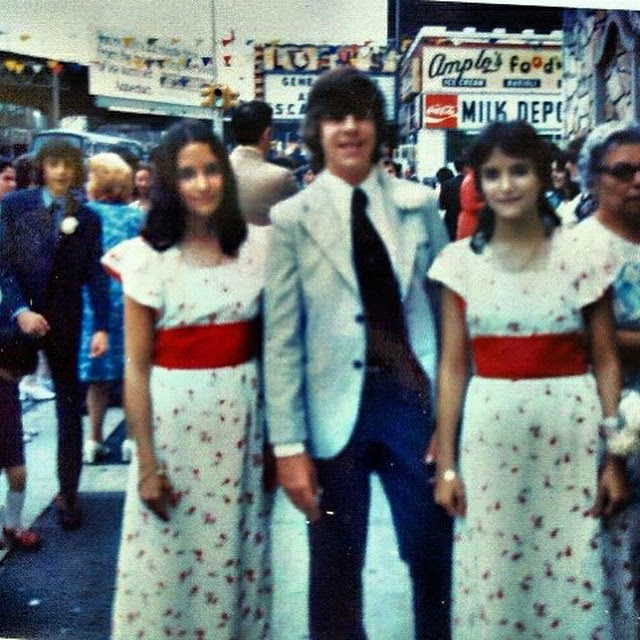
IMG_2791
Taken in Brooklyn, New York in the 70s

Have you ever been in the audience at a concert or comedy club or anywhere and the person on stage mentions Brooklyn and there will almost always be someone or more than one person in the audience who screams and shouts (loudly)? People who were born in Brooklyn or live in Brooklyn are filled with pride; some say it borders on obnoxious behaviors. Actually, people who come from Brooklyn believe they have supernatural powers.

I would know, because I was born and raised in Brooklyn and I too have supernatural powers. My boyish charm and charisma are proof of my powers, no? Okay, okay, I digress. But honestly folks, there is something about Brooklyn that makes one believe he or she is really special. How else would you explain Barbra Streisand (click), Jay Z, Woody Allen, Joy Behar, and on and on (click for long list)?

The Brooklyn of My Youth

  • Coney Island — I was born in Coney Island. It was of course very different back then. There was Steeplechase Park (click), an amusement park that was probably responsible for putting Coney Island on the map. It closed when I was a little boy; however, I have fond memories of the fun houses and rides. There truly was nothing like it in the world. The Amusement Park that is still operating today took its place and although it is not Steeplechase, it’s a great place to bring the kids. My dad immigrated from Italy and moved to Coney Island as a young man. He was a member of a social club and he knew most of the ride owners. I would go straight from school to the amusement park and ride the Cyclone for hours without having to pay. My mother worked at the snack bar at Coney Island hospital where she gave birth to several of my siblings. For some reason, I was born at a different hospital — probably her doctor; I never asked. My mother’s mother was born in Russia — so you see where all my problems originated.
  • The Streets — the streets of Brooklyn were safe back then. Parents would not have thought twice about allowing their children to play stickball in the streets. I pretty certain this is a practice of the past.
  • Restaurants — Because Brooklyn had over 2.5 million residents from all over the world (see below), 50 years ago you could find really good Italian, Russian, Chinese and other ethnic foods. And then of course there was Nathans hot dogs — I still crave these crunchy dogs today. You can get them in many different places (franchise), but to get truly have the Nathan’s experience you have to go to Coney Island. The fries and the Little Neck clams were also memorable.
  • Confidence versus attitude (arrogance) — many people accuse Brooklynite’s of being over-confident. I would argue that a healthy self-esteem is a good thing. Perhaps there are Brooklynite’s with an attitude, but these kind of people live everywhere. The pride one feels about coming from Brooklyn has a great deal to do with the richness of the culture, the diversity, the many great things that have come out of Brooklyn and Brooklyn’s historical resistance to living in the shadow of Manhattan. Brooklyn has always had its own identity and boatloads of things to be proud of.
  • Welcome Back Kotter (click) — was a very successful television comedy series in the 70s. A photograph of my high school, New Utrecht High School, was shown at the beginning and the end of every episode. I didn’t especially appreciate the notion of Sweat Hogs (a whole class of not-very-bright teenagers), but I did relate to a good deal of the show.
  • The Brooklyn Museum, the Brooklyn Public Library, the Farmer’s Market, Prospect Park, the Brooklyn Botanical Gardens, the beaches — it took me so long to discover how rich in culture Brooklyn truly is. We took school trips to all of these magnificent places and I took it all for granted. I assume I absorbed some of it, but it was not until I moved to North Carolina that I realized what I had been exposed to as a child.
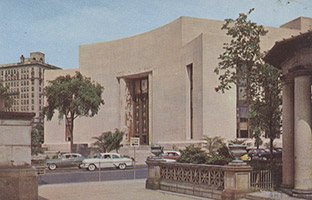
Brooklyn Public Library by DS.JPG
Central Branch
The Brooklyn Public Library

Ground was broken for a Brooklyn central library on Prospect Park Plaza (Grand Army Plaza) in 1912. The design of the original architect Raymond Almirall called for a domed, four-story Beaux Arts building, similar in style to the nearby Brooklyn Museum. Escalating costs and political in-fighting helped slow construction throughout the decade. World War I and the Great Depression ensured that Almirall’s building, whose Flatbush Avenue wing had been completed by 1929, would never be built. In the 1930s, the architects Githens and Keally were commissioned to redesign the building, eliminating all the expensive ornamentation and the entire fourth floor. After much public and critical praise for the comparatively inexpensive Art Deco structure, construction recommenced in 1938. Almirall’s building on Flatbush Avenue was largely demolished except for the frame. (Some of the original facade that faces in toward the library’s parking lot is still visible.) Completed by late 1940, the Central Library opened to the public on February 1, 1941. It is regarded today as one of America’s greatest Art Deco buildings (Wikipedia).

Image result for Brooklyn Museum
The Brooklyn Museum houses over one million pieces of artwork. I had no idea how important the museum was when I was growing up.

Prospect Park

The 585-acre green heart of Brooklyn, is arguably the best park in New York City? Even its famed designers, Frederick Law Olmsted and Calvert B.Vaux, considered it their masterpiece (more fun Wikipedia facts). But Central Park in Manhattan casts a very large shadow over Prospect Park; doesn’t matter it was my playground as a child. We lived only a few blocks away and the sleigh riding in winter was awesome.

The Framer’s Market

There is so much about Brooklyn that I can opine about and I would bore you and sound boastful, so I’ll only mention one more magical place:  there are many farmer’s markets in Brooklyn; however, none are quite as vast as the market at Grand Army Plaza, Prospect Park. From Grow NYC:

“Founded in 1989, Grand Army Plaza is Greenmarket’s flagship Brooklyn market, and the second largest market in the program, behind Union Square. Located at the northwest entrance to beautiful Prospect Park— and just steps from the Brooklyn Public Library, the Brooklyn Museum, and the Brooklyn Botanic Garden. This community destination brings together a mix of shoppers from the nearby neighborhoods of Park Slope, Prospect Heights, Crown Heights, and beyond. Runners, dog-walkers, families, singles and foodies all converge to buy from the huge array of farm fresh products, and to participate in the programming and cooking demonstrations that take place every Saturday all year-long.”

My apartment was one block away (5 minute walk) from the market in North Park Slope. I would wake up at my usual 5:15 a.m. (except when I went clubbing), have my coffee on my terrace (which faced the park — couldn’t see the park through the trees) and then walk over to my market to buy greens for the week. I never bought bread because I got the most amazing bread free from The French Culinary Institute bread kitchen. Well, it wasn’t really free because I worked my tooshie off for it.

The Landscape (Demographics)

Map of Brooklyn
Year Inhabitants
1731 2,150
1756 2,707
1771 3,623
1786 3,966
1790 4,549
1800 5,740
1810 8,303
1820 11,187
1830 20,535
1840 47,613
1850 138,822
1860 279,122
1870 419,921
1880 599,495
YearInhabitants17312,15017562,70717713,62317863,96617904,54918005,74018108,303182011,187183020,535184047,6131850138,8221860279,1221870419,9211880599,495
Year Inhabitants
1890 838,547
1900 1,166,582
1910 1,634,351
1920 2,018,356
1930 2,560,401
1940 2,698,285
1950 2,738,175
1960 2,627,319
1970 2,602,012
1980 2,230,936
1990 2,300,664
2000 2,465,326
2010 2,504,710
2015 2,636,735
YearInhabitants1890838,54719001,166,58219101,634,35119202,018,35619302,560,40119402,698,28519502,738,17519602,627,31919702,602,01219802,230,93619902,300,66420002,465,32620102,504,71020152,636,735
YearInhabitants
17312,150
17562,707
17713,623
17863,966
17904,549
18005,740
18108,303
182011,187
183020,535
184047,613
1850138,822
1860279,122
1870419,921
1880599,495
YearInhabitants
1890838,547
19001,166,582
19101,634,351
19202,018,356
19302,560,401
19402,698,285
19502,738,175
19602,627,319
19702,602,012
19802,230,936
19902,300,664
20002,465,326
20102,504,710
20152,636,735

Neighborhoods

Brooklyn, like many other cities, is divided up into many neighborhoods. Each has its own identity and culture. I spent a lot of time exploring before purchasing my very first apartment. I didn’t have very much money at the time, but I begged, borrowed, and sold my life insurance policy for a $9,000 down payment. Park Slope was one of the most beautiful areas I had ever visited and prior to a colleague showing it to me, I had no idea it existed. I was very fortunate to find a tiny one bedroom with a fireplace and terrace just one block from Prospect Park and only a few blocks from the subway. It was a four floor walk-up in a beautiful 1880s brownstone. While I was living there the economy improved and Brooklyn as a brand, took off. I took advantage of the boom and sold my place to upgrade to a two bedroom in a dicey section of Fort Greene I knew would become more desirable; after all, Manhattan’s desirable housing inventory was expensive and not easy to come by. the downtown Brooklyn Fort Greene area was right next to the Brooklyn and Manhattan Bridges with amazing views of Manhattan and easy access to the city — it seemed like a good move. All of these real estate decisions were fairly impulsive. I keep telling myself that I must have been thinking about the economy and the times, but I can’t recall when that thinking might have taken place.  It was certainly not happening at work or at the clubs. Perhaps I just got lucky.

Brooklyn has been good to me my entire life and I consider it my home. I will return to my roots for the rest of my life and I will never take Brooklyn for granted.

Diversity

Without going into specifics about the enormous diversity that has always existed in Brooklyn, let’s just say that living side-by-side with individuals from all over the world teaches a child a great deal about similarities and differences among individuals. I recall racial tension in Brooklyn around the issue of busing kids from one neighborhood to the other. It wasn’t pretty; there were walkouts and boycotts and a lot of angry people, but in due time it was sorted out. After awhile, people learned how to be with one another. I am certain that racism and religious bias continues to exist in Brooklyn; however, I am also certain that there have always been progressive individuals who were and are willing to do the work that needs to be done. As a child, I lived on a street with Italians, Hasidic Jews, Reformed Jews, Chinese, Irish, Greeks, and I’m certain, other nationalities. We held an annual block party where nearly every family put out food and danced in the street; it was honestly an international festival.

I believe that people from all over the world are moving to Brooklyn partly because they know that they will be embraced and provided with opportunities to earn a living and live their dream. I know this sounds “pie in the sky,” but I truly believe my thoughts have merit.

Why Brooklyn is Celebrated Everywhere

When I travel and meet new people, the first question is always, “Where are you from?” I was always proud to say, Brooklyn, New York. The reaction I got 20 years ago, even ten years ago, is not the reaction I get today. Today, people say, “Really, I want to go there.” For a Brooklynite, this is music to my ears. Of course you want to go there, it’s like going to Venice, except that there are no canals (that’s not entirely true) and/or stunning architecture (of course some will dispute this as well).

Brooklyn Today

I have to be very careful here. If I say anything disparaging about Brooklyn, they’ll come to Portugal to hunt me down. It’s easy to look back at the past and say things like:  things were different back then; it was safer and it was a more innocent time. Every generation perceives their particular generation to be smarter, innocent, and more fortunate.

I left Brooklyn to Move to Manhattan because I took a position at NYU that included housing. When it was time for me to purchase an apartment, I realized I could get more for my money there and it was before it became trendy to own or live there. In Brooklyn I could own a car and park on the street, drive to restaurants, drive into Manhattan or the other boroughs and eat at ethnic restaurants offering world-class cuisine. Again, to be sure, I had no idea what I had when I had it. I will always be grateful for the Brooklyn of my youth.

Image result for the brooklyn bridge
The Brooklyn Brige. Clearly one of the most magnificent bridges in the world (USA Today photo)
Image may contain: 1 person, standing and text
Image may contain: 6 people
The block I grew up on in Bensonhurst. I am in the back on the left; always photo shy. My friend Joey is the one holding the bat. He was the alpha male of 66th Street  ca. 1967