Tag: advice

  • Permission to Forgive Updated

    It’s so easy to forget you’re human. I need to revisit this topic for my own sanity.

    If you’re anything like me — and God help you if you are, you’re fairly hard on yourself. You can spend a lot of money trying to figure out why you’re like this, or you can just accept it as fact.

    black and white business career close up

    Self-Evaluation

    People who are hard on themselves usually spend a lot of time thinking about the way they did something or said something, presented themselves, worked on a project, planned a presentation; pretty much scrutinize every aspect of their lives. You go over it in your head a dozen times. This process, although it can keep you awake at night, is not necessarily a bad thing. It might be healthier to come up with an alternative that would be more productive the next time you do whatever it is that you’ve done.

    For example:  You decide to confront a friend who has been consistently late for a dinner date. Your friend gets to the restaurant 30 minutes after your scheduled meeting time and you’re angry. As they approach the table at the restaurant, you stand with your hands on your hips and you make certain to tense up your facial muscles and you stare her down.

    She apologizes and you say, “I’m tired of your excuses; if you cared anything about me and my time, you wouldn’t do this to me.”

    Your friend gets defensive, tells you that you have no idea what it’s like to be her and that she almost cancelled because she has so much going on. You both sit down angry, with no appetite, and no resolution. You both leave the restaurant wondering if your friendship can survive this confrontation.

    You can stew on this forever or you can decide that there was a better way to approach the problem. This, of course, is only if you value your friendship; some friendships are more work than they should be. Writing down various solutions are “next steps” can help purge the problem and free-up your thinking.

    You can try calling your friend and letting her know that she means a great deal to you and that you have come to realize that she deserved better. She now knows that you do not appreciate her tardiness and that you had gone past your level of tolerance. Remember, forgiveness and taking the high road are very freeing. You can try saying this:

    Jane, I realize that you have a lot going on in your life these days and I really appreciate that you still make time for me. Perhaps in the future we can decide on a time to meet that is more practical for you. For example, if trying to have dinner at 7:00 p.m. is stressing you out, perhaps we can meet for a drink at 8:30 or 9:00 instead. Or maybe a weekend brunch would work better for us . . . or a morning walk.

    Your letting Jane know that:  1) you understand and hear her, 2) you’re willing to work with her, and 3) you obviously want to see her. She’ll feel a whole lot less defensive and more understood. I’m pretty sure she’ll be on time in the future. And if that doesn’t last, you need to re-evaluate how important being on-time is for you.

    Give Yourself a Break

    I’m so much easier on others than I am on myself. Lately, I stop for a second after I disappoint myself and I say, how would you have treated your friend David if he had done the same thing? Nine times out of ten the answer would be that I would let it go. Often, it was an innocent mistake or there is a simple explanation and therefore, I can let it go. If I can treat a friend that way, I can do the same for myself. You’ll find that when you treat yourself fairly, you will performing an act of kindness and it feels just as good when you do it for yourself. In fact, it really needs to start with you; empathy comes easier when you know how it feels.

    Worst Case Scenario

    By now you know that this is my modus operandi. Consider the worst thing that could happen. You will normally discover two things:  1) the worst thing is not likely to happen, and 2) if it did, you would survive it.

    For example:  When I decided to move overseas I naturally experienced some anxiety. What if I hate Portugal? What if the people there don’t speak English? What if my money runs out in two years? And on and on.

    A good friend realized that I was anxious over the “what ifs” and said, “Chris, why are you so worried? If it doesn’t workout come back to the States. You’ll always be an American citizen and you’ll always have a home here.”

    Duh, permission granted to stop worrying.

    Treat Yourself the Way you Like/Want to be Treated

    Why is it so hard to treat ourselves with love and respect? I know it’s a loaded question and very difficult to answer; however, why not start today. Like any habit, it’s learned behavior — you have to do it and then repeat it over and over again; after awhile it will become a habit. You will see, you’ll do it without thinking about it. Try it one day soon:  look at yourself in the mirror and tell yourself that you are not perfect and that’s okay. In fact, it’s even better than okay, it’s the preferred way to be. Perfection is hard to be around; it makes one feel inadequate and less than. You are enough . . . I am Enough.

    A few years ago I was told that my laugh is a little loud. I became self-conscious about it and I stopped laughing. I stopped until a work friend told me how much he loved my laugh.

    He said, “Chris when you laugh everyone hears you and we all laugh with you; your laugh is contagious.”

    That person who told me that my laugh was loud, for whatever reason, could not handle joy. I can be sad about that, but it shouldn’t stop me from laughing. Think about how many times you were not your authentic self because someone else couldn’t handle it . . . well isn’t that just too bad for them.

    120 Inspirational Quotes About Laughter

    Every time you take two steps back, remember that as long as you take three steps forward, you’re making progress.

  • Too Righteous?

    Or Just Righteous Enough?

    Oxford’s definition of righteous

    adjective

    1. morally right or justifiable. “feelings of righteous indignation about pay and conditions”

    Just as soon as I read “feelings” in the definition, I thought, well, no one can argue with my feelings. But can they? Lately, I’m feeling an abundance of feelings about so many things. I feel like I’m in righteous overdrive. Is it the divided world we live in or am I an angry old man?

    Things I Have Felt Righteous About (I typed a list yesterday and it disappeared. Now I’m forced to consider what counts):

    • Politics (lies and misinformation)
    • Selfish behavior
    • Boasting
    • Dishonesty in relationships
    • Smoking around non-smokers without asking if it’s okay
    • Recycling (people who act like it’s way too difficult to separate their trash)
    • Climate change deniers
    • Racism deniers
    • People who do not/will not listen
    • Lazy people
    • Thieves
    • Friends, family, and/or strangers who take me for granted. The number of people who think they’re entitled to whatever is astounding. You forget to say thank you the first time you’re forgiven; after that, you’re on your own.
    • People who use religion to explain away their bias or hate
    • Price gouging
    • Laws or rules that make no sense or serve no purpose
    • People who fight socialism who do not even knowing the meaning of the concept
    • People who see others in pain and turn the other way
    • Haters
    • Nasty Karens
    • Cheaters
    • Abusers of all kinds

    I’m going to stop there because I’m getting fired up.

    Using That Energy

    The simple truth is this: if you have anger, rage, resentment, fury, it has to go somewhere or it ends up sitting in your internal organs and festering. Should it go unchecked, it will fester to the point of severe damage. The best thing you can do for yourself is to channel that anger toward something positive. For me, writing is my outlet, my escape valve. When the pressure builds, I write. The other method is to exercise patience; patience takes a lot of energy. If your deliberate in your practice of patience, that energy will become something fruitful and thought provoking.

    Case in point: I get angry with a sibling who calls me on a regular basis and talks and talks and talks, but doesn’t bother to ask how I’m doing. I let that steam build this week and I was going to let this family member have it. A piece of my mind was appropriate and there would be no holding back. (This individual does not read my blog, but I still feel compelled to keep his or her name to myself — family will know).

    The phone rings and it’s the culprit. I listen. I seeth and I wait for the right moment to pounce.

    I’m about to unleash the kraken and my sibling says, “What’s happening with you these days.”

    If that lesson is not convincing enough to keep me from jumping the gun, coming out with my fists clenched and my chin out, I don’t know what is. Patience Christopher, patience.

    Whether this individual listened to my reply . . . well, that’s a whole other matter. The other life lesson is this: we humans are only capable of so much change. The higher your expectations, the greater the likelihood of disappointment. Baby steps are all we can hope for.

    What Do Others’ Think?

    Like most, I pay way too much attention to social media. Whenever I’m feeling particularly righteous about something happening in the public arena (i.e., politics), I notice a post gets a lot less attention than say, a cute picture of my dog Paco. Or perhaps, people notice my outrage and agree with me; however, they made a vow to stay away from politics on social media and they’re sticking to it. That sort of gets under my skin. Waiting for a big election to come around is not the time to protest. Right now is the time to counter the false narrative.

    The other side of it of course is that I am preaching to the choir: the people in my life who are my tribe . . . the people in my life that I respect and admire because they agree with me. In truth, there are a few people in my orbit who are on the fence; these people are not 100% one way or the other. These uncertain few are my audience when I go off on a rant. I know of two people in my close circle of friends who have come over to my side. It is for this reason that I will not stop putting the facts out there and presenting a raional, truthful, common sense perspective; in my opinion.

    “There is only one way to avoid criticism: do nothing, say nothing, and be nothing.”

    – Aristotle

    My new cell phone has a “fun” feature when taking a selfie. This is how I might have looked on a typical Saturday morning had I been a member of the opposite sex (is that okay to say?). My sisters would have been jealous, no doubt.

  • When Did We Become So Sensitive?

    Or Am I Just Jaded?

    I was raised in a home where you said what you had to say; you got it off your chest and then you let it go. By the time I got to kindergarten, I learned that the rest of the world didn’t operate that way.

    Along the way, I received lots of reactions to my “Brooklyn” bravado. I had to hide my sexuality, therefore, it was act tough and survive or whimper and be bullied. I developed a thick skin and a look that said, be real with me or get out of my face.

    And then this happened . . .

    I was a candidate for a really great position on campus at the University of South Carolina. It was my second year of a two-year Master’s degree program and I had spent the first year validating my candidacy for a coveted position. At the end of my second semester, I met with the director of the Living & Learning Program and discussed my future. I remember a smirk on his face I didn’t appreciate. He told me that there had been a couple of complaints about my direct nature — an interesting way to put it. He further went on to tell me he had observed it himself. What he said in not so many words:

    I appreciate that you’re from New York and that New Yorkers are known for speaking their mind. It’s not how we conduct ourselves in the south. We tend to start with some small talk and then we sugar coat our words a bit. That’s how we succeed in getting what we want. You might want to consider changing your communication style while you’re in South Carolina; maybe tone it down a bit (source is now deceased, 1983). I guess I might have been reliving this horror in the middle of the night last night, because I also recalled that he said that I was a “primadonna.” At the time, I didn’t even know what that meant.

    To say that I was devastated is a gross understatement. I spent the next two months questioning everything about the way in which I conducted myself. I cried a lot, I was angry, I hated that creep, and I went from deciding I would change everything about myself to being determined I would stay true to who I am.

    At the end of a long and tortured summer, the director called me into his office; I almost refused to take the meeting, but I knew he had a lot of influence at the University. He asked me if I’d thought about what he’d said in May. I didn’t want to give him the satisfaction of knowing that I was tormented by his feedback. I responded:

    I thought about what you said and I agree with some of it. I went on to tell him that I could be a bit less crass and a bit more tactful. I also stared him straight in his eyes and told him that I liked my own sincerity and direct approach; bullshit was not my style and being all nice nice without feeling it, wasn’t ever going to happen.

    He listened with what seemed like an open mind. I asked him if there was anything else and he said,

    “The position is yours if you want it. There are a lot of people on campus who are rooting for you, don’t let them down.”

    He shared his own reservations and I sat there acting all smug and self-satisfied. I wanted that job more than anything and I was determined to prove him wrong.

    So what is the point of my telling you this tale of woe? There are a few reasons actually:

    1. His words stuck with me more than any others that I have heard in my life. I didn’t like him, but I respected him and I came to believe he was sincerely trying to teach me something.
    2. In many ways he was right. I was overly confident and way too direct.
    3. Had he not shared his observations with me, I may never have been told that I needed to lower the volume. I still resent his harsh and hurtful approach, however, he managed to get me thinking about how I communicate with people and that is never a bad thing.

    I have mentored several young people throughout my career. I have been in the position to share my thoughts about character flaws I thought could be altered or corrected. I am thoughtful about the way in which I phrase my criticism or feedback. I can always tell when I may have pushed too hard or said too much. I recall how much I learned from my critic and I accept the anger directed toward me. My own saboteur reminds me that I am vulnerable and imperfect.

    And Another Thing . . .

    My neighbor has decided to make his condo an Airbnb; it’s his place, I guess it’s his business. Personally, I think it’s an ugly dump and I’m not sure why anyone would rent it. It’s probably cheap, so it’s attracting young party people.

    Yesterday, my new, not-so-friendly Airbnb neighbors were getting on the elevator to go to the beach and I introduced myself:

    “Hi, I’m Chris, if you need anything please knock.”

    They looked at me like deer in headlights and I very gently said:

    “Do me a favor, when you close your door, please do it slowly. When your door slams my apartment shakes.”

    Seriously, it sounds like a bomb has hit the building when the wind is strong.

    You would have thought I was asking them to go to bed earlier. The look I got was of utter disgust and resentment. I promise you, I was pleasant.

    What I said to them was not even criticism mind you. Would a big ugly sign outside my door asking for consideration be better?

    Things I Keep In Mind When Offering Criticism/Feedback

    • Will I ever see this person again?
    • Will my words make a difference?
    • How am I being impacted by their approach or style?
    • What words can I use to make a difference?
    • Am I being honest or mean?
    • Do I really know better?
    • Is my honesty a way to sabotage a relationship?
    • Will they hear me?
    • Are they open to feedback?
    • Why am I doing it?

    I know that I don’t know anything about most things, but I sure do know a little about some things. Keeping my opinion to myself isn’t easy, so listen up:

    Men of Portugal (you know who you are), stop dousing yourself with buckets of cheap cologne, you stink and you’re making me sick! People, when you’re in line at the supermarket you need to stay in line; continuing to shop and expecting to keep your place in line, isn’t cool. And to the young men who own motorbikes in my neighborhood: I know that having a small penis makes life difficult; however, taking your muffler off of your motorcycle or moped won’t make that little penis any larger. You’re just making people angry and the girls don’t think it’s cool. Spend more time on your hair, it’s quieter. And I’m sorry to judge, but young gay men are not driving their loud motorbikes all around Faro.

    Note: I’m just guessing about penis size.

    When people are not willing to speak out for fear of repercussion or alienation, they become angry, resentful, and complacent. Keep this in mind when someone around you is feeling stifled or worse, gagged.

    honesty quotes we are franker towards others ourselves friedrich nietzsche wisdom

    Travel: Time on the Spanish/Portuguese border in a Pousada next week; they can’t cancel that on me. I’m pretty sure I’ll get to go on my trip to Stockholm in August. And maybe even a booked trip to Lyon, France in September. I don’t count on travel anymore, I just have to wait and see.

    POUSADAS DE PORTUGAL

    Castles, Palaces, Monasteries, Halls of kings and Rooms of Queens… The Pestana Pousadas de Portugal offers the ultimate immersive Portuguese experience in some of the country’s most historical and iconic properties.

    Note: Check out Wanda Sykes who is hosting for Jimmy Kimmel this week. She’s doing some kick ass truth tellin’.

  • The Ups and Downs of My Relationship With Food

    Who Am I Kidding, I Feel Fat


    Eight weeks into quarantine and no surprise that my weight is weighing heavily on my mind. Apparently, one of the by-products of quarantine is a rollercoaster ride of emotions. Out of nowhere you can become all weepy or conversely, elated. This week I was sitting on my sofa and suddenly I was crying. I just let the tears flow and I felt better when it passed. I guess the absence of social human contact is taking its toll.

    Eating dulls the ache. With food as a major focus, I have become hyper-aware of my weight. I refuse to get on a scale, however, I know from the tight fit of my pants, that I have gained weight. Yes, I have to wear pants when I walk Paco or go to the market.

    I have one full length mirror in my apartment. When I walk past it, I look away. I’ve developed that “if you can’t see it, it doesn’t exist” attitude. I guess it’s a defense mechanism or perhaps complete denial?

    I think quarantine is playing tricks on my mind:
    Is “walked past” or walked passed” grammatically correct …
    “Passed” is a verb which is the past (heh) tense of “pass“. So you could say either “walked past” or “passed“, but not “walked passed“. … Walked is a verb. Past is an adverb (we walked past, she drove past).
     

    Body Type

    I have written about this before, so I apologize for repeating myself. Naturally human beings have different body types, the reality is that some of us will never be thin and some of us could never be fat. Unless I’m very ill, I will never be skinny. All my life I have dreamt of being skinny. I wish I knew why; I don’t necessarily like feeling this way, but it is what it is — the grass is always greener . . .

    There have been a few times in my life where due to surgery or stress, I have dropped a good deal of weight. During those times, although psychologically I was happy to be thin, I looked terrible. My face is too long to be thin, my frame is too large and wide; therefore, without meat on my bones, I look sick. One would think that having this knowledge would be enough to settle my mind and I’d just be satisfied with a “healthy” look. One would think.

    I have my father’s body and I seem to have a weight my body comfortably settles into. I know I have some control over how big I get, but I also know that my body type is genetic. So when will the mental agony end?


    The Media

    We all enjoy blaming the media for a lot of our issues. We have been looking at beautiful people in magazines and on screen for so long, the ideal body type is ingrained in our psyche. By now we all know that what the media might see as the “ideal” body type is not a representation of how most of us look.

    Sit at an airport lounge when things get back to normal. You will see every type of shape imaginable. The vast majority of people in our world do not look like the people in magazines. There has been an effort in recent years to change that, however, it’s a slow process and we’re a long way off. It is a known fact that seeing a likeness of yourself depicted in the media, helps you feel more comfortable with your own body type.

    A piece on body type worth looking at.

    I loved it when I started seeing bald male models. Unfortunately, overweight middle aged male models are a long way off; probably not in my lifetime. When you do see it, it’s Joe Middle America in a sad sitcom or a reality crime show.


    Health/Exercise

    Good health is linked to good eating and exercise. I embraced this fact many years ago and I attribute my excellent health to living a lifestyle where nutritious fresh food is paired with daily exercise; providing for a better quality of life. However, because I am human and because I have weaknesses and character flaws, I often veer off course. This pandemic has been a good excuse to sit or lounge a lot more and therefore, gain weight from being sedentary. And then there is the baking . . . just because. I am exercising several times a week, but not moving nearly as much as I usually do. The age factors in and metabolism is the enemy. Cookies and cake and ice cream and rich savory dishes and trips to the grocery store as my only activity; all leading to weight gain. It’s a downhill spiral with no end in site.

    People all over the world are experiencing the same problem, but that doesn’t make it any easier. Please allow my gym to reopen soon.


    Letting it Go

    Often, when you share these thoughts of being overweight or out-of-shape with friends or acquaintances, their first reaction is to say the following:

    • “You are not overweight.”
    • “You are the healthiest person I know.”
    • “Are you kidding me?”
    • “Are you fishing for a compliment?”
    • “You have nothing to worry about.”
    • “You should see a professional.”
    • “We all feel that way.”
    • “Have you looked around these days.”
    • “You know it’s not true.”
    • “You look great for your age.”
    • “This is a temporary situation.”
    • “Just buy new jeans.”

    What people do not always understand, is that in no way do any of these statements make you feel better. You might be flattered for about three seconds, but the reality is, if you feel overweight, than nothing other than weight loss can make it go away.


    Mind Games

    Talking yourself into believing something, is common practice. I tell myself that everything in life is a trade-off. If I’m going to eat the things I love, I’m going to have to deal with a few extra pounds. I also tell myself that at my age, being slim and toned is not as important as it was in my 20s and 30s; after all, no matter what I do I will not have the body I once had. To be honest, I give up on dating at least 100 times a day.

    I tell myself that what matters now is that I remain healthy so that later in life, when my body continues to age, I will maintain a good quality of life. For example, if you exercise and stretch your muscles, they will continue to help you move without pain and discomfort. Healthy lungs, a healthy heart, a stimulated brain, and so on, will all insure ease of movement and a sharp mind later in life. I’m not in a hurry to experience this, however, it is a motivator.

    When the elderly are asked what they would have done differently, they often say the following:

    1. They would have worried less
    2. They would have exercised more
    3. They would have taken better care of themselves


    An expert speaks:

    Older people who smoked, didn’t exercise or became obese were regretful about it, but the issue wasn’t only about dying.

    “Many people will say to themselves, ‘I enjoy smoking’ or ‘I don’t like to exercise’ or ‘I just like to eat — who cares if I die a little sooner?’” Pillemer noted.

    “The problem is in this day and age is you’re not going to die sooner; you’re going to be stuck with 10 or 20 years of chronic disease as modern medicine keeps you alive.”

    Their advice: Pay attention to your health and change your lifestyle if it’s making you unwell, otherwise the incredible burden of chronic disease will make your life miserable.”

    Follow A. Pawlowski on Facebook, Instagram and Twitter.

    I just keep telling myself that this will end soon and life will go back to normal. The truth is, because of my lifestyle and my love of rich foods, I will never be thin and that has to be okay. I’m grateful that I’m not diabetic, not obese, not addicted to sugar, not lazy, and not an alcoholic. I do consider that any of these issues could become an unwelcome reality.


    Ina Garten is one of my favorite television personalities. She has been overweight since I started watching her cook. She wears clothes that are flattering, she never apologizes for her weight, she has a beautiful genuine and hearty laugh, and she seems to truly enjoy life. When she had the gourmet food store, The Barefoot Contessa, in the Hamptons, New York, I would marvel at her magnificent displays and incredible food. I always wanted to buy and eat everything. If I could spend a day with any celebrity, it would be Ina. She made a quarantini on social media recently, and it went viral — everybody loves Ina.

  • Right Where I am Supposed to Be

    Accept, Adjust and Adapt

    img_5535

    There have been many life lessons learned over the past couple of months. I can’t speak for those of us who were/are in quarantine with others and in fact, I cannot speak for those spending this time alone; I can only speak for myself. Clearly, this is and has been a unique experience for all of us. I have been alone in a foreign country since the lockdown began and it is surreal at the very least.

    It’s difficult not to be confused about exactly what is happening with COVID-19. It depends on who you’re watching or reading and what you choose to believe. There is a reason most people no longer have faith in the media or their government. I only allow myself a few minutes of news a day. It doesn’t matter when you turn on the television, it’s one big loop of sensationalism and half-truths. For the most part I choose to read a couple of sources and form my own opinion. I do what I have to do to stay within the law as we battle the unknown. Since fear is a major motivator for government and the media, I refuse to get sucked into this toxic vortex. I rely on facts as much as possible and I leave speculation to others.


    Once You Discover Who You Are . . .

    When you’re alone with your thoughts, you come to realizations and you make choices. Do you dwell on the negative? Do you get angry? Do you find yourself escaping? What mechanism do you use to cope? You probably have an arsenal of weapons on hand to deal with reality. Choosing healthy tools is the best way to go, however, that’s not always possible. So how do decide the route to take? First, do you know who you are?

    There are things I have discovered about myself that help me develop the tools I need and make the right choices:

    1. I do not like for anything to interfere with a good night’s sleep (about 7.5 hours).
    2. I do not like paying for my bad choices the next day.
    3. I do not like how it feels when I beat myself up.
    4. I love how it feels to be well rested.
    5. I do not like how my stomach feels when I have overindulged.
    6. When I have the discipline of going to the gym five or six times a week, I never contemplate not exercising. When that option is not available, one out of two times, I will not exercise. Even writing this down helps to motivate me.
    7. There are times when I’m stressed and concerned and in complete denial about my state of mind.
    8. As I get older, I have less tolerance for many things.
    9. Food has become my primary motivator.
    10. Having a pet helps with self-discipline.

    It all seems pretty straightforward and normal. So why am I still uncertain?


    Tools & Rewards

    One of the tools I frequently use is the weighing of pros and cons. Yes, that second Marguerita would taste really good with my Mexican food, but what price would I pay? When I do this simple assessment, nine out of 10 times, I will decide to pass on the second cocktail.

    I live for rewards. I find them to be a positive way to live a healthier life. If I do blank I get blank as a reward. This has been my MO for a long time. During this time — the lockdown, I have noticed this happening more often. If I complete my language lesson, I can read my novel for an hour. If I climb the stairs in my building for 30 minutes, I can have some chocolate and on and on. It seems to be the only thing that motivates me, but it works.


    What Matters Most

    What matters most in my life has been the greatest lesson learned during this time. I thought about this prior to the virus, but sorting it out has become a much greater priority. My family has always been important to me and that will continue until I die. A trip to the States this week was unfortunately cancelled. Now that I am a resident of Portugal, I cannot fly to the States at this time; my legal address is here. I need to be certain that I am okay with this situation for at least the next five years. Selling an apartment in Faro is not going to be like it was in the States — I sold my last three apartments in less than a week. In Portugal, your place can easily sit on the market for up to two years. That’s fine, it just means planning a bit further into the future.

    The good news is that I have come out of this knowing that living overseas is definitely what I want and remaining overseas is a certainty. I have come to realize that there is another move left in me and it will more than likely be Italy. I ultimately want to be where my father was born. I am Italian after all. Now that I have my father’s birth certificate, I can begin to look into dual citizenship. The coast of Croatia is also a possibility — all options are currently open. It’s a big world out there isn’t it?


    Noticing Changes 

    It seems that people are more grateful now than they have been for a long time. Grateful to others, grateful for their own good health, and grateful to be alive. I remember how people in New York City were after 911. I rode the subway watching strangers who would have never considered giving up their seats, stand for older people or the disabled. I saw people smile at one another for no other reason than to show gratitude and solidarity. This was a New York City I could love. Unfortunately, it didn’t last. We slowly slipped back into our everyday, former routines.

    I suspect the same thing will happen with this pandemic. People will be more grateful for a short while and then we will all go back to “normal.” Even if we have to socially distance ourselves from one another for a long while or wear masks when we get a haircut; we humans adapt pretty quickly. If we’re conscious of our nature, is it possible to change? I think it is very possible. Your new normal can be based on what you learned from past experience. If you took up running while in quarantine, then continue to run. If you started eating healthier foods, keep it up, if you called people you care about more often, and so on.

    The hardest thing for me has been isolation. I enjoy being out and about. I’m not sure it’s in my nature to spend a lot of time at home. I currently do not have a lot of choice and I’m hoping that will change sooner than later.

    Life Goes On! | Change my life quotes, Go for it quotes, My life ...


  • Dialogue With Yourself


    Here’s how the conversation might go on any given day:

    5:15 a.m.:  Good morning! Where’s Paco (dog)? Paco! Paco! Come and say good morning because I have to get up to pee. Did I set up the coffee last night? You need to brush your teeth. Hey Paco, good morning, what a good boy, yes, yes, yes, yes. No tongue, I told you no tongue. Okay let’s get up. What are you going to do today? I need to blog. It’s Monday, I need to start my blog, but what the fuck do I write about (I have a potty mouth when I talk to myself)? Call Angie to wish her a happy birthday. Oh shit, my back hurts. Stretch stupid! Paco are you hungry? Shit, I didn’t set up the coffee.

    Later the same morning:  It’s 11:00 a.m. and I have accomplished absolutely nothing. What is wrong with you, go for a walk.

    6:00 p.m.:  You didn’t get everything you wanted to get done, done, but it’s 6:00 p.m. and time for a cocktail. Good stuff? Cheap stuff? Oh what the hell, go for the good stuff.

    9:30 p.m.:  Did you floss? I don’t remember flossing? I should floss. I should go to bed. Goodnight Paco.

    2:00 a.m.:  get up to pee but don’t wake up. Crap you’re up. Why aren’t those pumpkin seeds helping my prostate? I’m sweaty? Why is it hot?

    [Talking to your pet is more like talking to yourself and that’s a good thing.]

    “We actually talk to ourselves silently all the time. I don’t just mean the odd “where are my keys?” comment – we actually often engage in deep, transcendental conversations at 3am with nobody else but our own thoughts to answer back. This inner talk is very healthy indeed, having a special role in keeping our minds fit. It helps us organise our thoughts, plan actions, consolidate memory and modulate emotions.” (The Conversation, May 3, 2017)

    It’s not like people have not written about this topic before, it’s just that it’s very personal and I want to add my two cents. We all process these kinds of things differently. Some people have always talked to themselves and could not imagine any other way of life. The other end of the spectrum is those who believe you have to be clinically insane to carry on a conversation with yourself. Like most things, most of us are somewhere in between. In order to prepare yourself for this behavior, you have to be:

    1. Willing to accept that it’s okay; normal even.
    2. Open to whatever comes out of your mouth.
    3. Prepared to answer back.

    Give it a try, after all, what have you got to lose. Don’t worry, we’re all crazy and the sooner we accept that . . .


    Out Loud Conversations

    There was a time when I would not have considered having an out loud conversation with myself. I would have been way too self-conscious and afraid that I might do it in public. Now, I couldn’t care less. I’m fairly certain that at this stage in my life I’m not going to humiliate myself. But if I’m in a car and I’m by myself, I’ll probably have a little talk. Things like, be careful, don’t go too fast, what are you forgetting — you see where this is going.

    When you live with other people and you’re unsure about something, you can just casually mention stuff in passing. When you live alone there is no one around to run things by. So why not ask yourself? The answer is more than likely inside that brain somewhere. When you’re bold enough to practice this behavior, you’ll notice a higher level of self-esteem and a certain pride in your own independence.

    Trust in yourself is important for this practice. Do you believe in your own words? Do you practice what you preach? Do you follow your own advice?

    Singing to yourself can be very calming. I had a boss who sang gospel songs to herself all day long and she was very centered. So much so that I resented it. I honestly didn’t realize she was doing something healthy for herself. Don’t be your own worst critic — this isn’t a live concert with a sophisticated sound system, belt it out.

    Have you noticed that people on the street and in their cars all seem to be talking to themselves these days? Most of them are on their cell phones. Bluetooth devices have made it easy to speak hands free. Now it looks like we’re all talking to ourselves, making it easy to do so with judgment from most.


    What People Might Think

    We humans care way too much about what people think of us. It’s not an easy thing to dismiss or ignore. Have you noticed how many older folks just don’t care. It seems to be something we learn to do over time. When you’re working on providing for your family or building a career, it has to matter. Still, there are things you can do that make little difference to anyone else; talking to yourself might be one of those things. When you come to the realization that what others think no longer matters, it is extremely liberating.


    The Benefits

    A good exercise might be to give it a try. Talk to yourself out loud for a solid week and see how it feels. Are you able to respond? Have you worked out any unresolved issues? Do you feel better? I’ve never been one to feel lonely, but my guess is that if you acknowledge what great company you’re in when you’re in your own company, you’ll feel better and make better decisions. Gaining more self-esteem and holding your head high only makes you more attractive to the world. Tell yourself, “Shoulders back, chest out, stand tall and be proud. Show the world who you are.”


    When Something Good Becomes a Habit

    Humans have a lot of bad habits; I won’t name mine here, but if you’re curious, every blog post reveals a few. The thing is, we can have good habits too. Do it once and it’s just a one-off, do it twice and it’s a repeat, do it many times and it becomes a habit. Make talking to yourself a positive habit (like going to the gym, dressing up and eating superfoods).


    Is talking to yourself ever harmful?

    Talking to yourself is often associated with mental illness, but that is rarely the reason for or cause of self-talk. However, there are some situations where self-talk may be an indication of a psychological problem.

    When self-talk is accompanied by self-harm — for example, striking yourself or cutting — then it’s a sign of an emotional problem, Dabney said. As well, if you are engaging in self-talk that involves repetitive phrases, mantras or numbers, and this type of self-talk is disruptive to you or difficult to stop, that can also be an indicator of an emotional problem. In either case, speak to a qualified medical professional for a proper assessment. (Huffington Post, Is it Normal to Talk to Yourself, August 23, 2019)


    collage photo of woman
    Photo by Andrea Piacquadio on Pexels.com


    Next Week:  Growing Up With Broadway

  • Caring Too Much or Too Little

    Developing a balance between empathy and good health is a formidable goal and this is a good time to work on it.


    65 Compassionate Empathy Quotes (2019)


    I have always been a bit too sensitive. I was bullied as a child because I cried easily (and I liked playing with girls . . . and I hated sports). I get the crying part honestly, my dad wept without shame. The problem with feeling intense empathy is that you often feel as if you have the weight of the world on your shoulders. Managing these feelings and mitigating your health and well-being are essential.


    What it Feels Like

    I have been reluctant to look at the number of deaths around the world due to the Coronavirus. Denying a problem exists or refusing to acknowledge it, has long been a defense mechanism. However, in this case I believe empathy matters. I need to be able to experience what is happening all over the world so that I can do my part to help. I’m forcing myself to look at the numbers and think about what people are going through. It’s surreal, it’s painful, it’s difficult and it’s morbid, but it’s necessary. We’ve been told what we can do and we need to listen, learn, and hold ourselves accountable. Doing your part helps you to be empathetic without drowning in sorrow.

    A brief story of too much empathy — very recent and still fresh:  When I adopted Paco in January, he had only been found on a country road two weeks prior. He weighed just over five pounds and his bones were protruding everywhere, his fur was extremely matted, and he was deathly ill from a virus. When I saw him for the first time, I wept. Each time I thought about him fighting for his life, alone and abandoned in the woods, I wept. Admittedly, this extreme sensitivity went on for weeks. This is the reason I had to leave my volunteer position at a pet shelter; I had too much empathy. Learning how to compartmentalize my feelings and thoughts was and is, necessary. By the way — Paco has fully recovered and he’s out of danger. I still worry, but it’s under control. The crying has stopped.


     Family

    The reality of family members who are not as strong as I am or who might be struggling with emotional and/or financial issues is ever-present. How much of their worries are my worries? How much of their suffering can I or should I take on? What can I do to ease the anxiety I impose upon myself? There are a number of considerations when discussing problems with family members. First and most importantly, in some cases, they have families of their own. Therefore, when you get involved, there may be others in your family that are also affected and that complicates matters further. There is a risk of alienating family members who may be embarrassed or who may see things differently.

    Most people prefer privacy, even if it means not sharing with their own family. This could be the topic of a whole other blog. I’ll leave it at this:  there are times when it is best to keep family problems at arm’s length. You may have to be clear about that when approached. “Sue, I think it would be better to discuss that with Greg; your husband is my brother-in-law and one of my favorite people in the world, I don’t want him to be angry with me for taking sides.” Sue doesn’t exist. Just an example of the language you may have to call upon when communicating. Remember, most people prefer candor and authenticity. Those who don’t may not deserve your time or energy.

    There is always the advice that is unwelcomed. Family members who are not ready or willing to face their problems will sometimes push you away and resent you for getting involved. In these situations, you have to be either willing to handle the confrontation or in some cases ignore the radio silence.


    Friends

    Our friends are our chosen family. We love them dearly and sometimes that love might cause us great pain. When you see a friend in trouble and you cannot help them, it can tear you apart. Two of my friends are alcoholics. One of these individuals will no longer speak to me because I tried to help and he does not want to acknowledge his problem. The other is in treatment and doing well so far. The only way I can live with myself in situations like this (be it a friend or a family member) is to try to help in some way:  support, resource, friend, caregiver, etc. Doing nothing makes me feel useless and more like a failure. On the other hand, if I reach out numerous times and the friend refuses my help, I have to be able to accept that I’ve done all I could do and walk away. Speaking from experience, I’m not insinuating this part is easy; in fact, it may be one of the more difficult things in life you will have to do. Friendship is like any other relationship, empathy is imperative and it must be conveyed delicately. People who are suffering emotionally cannot always handle empathy when you’re feeling it, they may need time to process and prepare. As a friend, you need to understand boundaries and know when it’s the right time to help.


    Our World

    We live in complicated circumstances with over seven billion people inhabiting the planet.  Unfortunately, 734 million of the world’s dwellers are considered to be living in absolute poverty (wikipedia); that’s a lot of people. Horrible reality like this can keep you up at night. The number of people with cancer and no access to care, the number of people in abusive relationships, the number of children without food, the number of refugees without a home, self-serving politicians, and on and on. It is important to consider the difficulties all around you and do what you can to help; however, it is equally important to consider all that you have to be grateful for.


    How to Manage it So that it Doesn’t Take Over

    Meditation is a self-help practice I mention regularly. People often think of it as a waste of time or new agie. For me, it is a way of keeping things in perspective. Sometimes I make life too much about me and I have to remind myself that it is not at all about me. At other times, the weight of everything around me is so difficult to manage, I have to shed some of it by logically thinking it through.

    Exercise is one of my top three ways of sorting through life’s difficulties. When you’re overly concerned about everything, you have to have a way to balance the gravity of all of these concerns or it will consume you. Exercise is like a release valve. There is no doubt in my mind that I have developed an addiction to working out. Exercise and chocolate are the only two addictions I can honestly say I embrace without guilt or self-punishment. I do not often give myself a free pass to indulge; therefore, I am grateful for the freedom to just enjoy these two gifts.

    Volunteering your time is not a panacea for solving the world’s problems. However, it is a way for you to feel empowered. Everything you do to help will yield rewards.

    “Volunteers are not paid — not because they are worthless, but because they are priceless.”

    — Sherry Anderson


    You know as well as I, that no matter how thoughtful you are or healthy you may try to be, your emotional state of mind (mood), often determines how you feel. You might have a good night’s sleep and wake up feeling so much better than the night before. On the other hand, you might do everything right and have a restless night’s sleep and wake up angry at the world. I have learned to just go with it. If you try to push it away or sweep it under the rug, you are likely to either experience it with greater angst or have it rear its ugly head at the most inopportune time. If you breathe and treat yourself kindly during these difficult periods, you will come through the difficulty with less collateral damage.


    Talk Through it With Someone You Love and Trust

    For some, talking through your worries is a learned behavior. Some of us are hesitant to burden others with our problems or confused thoughts. We’re quick to want to help others, but when it comes to our own issues, we retreat and suffer in silence. I’m a big fan or running things by people who are not directly involved and I believe, can be objective. Be sure to ask if it is okay to share. Do not judge or dismiss an individual’s thoughts. You can be certain that if you disrespect a generous listener, you will never be able to solicit advice again.


    “Empathy is the medicine the world needs.”

    — Judith Orloff. M.D.


    Resources:

    How to Be More Empathetic (NY Times)

    Importance and Benefits of Empathy (Very Well Mind)


    I hit a milestone with 100 blog posts last week. I wish I had been aware of it, I would have celebrated sooner.

  • Coloring Up My World

    Give it a try, it might help you feel better.


    The single most inspiring thing I have done over the past few years (not counting moving overseas which was a different kind of life change), is to add color to my life. Blues, reds, yellows, and lots of contrasts. For the longest time I was afraid of color. That fear still exists deep inside of me.

    “Color plays a vitally important role in the world in which we live. Color can sway thinking, change actions, and cause reactions. It can irritate or soothe your eyes, raise your blood pressure or suppress your appetite. When used in the right ways, color can even save on energy consumption.”


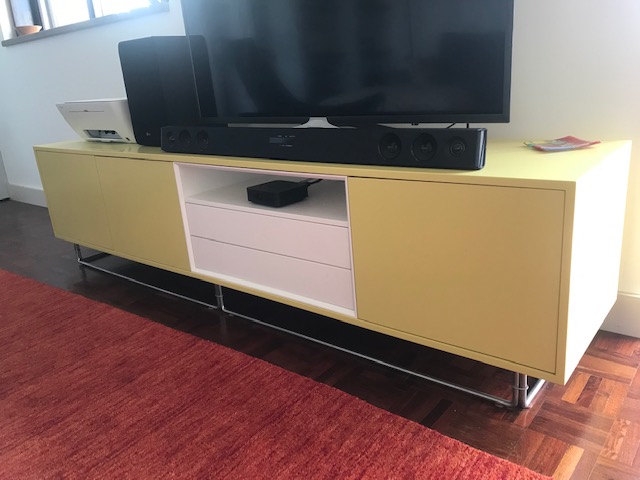
    IMG_5573 (1).jpg

    It took me months to decide on the color of this piece. Once I made the decision, it tooks months to make. The price you pay to have the color you can live with. It’s a greenish yellow (hard to tell) and it brings out the mustard in the rug and a yellow in the painting that hangs above it. I think it also compliments the burnt orange rug.

    Color Matters — an article to review

    Now why would a grown man like me be afraid of color?

    Imagine living a lie for over 20 years; my sexuality being the lie. When you’re in a situation such as this, where you are hiding your true identity, the last thing you want to do is draw attention to yourself. I shouldn’t really generalize this way; in fact, some closeted gay people do a great deal to draw attention to themselves. Best that I switch to first person:  the last thing I wanted to do was draw attention to myself — I lived life through muted colors for a long time. On certain days and sometimes for extended periods, I revert back to this practice.

    Here I am, 61 years old and I’m finally comfortable enough in my own skin to add color to my life and not feel embarrassment. True enough that my last apartment, in Maine, was decorated with burgundy and lime green, but they too were muted. I would often walk into my kitchen and think, what did I do? Is this too much? Is it feminine? What will people think?

    Then I made a bold move and bought a contemporary condo in Portugal.  I am finally at a place in my life where what others think hardly matters. I can’t say it doesn’t matter at all, because that would be a lie. It just doesn’t matter as much. What does matter is what makes me comfortable; right now, color feels good.

    I do admit that I’ve had to reign it in. I saw the latest Almodovar film and came close to painting my kitchen cabinets red — that would not have been good. Almodovar uses color effectively in all of his films; it’s one of his distinct trademarks and I have always envied him for it.

    I want to have a big, bold, splash of red somewhere in my home. I decided on the terrace wall and then I pulled back on that idea; now I’m reconsidering it. I figure if I sit with it for a bit, a more concrete decision will come. Some would say, don’t worry, if you don’t like it you can paint over it. That seems like a big hassle to me, I’d rather get it right the first time. And now I have meshing up so that Paco doesn’t go through the slats; therefore, that would have to come down first. This is what is called procrastination; a Coronavirus byproduct. Stay tuned for a firmer decision sometime soon.


    The Current Situation

    Like so many others I constantly shake my head wondering if this is really happening. When you have never lived through a war (Vietnam but I was a child), it’s difficult to wrap your head around so much death and despair. I’m coping the best way I know how; grateful that I have a pet to keep me company, happy to be in a beautiful place, and hopeful that my friends and family remain healthy.

  • Feelings Reiterated

    Reblog — difficult time to write and some things require reiteration


    Your State of Mind

    One of the many things that happen when you grow older is coming to terms with your feelings (if you’re lucky). Coping with your feelings, identifying your feelings, sorting out your feelings, embracing your feelings, allowing yourself to feel, projecting feelings; you can see where I’m going with this.

    Why Your Biology Runs on Feelings (click for more)

    Feelings are complicated and so is being human; it comes with the territory. Some people are so wrapped up in themselves, they neglect to consider the feelings of others. Is it social media, the pressures of life, family, coping skills, socialization? What is it about the world around us that has made us less empathetic? Some would argue that humans have always been this way. I’m not sure about that. I recall a time when people had more time for one another and seemed to care more; I could be wrong.

    I’m sure the news media has something to do with it. Around the clock news covering the world. It’s easy to become numb. The “this doesn’t affect me” attitude is also pervasive. I certainly do not have the answers; I only know how I feel.

    Anger
    I hate it when I get angry. Mostly because I feel that it could have been avoided. Harnessing my anger has been a long-term goal. When I’m well rested and relatively happy, any anger I feel is short-lived and can be sorted out. On the other hand, when I’m tired and things are falling apart around me, anger becomes a ball and chain around my ankle; impossible to get rid of. I can usually take a step back to process my anger and that seems to help; however, let’s be honest, sometimes the stepping back part just doesn’t happen. When I react based on emotion, it’s usually an outcome I regret.
    Not long ago I was having lunch with a friend and she started spewing what I thought was bigoted hate speech. You’d recognize it in a minute; when the words come from privilege and a lack of empathy. No matter how hard I sit on my hands and push the anger down, I find myself gritting my teeth and becoming righteous. I don’t like it one bit. The person sitting across from you does not hear the words you are speaking, they only experience the anger. What it does do is justify their feelings. What they hear in their head is:  it doesn’t matter what we’re talking about, he always has to start an argument or why does he think he’s smarter or better than I am? None of this is productive; in fact, it is counter-productive. Now we’re both angry and not speaking to one another and we both feel justified in our feelings. I shouldn’t speak for this person, let me say, I feel justified.
    We seek out like-minded individuals in order to avoid this kind of anger, but you have to ask yourself if avoidance is the right way to go. I’m not providing answers, I’m merely asking questions; processing for myself and hoping it helps others.
    Tears
    I am often moved to tears. I cry while watching movies, I weep while reading novels, I’ve been known to shed tears in the middle of a conversation with a friend, I cry in my dreams and at poetry readings, and I have cried myself to sleep a time or two. My father was a big man and he cried; he taught me that crying was okay and I am forever grateful to him for this. I feel sorry for people who cannot cry. I highly recommend it.
    Loss of Control 
    I have come to terms with being a control freak. I like to be in control. If something bad happens and it is beyond my control, I get angry. I have a difficult time processing:  how did this happen, why did it happen, who made it happen? I guess I believe that if I were in control, bad things wouldn’t happen. This is of course, untrue. Many bd things have happened while I was in control. The helpless feeling that I have when something is out of my control is unpleasant and frustrating. I am learning how to “let go” of situations, events, and reactions that are out of my control.
    Pain
    The hardest thing about pain, emotional, physical or psychological, is coping — not denying it, but feeling it. Let’s face it, pain in any manifestation sucks, but it’s unavoidable and must be felt. Make yourself as comfortable as possible and wait for it to pass. Unless we’re talking about a terminal illness, it will pass, and you will more than likely be stronger for having dealt with it.
    Happiness
    I hear about and read about happiness a lot lately. I was watching an old episode of the Good Wife last night and Stockard Channing (love her — did yoga with her in NYC once) was the guest star. Her character said this, “When you get older, the only thing that matters is your happiness.” I guess it struck me because I was in the middle of writing this blog. I don’t think it’s true. Life is so much more than my personal happiness. Yes, lots of things make me happy and I do often pursue my own happiness, but I also spend time thinking about the world, friends, family, cleaning my apartment, paying bills and none of that is necessarily about happiness. A good deal of the day is spent just doing what needs to get done. What makes me happy is just that, getting stuff done — it’s that sense of purpose I’ve discussed in earlier blogs.
    Joy
    I have to give myself permission to feel joy. I wish it wasn’t so, but it is what it is. After a while, if you’re watching, you get to know yourself and your limitations; your proclivities. I can hear this little voice in my head reminding me to smile and enjoy the moment. I have stopped questioning why this is so. As with any habit, good or bad, you do something often enough and it becomes part of your everyday life. It’s a good habit I am striving to teach myself . . . live a life filled with joy.
    “Today I choose life. Every morning when I wake up I can choose joy, happiness, negativity, pain… To feel the freedom that comes from being able to continue to make mistakes and choices – today I choose to feel life, not to deny my humanity but embrace it.”
    Kevyn Aucoin
    Gratitude
    Feeling grateful is powerful. Replacing feelings of pity, blame, resentment, anger, heartbreak, and regret, with gratitude can be more powerful than just about anything else. Sweeping feelings under the rug doesn’t work. Taking pills or drinking alcohol is temporary relief at best. Sitting quietly and thinking about or even writing about, what you are grateful for, helps you to feel more joyful.
    Tools
    Tools are helpful when feelings become difficult or painful. Some tools/coping skills have been discussed in this blog or past blogs. What I have learned is that tools are at our disposal and can and should be used as often as possible — not as a way of hiding or denying, but as a way to guide us, comfort us, and teach us.
    What’s Next for me?
    This is the six million dollar question I often ask myself. The answer is:  I have no idea. For the first time in my life, I am not thinking past the next few months and I have to say, I like it.

    abstract aluminum architectural architecture
    Photo by Pixabay on Pexels.com

  • Living in a Material World


    Self-Discovery

    I’m not sure when it happened or why it happened, but at some point I decided to give up just about all of my earthly possessions. Have you ever wondered what you could live without? Two years ago I had the opportunity to answer that question. I either sold or gave away almost everything and now I know the answer. As evolved as I thought I had become, I still like things.  This is a list of what I cannot live without (not in order of importance):

    • a comfy mattress
    • good bedding (Portuguese cotton sheets, a down comforter, and 3 down pillows)
    • good pots & pans
    • well made kitchen tools
    • a high definition, smart TV
    • 100% cotton underwear
    • an iphone with a screen that isn’t cracked (it’s not about the label, it’s about quality and efficiency)
    • sunglasses that protect you from UV rays
    • a four wheel suitcase
    • a comfortable sofa
    • good martini glasses
    • silicone ice cube tray
    • a MacBook
    • an iphone (I have the 7S and it’s fine)
    • novels, lots of novels
    • a watch (I’m obsessed with time)
    • Alexa — I love answers to questions without any effort
    • a bicycle
    • a practical wardrobe (includes good shoes)

    When I look at this list I feel pretty good. There are a few luxury items (i.e., Murano martini glasses, Apple products); however, I’m certain it could be a lot worse. No judgment if your list is longer; to each his own.

    The flip side of this revelation is what I can live without and that list is unfortunately, much shorter:

    • cargo shorts
    • Nike sneakers
    • Cashmere
    • expensive artwork
    • expensive watches (I once owned over 50 watches)
    • fine silverware and wine glasses
    • a car
    • a KitchenAid mixer

    Am I a better person for having learned these things about myself? No. What I am is more realistic and less bogged down. I now know that I can easily get rid of almost everything and start fresh. I can walk away from that ceramic bowl I thought I was in love with and never look back. I can give away that Burberry jacket and not shed a single tear. I can survive without a Bertazzoni stove (I do miss my stove).

    When I look at the list of things I cannot live without, it seems longer than I thought it would be, but in reality, it’s not that long. There are a few items on the list that I certainly could live without, however, I choose not to. I have come to learn that I love and want certain creature comforts. What I found interesting was the process of acquiring new things. When I arrived to Portugal, my mindset was somewhat unrealistic. I thought that I could wear what I brought with me and only buy new clothing when it was absolutely necessary — holes in my socks sort of thing. I had always cared a great deal about quality clothing; this new business of a minimal lifestyle was foreign to me. I learned over time that it was unrealistic to stay away from shops. I need to feel good about myself and part of that is to wear nice clothes and present myself in a positive way. I’m sixty years old now (61 in a few weeks) and I don’t have the physique I once had; therefore, what I desire these days is a comfortable, practical, classic wardrobe. I occasionally purchase a colorful hat or watch, just to brighten things up. It’s more for my own psyche than to impress someone else.

    In a very healthy way, I have come to accept what I look like. I am hoping I care about my appearance until I die. I think it’s important to love and accept yourself physically, spiritually and mentally. When you stop caring, you begin to decline in every way. I have observed that older women in Europe (mostly the cities) seem to embrace this philosophy. I see so many women in their 70s and 80s wearing beautiful clothing and owning their look — unfortunately, men that age do not seem to care. I’m afraid tobacco and alcohol have done some major irreparable damage. There are exceptions of course.

    Apropos of nothing, I was talking to my niece Nicole this week and she brought up the scaling down process in her own life. She’s raising twins on her own and she’s figuring out a way to financially make it work.

    I told her that I was writing this piece and she said, “You only need one coat, so long as it’s a good coat.”

    I laughed because she and I are spiritually connected and that philosophy is exactly where my head has been lately. I have only one coat in Portugal, but it’s a good coat.


    My Home

    My nest is probably in the top three most important parts of my life. It has to be clean, contemporary, and warm. It does not have to be super expensive and posh. Before I moved to Portugal and decided to purchase in Faro, I looked for an apartment with clean lines. I wanted a place I could keep clean with minimal effort. Faro doesn’t have dust build-up the likes of which I experienced in New York and Maine. I assume it’s because there are fewer automobiles and a constant breeze off of the Ria Formosa. It’s nice not to have to dust daily. I mention this because keeping the things I enjoy out in the open gives me pleasure. So even though I have fewer “things” sitting around on shelves, I don’t have to work very hard to keep them looking nice. Sticking to my decision to remain minimal has been easier than I thought. I guess once you go through the process of shedding everything, you never want to accumulate that much stuff again. If I decide to move, I won’t have quite as much stuff to cart around.


    What is all Means

    I can never help stepping back and analyzing what it all means for me and my life. I think that is what I love most about writing; put it down on paper or type it into your computer and it becomes reality. Sometimes you like what you read and other times you are appalled. You can make a conscious decision to change what you don’t like. I have found that if I start with awareness and then gradually make small changes, after awhile, I come to realize that whatever it was, is no longer present.

    The car is a good example. I sold my car in Maine a couple of months before I moved to Portugal. I wanted to test life without a vehicle. I’ve had a car my entire adult life, so I knew it wouldn’t be easy. I even owned a car when I lived in Manhattan. I recall getting up to move it every morning. I found it damaged numerous times; often, I had to park it a mile or more away from my apartment, but that didn’t deter me because I couldn’t imagine life without wheels. This test would not be easy, but it’s the challenges we face that make us stronger and more determined. Cycling and walking have always been favorite pastimes for me, even more so now.

    By the way, when people ask about my desire to reduce my carbon footprint, some of them raise the issue of the number of flights I take (and then they laugh). To this I say:  I take a train or a bus whenever I possible and I only fly when I absolutely have to. Sometimes I think doing the best you can do, has to be good enough. On a recent trip I took Amtrak from North Carolina to Boston stopping at various locations along the way. It was a great way to get from point A to point B.


    A Recent Comment

    I love honest conversations and I had one at the gym today. Someone I have known for a few months told me that my blog reads like a diary. He was not being critical, he was sharing his perception. I could hardly argue with his assessment. I do share a great deal of what I’m feeling at any given moment, with my readers.  I actually do keep a journal; I have for almost forty years. What I write in my journal is just as honest and straightforward, but much of what I write privately, is never meant to be shared. I write about perceptions of individuals, fears, hopes; all very personal. I imagine you might be questioning what could possibly be more personal than what I include in my blog . . . I guess you’ll just have to trust me; we all have demons and dark thoughts.


    The Coronavirus (COVID-19)

    It was very difficult to concentrate on anything other than COVID-19 this week. So many things are up in the air and the news changes by the minute. The entire country of Italy on lockdown and Spain is not far behind (they’re only 40 minutes away); it’s difficult to imagine. And then there is the choosing who to save thing.

    I woke up in the middle of the night concerned about Paco getting the virus. His immune system is currently compromised and I was acutely concerned. I got out of bed and grabbed my laptop and learned that dogs cannot contract this particular strain.  One less thing to worry about.