Dialogue With Yourself


Here’s how the conversation might go on any given day:

5:15 a.m.:  Good morning! Where’s Paco (dog)? Paco! Paco! Come and say good morning because I have to get up to pee. Did I set up the coffee last night? You need to brush your teeth. Hey Paco, good morning, what a good boy, yes, yes, yes, yes. No tongue, I told you no tongue. Okay let’s get up. What are you going to do today? I need to blog. It’s Monday, I need to start my blog, but what the fuck do I write about (I have a potty mouth when I talk to myself)? Call Angie to wish her a happy birthday. Oh shit, my back hurts. Stretch stupid! Paco are you hungry? Shit, I didn’t set up the coffee.

Later the same morning:  It’s 11:00 a.m. and I have accomplished absolutely nothing. What is wrong with you, go for a walk.

6:00 p.m.:  You didn’t get everything you wanted to get done, done, but it’s 6:00 p.m. and time for a cocktail. Good stuff? Cheap stuff? Oh what the hell, go for the good stuff.

9:30 p.m.:  Did you floss? I don’t remember flossing? I should floss. I should go to bed. Goodnight Paco.

2:00 a.m.:  get up to pee but don’t wake up. Crap you’re up. Why aren’t those pumpkin seeds helping my prostate? I’m sweaty? Why is it hot?

[Talking to your pet is more like talking to yourself and that’s a good thing.]

“We actually talk to ourselves silently all the time. I don’t just mean the odd “where are my keys?” comment – we actually often engage in deep, transcendental conversations at 3am with nobody else but our own thoughts to answer back. This inner talk is very healthy indeed, having a special role in keeping our minds fit. It helps us organise our thoughts, plan actions, consolidate memory and modulate emotions.” (The Conversation, May 3, 2017)

It’s not like people have not written about this topic before, it’s just that it’s very personal and I want to add my two cents. We all process these kinds of things differently. Some people have always talked to themselves and could not imagine any other way of life. The other end of the spectrum is those who believe you have to be clinically insane to carry on a conversation with yourself. Like most things, most of us are somewhere in between. In order to prepare yourself for this behavior, you have to be:

  1. Willing to accept that it’s okay; normal even.
  2. Open to whatever comes out of your mouth.
  3. Prepared to answer back.

Give it a try, after all, what have you got to lose. Don’t worry, we’re all crazy and the sooner we accept that . . .


Out Loud Conversations

There was a time when I would not have considered having an out loud conversation with myself. I would have been way too self-conscious and afraid that I might do it in public. Now, I couldn’t care less. I’m fairly certain that at this stage in my life I’m not going to humiliate myself. But if I’m in a car and I’m by myself, I’ll probably have a little talk. Things like, be careful, don’t go too fast, what are you forgetting — you see where this is going.

When you live with other people and you’re unsure about something, you can just casually mention stuff in passing. When you live alone there is no one around to run things by. So why not ask yourself? The answer is more than likely inside that brain somewhere. When you’re bold enough to practice this behavior, you’ll notice a higher level of self-esteem and a certain pride in your own independence.

Trust in yourself is important for this practice. Do you believe in your own words? Do you practice what you preach? Do you follow your own advice?

Singing to yourself can be very calming. I had a boss who sang gospel songs to herself all day long and she was very centered. So much so that I resented it. I honestly didn’t realize she was doing something healthy for herself. Don’t be your own worst critic — this isn’t a live concert with a sophisticated sound system, belt it out.

Have you noticed that people on the street and in their cars all seem to be talking to themselves these days? Most of them are on their cell phones. Bluetooth devices have made it easy to speak hands free. Now it looks like we’re all talking to ourselves, making it easy to do so with judgment from most.


What People Might Think

We humans care way too much about what people think of us. It’s not an easy thing to dismiss or ignore. Have you noticed how many older folks just don’t care. It seems to be something we learn to do over time. When you’re working on providing for your family or building a career, it has to matter. Still, there are things you can do that make little difference to anyone else; talking to yourself might be one of those things. When you come to the realization that what others think no longer matters, it is extremely liberating.


The Benefits

A good exercise might be to give it a try. Talk to yourself out loud for a solid week and see how it feels. Are you able to respond? Have you worked out any unresolved issues? Do you feel better? I’ve never been one to feel lonely, but my guess is that if you acknowledge what great company you’re in when you’re in your own company, you’ll feel better and make better decisions. Gaining more self-esteem and holding your head high only makes you more attractive to the world. Tell yourself, “Shoulders back, chest out, stand tall and be proud. Show the world who you are.”


When Something Good Becomes a Habit

Humans have a lot of bad habits; I won’t name mine here, but if you’re curious, every blog post reveals a few. The thing is, we can have good habits too. Do it once and it’s just a one-off, do it twice and it’s a repeat, do it many times and it becomes a habit. Make talking to yourself a positive habit (like going to the gym, dressing up and eating superfoods).


Is talking to yourself ever harmful?

Talking to yourself is often associated with mental illness, but that is rarely the reason for or cause of self-talk. However, there are some situations where self-talk may be an indication of a psychological problem.

When self-talk is accompanied by self-harm — for example, striking yourself or cutting — then it’s a sign of an emotional problem, Dabney said. As well, if you are engaging in self-talk that involves repetitive phrases, mantras or numbers, and this type of self-talk is disruptive to you or difficult to stop, that can also be an indicator of an emotional problem. In either case, speak to a qualified medical professional for a proper assessment. (Huffington Post, Is it Normal to Talk to Yourself, August 23, 2019)


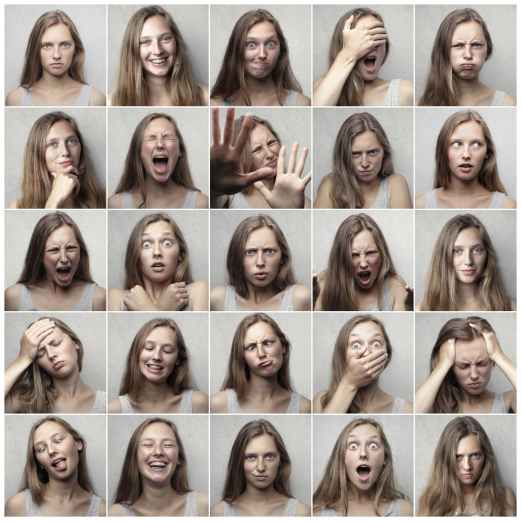
collage photo of woman
Photo by Andrea Piacquadio on Pexels.com


Next Week:  Growing Up With Broadway

Caring Too Much or Too Little

Developing a balance between empathy and good health is a formidable goal and this is a good time to work on it.


65 Compassionate Empathy Quotes (2019)


I have always been a bit too sensitive. I was bullied as a child because I cried easily (and I liked playing with girls . . . and I hated sports). I get the crying part honestly, my dad wept without shame. The problem with feeling intense empathy is that you often feel as if you have the weight of the world on your shoulders. Managing these feelings and mitigating your health and well-being are essential.


What it Feels Like

I have been reluctant to look at the number of deaths around the world due to the Coronavirus. Denying a problem exists or refusing to acknowledge it, has long been a defense mechanism. However, in this case I believe empathy matters. I need to be able to experience what is happening all over the world so that I can do my part to help. I’m forcing myself to look at the numbers and think about what people are going through. It’s surreal, it’s painful, it’s difficult and it’s morbid, but it’s necessary. We’ve been told what we can do and we need to listen, learn, and hold ourselves accountable. Doing your part helps you to be empathetic without drowning in sorrow.

A brief story of too much empathy — very recent and still fresh:  When I adopted Paco in January, he had only been found on a country road two weeks prior. He weighed just over five pounds and his bones were protruding everywhere, his fur was extremely matted, and he was deathly ill from a virus. When I saw him for the first time, I wept. Each time I thought about him fighting for his life, alone and abandoned in the woods, I wept. Admittedly, this extreme sensitivity went on for weeks. This is the reason I had to leave my volunteer position at a pet shelter; I had too much empathy. Learning how to compartmentalize my feelings and thoughts was and is, necessary. By the way — Paco has fully recovered and he’s out of danger. I still worry, but it’s under control. The crying has stopped.


 Family

The reality of family members who are not as strong as I am or who might be struggling with emotional and/or financial issues is ever-present. How much of their worries are my worries? How much of their suffering can I or should I take on? What can I do to ease the anxiety I impose upon myself? There are a number of considerations when discussing problems with family members. First and most importantly, in some cases, they have families of their own. Therefore, when you get involved, there may be others in your family that are also affected and that complicates matters further. There is a risk of alienating family members who may be embarrassed or who may see things differently.

Most people prefer privacy, even if it means not sharing with their own family. This could be the topic of a whole other blog. I’ll leave it at this:  there are times when it is best to keep family problems at arm’s length. You may have to be clear about that when approached. “Sue, I think it would be better to discuss that with Greg; your husband is my brother-in-law and one of my favorite people in the world, I don’t want him to be angry with me for taking sides.” Sue doesn’t exist. Just an example of the language you may have to call upon when communicating. Remember, most people prefer candor and authenticity. Those who don’t may not deserve your time or energy.

There is always the advice that is unwelcomed. Family members who are not ready or willing to face their problems will sometimes push you away and resent you for getting involved. In these situations, you have to be either willing to handle the confrontation or in some cases ignore the radio silence.


Friends

Our friends are our chosen family. We love them dearly and sometimes that love might cause us great pain. When you see a friend in trouble and you cannot help them, it can tear you apart. Two of my friends are alcoholics. One of these individuals will no longer speak to me because I tried to help and he does not want to acknowledge his problem. The other is in treatment and doing well so far. The only way I can live with myself in situations like this (be it a friend or a family member) is to try to help in some way:  support, resource, friend, caregiver, etc. Doing nothing makes me feel useless and more like a failure. On the other hand, if I reach out numerous times and the friend refuses my help, I have to be able to accept that I’ve done all I could do and walk away. Speaking from experience, I’m not insinuating this part is easy; in fact, it may be one of the more difficult things in life you will have to do. Friendship is like any other relationship, empathy is imperative and it must be conveyed delicately. People who are suffering emotionally cannot always handle empathy when you’re feeling it, they may need time to process and prepare. As a friend, you need to understand boundaries and know when it’s the right time to help.


Our World

We live in complicated circumstances with over seven billion people inhabiting the planet.  Unfortunately, 734 million of the world’s dwellers are considered to be living in absolute poverty (wikipedia); that’s a lot of people. Horrible reality like this can keep you up at night. The number of people with cancer and no access to care, the number of people in abusive relationships, the number of children without food, the number of refugees without a home, self-serving politicians, and on and on. It is important to consider the difficulties all around you and do what you can to help; however, it is equally important to consider all that you have to be grateful for.


How to Manage it So that it Doesn’t Take Over

Meditation is a self-help practice I mention regularly. People often think of it as a waste of time or new agie. For me, it is a way of keeping things in perspective. Sometimes I make life too much about me and I have to remind myself that it is not at all about me. At other times, the weight of everything around me is so difficult to manage, I have to shed some of it by logically thinking it through.

Exercise is one of my top three ways of sorting through life’s difficulties. When you’re overly concerned about everything, you have to have a way to balance the gravity of all of these concerns or it will consume you. Exercise is like a release valve. There is no doubt in my mind that I have developed an addiction to working out. Exercise and chocolate are the only two addictions I can honestly say I embrace without guilt or self-punishment. I do not often give myself a free pass to indulge; therefore, I am grateful for the freedom to just enjoy these two gifts.

Volunteering your time is not a panacea for solving the world’s problems. However, it is a way for you to feel empowered. Everything you do to help will yield rewards.

“Volunteers are not paid — not because they are worthless, but because they are priceless.”

— Sherry Anderson


You know as well as I, that no matter how thoughtful you are or healthy you may try to be, your emotional state of mind (mood), often determines how you feel. You might have a good night’s sleep and wake up feeling so much better than the night before. On the other hand, you might do everything right and have a restless night’s sleep and wake up angry at the world. I have learned to just go with it. If you try to push it away or sweep it under the rug, you are likely to either experience it with greater angst or have it rear its ugly head at the most inopportune time. If you breathe and treat yourself kindly during these difficult periods, you will come through the difficulty with less collateral damage.


Talk Through it With Someone You Love and Trust

For some, talking through your worries is a learned behavior. Some of us are hesitant to burden others with our problems or confused thoughts. We’re quick to want to help others, but when it comes to our own issues, we retreat and suffer in silence. I’m a big fan or running things by people who are not directly involved and I believe, can be objective. Be sure to ask if it is okay to share. Do not judge or dismiss an individual’s thoughts. You can be certain that if you disrespect a generous listener, you will never be able to solicit advice again.


“Empathy is the medicine the world needs.”

— Judith Orloff. M.D.


Resources:

How to Be More Empathetic (NY Times)

Importance and Benefits of Empathy (Very Well Mind)


I hit a milestone with 100 blog posts last week. I wish I had been aware of it, I would have celebrated sooner.

Coloring Up My World

Give it a try, it might help you feel better.


The single most inspiring thing I have done over the past few years (not counting moving overseas which was a different kind of life change), is to add color to my life. Blues, reds, yellows, and lots of contrasts. For the longest time I was afraid of color. That fear still exists deep inside of me.

“Color plays a vitally important role in the world in which we live. Color can sway thinking, change actions, and cause reactions. It can irritate or soothe your eyes, raise your blood pressure or suppress your appetite. When used in the right ways, color can even save on energy consumption.”


IMG_5573 (1).jpg

It took me months to decide on the color of this piece. Once I made the decision, it tooks months to make. The price you pay to have the color you can live with. It’s a greenish yellow (hard to tell) and it brings out the mustard in the rug and a yellow in the painting that hangs above it. I think it also compliments the burnt orange rug.

Color Matters — an article to review

Now why would a grown man like me be afraid of color?

Imagine living a lie for over 20 years; my sexuality being the lie. When you’re in a situation such as this, where you are hiding your true identity, the last thing you want to do is draw attention to yourself. I shouldn’t really generalize this way; in fact, some closeted gay people do a great deal to draw attention to themselves. Best that I switch to first person:  the last thing I wanted to do was draw attention to myself — I lived life through muted colors for a long time. On certain days and sometimes for extended periods, I revert back to this practice.

Here I am, 61 years old and I’m finally comfortable enough in my own skin to add color to my life and not feel embarrassment. True enough that my last apartment, in Maine, was decorated with burgundy and lime green, but they too were muted. I would often walk into my kitchen and think, what did I do? Is this too much? Is it feminine? What will people think?

Then I made a bold move and bought a contemporary condo in Portugal.  I am finally at a place in my life where what others think hardly matters. I can’t say it doesn’t matter at all, because that would be a lie. It just doesn’t matter as much. What does matter is what makes me comfortable; right now, color feels good.

I do admit that I’ve had to reign it in. I saw the latest Almodovar film and came close to painting my kitchen cabinets red — that would not have been good. Almodovar uses color effectively in all of his films; it’s one of his distinct trademarks and I have always envied him for it.

I want to have a big, bold, splash of red somewhere in my home. I decided on the terrace wall and then I pulled back on that idea; now I’m reconsidering it. I figure if I sit with it for a bit, a more concrete decision will come. Some would say, don’t worry, if you don’t like it you can paint over it. That seems like a big hassle to me, I’d rather get it right the first time. And now I have meshing up so that Paco doesn’t go through the slats; therefore, that would have to come down first. This is what is called procrastination; a Coronavirus byproduct. Stay tuned for a firmer decision sometime soon.


The Current Situation

Like so many others I constantly shake my head wondering if this is really happening. When you have never lived through a war (Vietnam but I was a child), it’s difficult to wrap your head around so much death and despair. I’m coping the best way I know how; grateful that I have a pet to keep me company, happy to be in a beautiful place, and hopeful that my friends and family remain healthy.

Feelings Reiterated

Reblog — difficult time to write and some things require reiteration


Your State of Mind

One of the many things that happen when you grow older is coming to terms with your feelings (if you’re lucky). Coping with your feelings, identifying your feelings, sorting out your feelings, embracing your feelings, allowing yourself to feel, projecting feelings; you can see where I’m going with this.

Why Your Biology Runs on Feelings (click for more)

Feelings are complicated and so is being human; it comes with the territory. Some people are so wrapped up in themselves, they neglect to consider the feelings of others. Is it social media, the pressures of life, family, coping skills, socialization? What is it about the world around us that has made us less empathetic? Some would argue that humans have always been this way. I’m not sure about that. I recall a time when people had more time for one another and seemed to care more; I could be wrong.

I’m sure the news media has something to do with it. Around the clock news covering the world. It’s easy to become numb. The “this doesn’t affect me” attitude is also pervasive. I certainly do not have the answers; I only know how I feel.

Anger
I hate it when I get angry. Mostly because I feel that it could have been avoided. Harnessing my anger has been a long-term goal. When I’m well rested and relatively happy, any anger I feel is short-lived and can be sorted out. On the other hand, when I’m tired and things are falling apart around me, anger becomes a ball and chain around my ankle; impossible to get rid of. I can usually take a step back to process my anger and that seems to help; however, let’s be honest, sometimes the stepping back part just doesn’t happen. When I react based on emotion, it’s usually an outcome I regret.
Not long ago I was having lunch with a friend and she started spewing what I thought was bigoted hate speech. You’d recognize it in a minute; when the words come from privilege and a lack of empathy. No matter how hard I sit on my hands and push the anger down, I find myself gritting my teeth and becoming righteous. I don’t like it one bit. The person sitting across from you does not hear the words you are speaking, they only experience the anger. What it does do is justify their feelings. What they hear in their head is:  it doesn’t matter what we’re talking about, he always has to start an argument or why does he think he’s smarter or better than I am? None of this is productive; in fact, it is counter-productive. Now we’re both angry and not speaking to one another and we both feel justified in our feelings. I shouldn’t speak for this person, let me say, I feel justified.
We seek out like-minded individuals in order to avoid this kind of anger, but you have to ask yourself if avoidance is the right way to go. I’m not providing answers, I’m merely asking questions; processing for myself and hoping it helps others.
Tears
I am often moved to tears. I cry while watching movies, I weep while reading novels, I’ve been known to shed tears in the middle of a conversation with a friend, I cry in my dreams and at poetry readings, and I have cried myself to sleep a time or two. My father was a big man and he cried; he taught me that crying was okay and I am forever grateful to him for this. I feel sorry for people who cannot cry. I highly recommend it.
Loss of Control 
I have come to terms with being a control freak. I like to be in control. If something bad happens and it is beyond my control, I get angry. I have a difficult time processing:  how did this happen, why did it happen, who made it happen? I guess I believe that if I were in control, bad things wouldn’t happen. This is of course, untrue. Many bd things have happened while I was in control. The helpless feeling that I have when something is out of my control is unpleasant and frustrating. I am learning how to “let go” of situations, events, and reactions that are out of my control.
Pain
The hardest thing about pain, emotional, physical or psychological, is coping — not denying it, but feeling it. Let’s face it, pain in any manifestation sucks, but it’s unavoidable and must be felt. Make yourself as comfortable as possible and wait for it to pass. Unless we’re talking about a terminal illness, it will pass, and you will more than likely be stronger for having dealt with it.
Happiness
I hear about and read about happiness a lot lately. I was watching an old episode of the Good Wife last night and Stockard Channing (love her — did yoga with her in NYC once) was the guest star. Her character said this, “When you get older, the only thing that matters is your happiness.” I guess it struck me because I was in the middle of writing this blog. I don’t think it’s true. Life is so much more than my personal happiness. Yes, lots of things make me happy and I do often pursue my own happiness, but I also spend time thinking about the world, friends, family, cleaning my apartment, paying bills and none of that is necessarily about happiness. A good deal of the day is spent just doing what needs to get done. What makes me happy is just that, getting stuff done — it’s that sense of purpose I’ve discussed in earlier blogs.
Joy
I have to give myself permission to feel joy. I wish it wasn’t so, but it is what it is. After a while, if you’re watching, you get to know yourself and your limitations; your proclivities. I can hear this little voice in my head reminding me to smile and enjoy the moment. I have stopped questioning why this is so. As with any habit, good or bad, you do something often enough and it becomes part of your everyday life. It’s a good habit I am striving to teach myself . . . live a life filled with joy.
“Today I choose life. Every morning when I wake up I can choose joy, happiness, negativity, pain… To feel the freedom that comes from being able to continue to make mistakes and choices – today I choose to feel life, not to deny my humanity but embrace it.”
Kevyn Aucoin
Gratitude
Feeling grateful is powerful. Replacing feelings of pity, blame, resentment, anger, heartbreak, and regret, with gratitude can be more powerful than just about anything else. Sweeping feelings under the rug doesn’t work. Taking pills or drinking alcohol is temporary relief at best. Sitting quietly and thinking about or even writing about, what you are grateful for, helps you to feel more joyful.
Tools
Tools are helpful when feelings become difficult or painful. Some tools/coping skills have been discussed in this blog or past blogs. What I have learned is that tools are at our disposal and can and should be used as often as possible — not as a way of hiding or denying, but as a way to guide us, comfort us, and teach us.
What’s Next for me?
This is the six million dollar question I often ask myself. The answer is:  I have no idea. For the first time in my life, I am not thinking past the next few months and I have to say, I like it.
abstract aluminum architectural architecture
Photo by Pixabay on Pexels.com

Living in a Material World


Self-Discovery

I’m not sure when it happened or why it happened, but at some point I decided to give up just about all of my earthly possessions. Have you ever wondered what you could live without? Two years ago I had the opportunity to answer that question. I either sold or gave away almost everything and now I know the answer. As evolved as I thought I had become, I still like things.  This is a list of what I cannot live without (not in order of importance):

  • a comfy mattress
  • good bedding (Portuguese cotton sheets, a down comforter, and 3 down pillows)
  • good pots & pans
  • well made kitchen tools
  • a high definition, smart TV
  • 100% cotton underwear
  • an iphone with a screen that isn’t cracked (it’s not about the label, it’s about quality and efficiency)
  • sunglasses that protect you from UV rays
  • a four wheel suitcase
  • a comfortable sofa
  • good martini glasses
  • silicone ice cube tray
  • a MacBook
  • an iphone (I have the 7S and it’s fine)
  • novels, lots of novels
  • a watch (I’m obsessed with time)
  • Alexa — I love answers to questions without any effort
  • a bicycle
  • a practical wardrobe (includes good shoes)

When I look at this list I feel pretty good. There are a few luxury items (i.e., Murano martini glasses, Apple products); however, I’m certain it could be a lot worse. No judgment if your list is longer; to each his own.

The flip side of this revelation is what I can live without and that list is unfortunately, much shorter:

  • cargo shorts
  • Nike sneakers
  • Cashmere
  • expensive artwork
  • expensive watches (I once owned over 50 watches)
  • fine silverware and wine glasses
  • a car
  • a KitchenAid mixer

Am I a better person for having learned these things about myself? No. What I am is more realistic and less bogged down. I now know that I can easily get rid of almost everything and start fresh. I can walk away from that ceramic bowl I thought I was in love with and never look back. I can give away that Burberry jacket and not shed a single tear. I can survive without a Bertazzoni stove (I do miss my stove).

When I look at the list of things I cannot live without, it seems longer than I thought it would be, but in reality, it’s not that long. There are a few items on the list that I certainly could live without, however, I choose not to. I have come to learn that I love and want certain creature comforts. What I found interesting was the process of acquiring new things. When I arrived to Portugal, my mindset was somewhat unrealistic. I thought that I could wear what I brought with me and only buy new clothing when it was absolutely necessary — holes in my socks sort of thing. I had always cared a great deal about quality clothing; this new business of a minimal lifestyle was foreign to me. I learned over time that it was unrealistic to stay away from shops. I need to feel good about myself and part of that is to wear nice clothes and present myself in a positive way. I’m sixty years old now (61 in a few weeks) and I don’t have the physique I once had; therefore, what I desire these days is a comfortable, practical, classic wardrobe. I occasionally purchase a colorful hat or watch, just to brighten things up. It’s more for my own psyche than to impress someone else.

In a very healthy way, I have come to accept what I look like. I am hoping I care about my appearance until I die. I think it’s important to love and accept yourself physically, spiritually and mentally. When you stop caring, you begin to decline in every way. I have observed that older women in Europe (mostly the cities) seem to embrace this philosophy. I see so many women in their 70s and 80s wearing beautiful clothing and owning their look — unfortunately, men that age do not seem to care. I’m afraid tobacco and alcohol have done some major irreparable damage. There are exceptions of course.

Apropos of nothing, I was talking to my niece Nicole this week and she brought up the scaling down process in her own life. She’s raising twins on her own and she’s figuring out a way to financially make it work.

I told her that I was writing this piece and she said, “You only need one coat, so long as it’s a good coat.”

I laughed because she and I are spiritually connected and that philosophy is exactly where my head has been lately. I have only one coat in Portugal, but it’s a good coat.


My Home

My nest is probably in the top three most important parts of my life. It has to be clean, contemporary, and warm. It does not have to be super expensive and posh. Before I moved to Portugal and decided to purchase in Faro, I looked for an apartment with clean lines. I wanted a place I could keep clean with minimal effort. Faro doesn’t have dust build-up the likes of which I experienced in New York and Maine. I assume it’s because there are fewer automobiles and a constant breeze off of the Ria Formosa. It’s nice not to have to dust daily. I mention this because keeping the things I enjoy out in the open gives me pleasure. So even though I have fewer “things” sitting around on shelves, I don’t have to work very hard to keep them looking nice. Sticking to my decision to remain minimal has been easier than I thought. I guess once you go through the process of shedding everything, you never want to accumulate that much stuff again. If I decide to move, I won’t have quite as much stuff to cart around.


What is all Means

I can never help stepping back and analyzing what it all means for me and my life. I think that is what I love most about writing; put it down on paper or type it into your computer and it becomes reality. Sometimes you like what you read and other times you are appalled. You can make a conscious decision to change what you don’t like. I have found that if I start with awareness and then gradually make small changes, after awhile, I come to realize that whatever it was, is no longer present.

The car is a good example. I sold my car in Maine a couple of months before I moved to Portugal. I wanted to test life without a vehicle. I’ve had a car my entire adult life, so I knew it wouldn’t be easy. I even owned a car when I lived in Manhattan. I recall getting up to move it every morning. I found it damaged numerous times; often, I had to park it a mile or more away from my apartment, but that didn’t deter me because I couldn’t imagine life without wheels. This test would not be easy, but it’s the challenges we face that make us stronger and more determined. Cycling and walking have always been favorite pastimes for me, even more so now.

By the way, when people ask about my desire to reduce my carbon footprint, some of them raise the issue of the number of flights I take (and then they laugh). To this I say:  I take a train or a bus whenever I possible and I only fly when I absolutely have to. Sometimes I think doing the best you can do, has to be good enough. On a recent trip I took Amtrak from North Carolina to Boston stopping at various locations along the way. It was a great way to get from point A to point B.


A Recent Comment

I love honest conversations and I had one at the gym today. Someone I have known for a few months told me that my blog reads like a diary. He was not being critical, he was sharing his perception. I could hardly argue with his assessment. I do share a great deal of what I’m feeling at any given moment, with my readers.  I actually do keep a journal; I have for almost forty years. What I write in my journal is just as honest and straightforward, but much of what I write privately, is never meant to be shared. I write about perceptions of individuals, fears, hopes; all very personal. I imagine you might be questioning what could possibly be more personal than what I include in my blog . . . I guess you’ll just have to trust me; we all have demons and dark thoughts.


The Coronavirus (COVID-19)

It was very difficult to concentrate on anything other than COVID-19 this week. So many things are up in the air and the news changes by the minute. The entire country of Italy on lockdown and Spain is not far behind (they’re only 40 minutes away); it’s difficult to imagine. And then there is the choosing who to save thing.

I woke up in the middle of the night concerned about Paco getting the virus. His immune system is currently compromised and I was acutely concerned. I got out of bed and grabbed my laptop and learned that dogs cannot contract this particular strain.  One less thing to worry about.

Expat Life in Portugal Two Years In

“It is wiser to find out than to suppose.”

— Mark Twain


It’s been close to two years since I acquired my residential visa and boarded a plane to Faro, Portugal. Three bags containing all that I chose to keep and my furball companion, Giorgio. I had no idea what awaited me, but what I did know is this:  I knew that life in Portugal would be extremely different in just about every way, I knew there would be challenges to overcome, I knew that it might at times be lonely, I knew that because I was too young to “officially” retire,  I would be living on savings for quite a while, I knew that good friends would come to visit, and I hoped that I would never experience another snowstorm or see my nextdoor neighbors in Portland — the ones I shared a condo wall with. There is nothing worse than bitter, unpleasant, holier than thou, neighbors.

What I didn’t know:

  • that the weather in the Algarve is near perfect.
  • that fish straight from the ocean could be that good and so affordable.
  • that Portuguese wine is delicious and a true value
  • I didn’t know what social democracy looked like.
  • that if you look hard enough you can find just about anything you “really” need.
  • that your neighbors could be so kind and caring.
  • that out of despair can come truth.
  • that people in your life who truly love you will be there for you no matter how far away you are.
  • that you can live on a whole lot less than you ever thought possible.
  • that there are toxic people who will make their way into your life no matter where you live or how hard you try to keep them away.
  • that you can do just about anything you put your mind to.
  • that forgiveness is the best medicine.
  • that it is okay to miss what you once had so long as you embrace what you currently have.


The Best Parts of Living in Portugal

One of the things I didn’t realize before I moved to Faro was how perfect the location is for travel. Portugal is your first stop in Europe and from here, you can travel to many different places. There are several budget airlines flying in and out of Faro to different parts of Europe. I hate connecting flights, so I try my best to visit places where I can take a direct flight. I’ve been to some beautiful cities in France, Great Britain, Germany, and the Netherlands. It’s quick and easy and my cell phone still works in all of these places. Apparently, there are some pluses to being a part of the European Union. I’ll be traveling to Manchester soon and I’m not quite sure if Brexit has spoiled my cell service there. I’m sad about Brexit for reasons I won’t go into here. I’ve enjoyed conversations about British and EU politics with my British expat friends in Faro. The United States is not the only place on earth — I wish I had been more aware of global politics in the past. Our influence is vast and more significant than I had ever realized.

I knew that the cost of living would less in Faro than it was in Maine; however, I was pleasantly surprised when I discovered that certain taxes were very reasonable. For example:  my property taxes on my 1100 square foot, two bedroom, three bathroom condo, are 350 Euros a year. I paid more than that per month in Maine and my apartment was smaller. I cannot help but wonder why that is. What does your money pay for in the U.S.? Taxes are automatically added in at the grocery store, restaurants, department stores, etc.; therefore, you don’t really feel it as much. Groceries are usually about a third lower than what I paid in the U.S. even with the added taxes and in some cases, food cost even less. Fresh fish is inexpensive; therefore, my diet is much healthier and tastier. Fresh vegetables are, for the most part, local and free of toxins. It’s great not having to break the bank on organic food. Laws prohibit antibiotics in animals raised for food and green growing methods produce grapes used for winemaking that is far better for you.

The weather in the Algarve is absolutely phenomenal; 300 days a year of sunshine phenomenal. Even when the weather is bad, it’s good. Summers are warm, but there is a wonderful breeze off of the Ria Formosa (the body of water near my home), with fall comes relief from the warm temperatures; a bit of rain; when it comes you want more, winter is cooler, but a sweater is more than enough to warm you, and spring (now) is glorious:  birds chirping, warm sunshine and a sense of renewal. When we do have humidity, it’s during the cooler months so you welcome and embrace it. I cannot overstress the power of all of this vitamin D and the joy of not having to shovel snow. No wonder Portugal has been the #1 place to retire for a few years running.

The warmth and sincerity of the people is not to be taken for granted. There is a reason there is so little crime and and virtually no homeless people in the Algarve:  people here take care of one another. I think that this pretty much sums-up social democracy:  people take care of people; they don’t gripe about it or show any signs of regret, they genuinely care about humanity. Sure doctors make less money and people in general pay more taxes, but the quality of life is so much better for a greater number of people. That is not to say that they don’t care about humanity elsewhere; I can only speak to what I have experienced here in Portugal.

Portugal is not a wealthy country. There are pockets of wealth, but I chose to live in Faro, a working class, mostly Portuguese city. I have never for a second regretted this decision. When I want a bit of luxury:  Quinta do Lago, Vilamoura, Porto, I go to those towns. For the most part, it’s the gastronomy that might draw me to these places. This is not to say that Faro isn’t a beautiful city with great food; plainly speaking, it is special in its authenticity — there is no pretense or putting on of airs. There is history and culture in Faro and it is preserved, however, not widely promoted. The food is fresh and fairly priced, and as I mentioned earlier, the location is ideal for travel. In so many ways, that is just about all I need.

The morning has been glorious for me in Faro. Early morning has always been my favorite part of the day. I find it to be peaceful and hopeful. Every day is a new day after all. Aside from the ability to sit out on my terrace with a cup of Joe in the morning almost year-round, there is the fact that the United States is five hours behind and I rarely, if ever, hear from anyone from back home until noon at the earliest (except for my brother Leo who calls at any hour). It’s almost like being in a state of meditation; I can breathe, think, and enjoy the quiet with little interruption. I feel so much healthier not having frantic morning telephone calls due to work or family issues. Then there is the morning walk with Paco in the park across the street from my apartment; I rarely see another soul as the sky goes from fiery red to bright blue — it’s poetic and sublimely peaceful.


The Challenges

Language remains a bit of a challenge for me. I have learned a great deal from Memrise (a language app), a tutor at my home, and Portuguese subtitles, but I still have so much to learn. Although many people speak English well, I believe strongly, that if I am going to reside here, that I should speak the language as much as and as often as possible. I’m at a place where I get by with my limited Portuguese. I’d like to be able to watch the news in Portuguese and have a clearer picture of what is happening in Portugal. I’ll get there; however, getting over my shyness about pronunciation is essential. I need to realize that when I say something and someone laughs, they are not laughing at me; they are more than likely laughing at the meaning of the word I just uttered by mistake and there is a big difference. And if they are laughing at me, so what. My neighbors and friends are delighted that I have committed to learning Portuguese and most people are helpful.

I have to be careful about how I talk about middle aged men in the Algarve. Careful, because the last thing I want to do is offend the people I am living among. Generalizations can be unkind and unfair; therefore, I want to express my thoughts without prejudice. What I have noticed are merely my own observations — they should not be regarded as fact. Some men have a difficult time with me; questioning who I am and why I am here. I am careful in how I approach men I do not know. The gym has become the easiest place for me to learn more about the culture and why I am sometimes misunderstood.

Women here are very open, friendly and genuine. They have been gracious toward me and helpful in so many ways. Of course there have been exceptions. As a sociologist, what I have observed is mainly cultural. Men here seem to be very masculine and reserved; women seem to be more progressive and open to societal changes. I believe that behind the scenes they are quietly persuading men to be more tolerant and modern. By seeing it through this lens, it helps me to understand that when I sense a barrier or resistance, it is probably not due to anything I have said or done.

Older and younger men are similar in their dealings with me; however, I have less interaction with these two groups. I have often complained (when blogging) that young men smoke too much and overuse cologne and I stand by these thoughts. I live next to a high school where my sample group gathers daily.

[This is one of those times when I have to tell myself not to be judgmental.]

You know how much I love to complain about food; please, please, please bring more ethnic (world) cuisine to Faro. I just keep telling myself it will come. Too few countries are represented here. However, I have noticed things are changing in a more positive direction.

Pastry is sublime. It’s not quite as decadent as it is in France, but I love it just the same. What I like most is that a good deal of the baked goods here are not terribly sweet. It’s dangerous to be around so many bakeries. I have blogged about the bread so I won’t belabour the point. What I will mention is that I love French bread and it’s not that easy to come by in the Algarve. I have to go out-of-my-way to snag it and I do — in fact I’m going to Loulé today and I intend to pick up a baguette. This bread freezes well, which makes having it when I want it fairly easy. I’ll be in Toulouse in two weeks and I’ll load up on some good bread before I leave France. Portuguese people love their bread; I respect their opinion and I have found some Portuguese breads that I do like. This one will definitely get me in trouble.

Portuguese people are proud and stubborn and often refuse to admit that they might be wrong. I was at a self-checkout counter at the grocery store recently and the machine flashed a “printer not-working message.” I left the machine and walked to another. A staff member came over to me and said, “Please use the machine where you started.” I told her that the printer was not working and she said it was. Sure enough when it was time to get the receipt, which you have to show before you leave, the printer was not working. When I went over to her to inform her, she shrugged and went to the machine to fix the roll of paper for the printer; offering no apologies. I know this kind of thing happens everywhere, but I noticed it happens a lot in the Algarve. There is some expat resentment.


The Surprises

I had no idea that Portuguese cotton was so cool and soft. One of my three suitcases when I arrived had two sets of cotton sheets; one set for my bed and one set for my guest bed. I have been searching for the perfect set of sheets my entire adult life. Egyptian cotton is usually a good bet; however, this bedding can be very experience and sometimes a higher thread count doesn’t necessarily translate to comfort.

Giving up having a car in Portugal was a big, scary decision. It was the one thing I was truly concerned about. Using public transportation has been easier than expected. It’s certainly not perfect, but neither is being in a car. Reducing my contribution to the carbon crisis is rewarding and fiscally smarter; although Uber has benefited greatly. The walking and cycling are also beneficial to my overall wellbeing. There is a fairly long and steep incline when returning to my building from shopping or walking. I consider the health benefits as I climb; the sweets in my bag seem less threatening. Still, there will always be guilt.

I will not lie and say that I do not miss the city. Cluttered sidewalks, honking horns, packed public transportation, and the odors of an ethnically rich urban city, remains one of the great loves of my life. When I’m feeling the loss of grit and sirens, I board a train for Lisbon and I am at once returned to my city roots. I have learned how to mitigate any yearning that rears its head — feed the beast and it will simmer down.

Gay life has been a bit challenging, it gives me a reason to travel and I know that it will improve in time — Portuguese men in my part of Portugal are more closeted than what I’m used to.

There’s more . . . but there are some things that I prefer to keep to myself.


To Sum Up

I am hoping that I have conveyed that the pluses far outweigh the minuses. Living in Europe was a dream I never imagined possible. My friends and family often remind me that I took a risk and they are proud of me for it. When my visitors walk out onto my terrace and light up, I know that I made the right decision to be in Faro. I also know that I can leave whenever I choose to do so. On my walk with Paco this morning, I noticed how fresh and fragrant the air was. I took in the light, the sounds, and the scents and I embraced my good fortune. I’m not sure how long I will remain in Faro, but I know that for the first time in my life, I am at peace.


What Happens When Your World Expands

Travel to faraway places expands your mind; how could it not. You see and experience things that you might never have imagined possible. The impact this has on your thoughts and beliefs should not be underestimated. We are the sum total of our experiences. You can read it and hear about it your entire life, but until you see it up close and touch it, you cannot appreciate its effects.


Looking Ahead

I need a hobby. It used to be poker and now it’s not — and not because I don’t want to play either. I refuse to play online, I need to look into the eyes of my fellow players. Paco is helping to fill my day in wonderful ways:  walks, playtime, training. I’ve always been a voracious reader and the ability to sit with a good book for hours at a time has been a true gift. Then there’s the improving of my cooking skills:  24 Kitchen is a 24 hour cooking channel here in Portugal and I love it for so many reasons. I especially like the Portuguese shows, they don’t have all that yelling and screaming I used to experience. They’re quiet, instructional programs. It’s a great way to learn Portuguese because the chefs and home cooks speak slowly and it’s fairly easy to follow. When the say “faca,” they pick up a knife, so you learn that faca means knife.

A part of me believes I still have another big move left in me. I have dreamed of waking up to the sound of ocean waves and I believe I can make that dream come true. I guess I need to see how life plays out; so much can happen between now and whatever lies ahead.

A crazy world full of languages — “panda’s holiday” is a series of posts for when...


Paco Update

Paco has now had three visits to the Vet in less than two months. He is up to six pounds, but still way too thin. His immune system is so badly compromised, there is not much he tolerates.

The vet recently informed me that the Portuguese government has to be sure no one is looking for him before I can officially register him as mine. This angers me because he was clearly abused as a puppy. No dog who had love, kindness, food, disease prevention, etc. would have been found in his condition. I was told that if someone did come forward, I’d have to battle it out in court and I would.

Paco is one of the sweetest, most appreciative pets I’ve ever encountered. He wants to shower me with love and kisses whenever I allow it — his wet nose is very cold. He’s super smart:  he’ll learn a trick on the second try and repeat it the next day without review. He’s never once made a mistake in the house and he doesn’t mess with my things. He knows his toys and loves sunning on the terrace. I sense his loving gratitude. I know that he wants to stick around for awhile and he’s trying his best to recover . . . I’m convinced he will.

A good article on why yelling at your dog is a bad thing:

http://www.you.co.uk/never-shout-at-your-dog/

We’re in the training phase of our relationship. Paco was clearly traumatized early on in his young life. The best thing I can do is show him lots of love and patience. Gaining his trust is essential for good behavior. Learning tricks is good for dogs; they want. to please you and they love treats. He’s testing me right now — he’s exploring how far he can push me and how much he can manipulate me. When I show him that I make the rules, he becomes passive and loses his alpha male persona. In my world, there is no other way. Fortunately for Paco, he’s 100% on board.
0525557a-e263-48f6-9646-5fcc356857ce

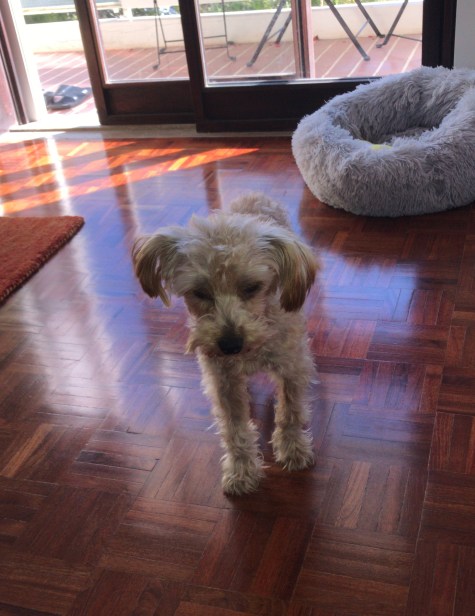
May 21:  Paco is fully recovered, weighs almost nine pounds, has been neutered, and he couldn’t be happier and of course, that makes me happy.

Why I Chose to Move to Portugal (reblog)

I will be rewriting an update for my almost two years living in Portugal for next week’s blog.

img_1810
Magnificent architecture in Faro:  Moorish, Roman & Gothic throughout the city.

When you make a big and unexpected decision in your life, people are curious about why you went in a particular direction; it’s a reasonable curiosity. I’ve spent a bit of time on why I moved to Portugal in previous blogs; however, I thought since I am frequently asked this question, I would answer it thoroughly.

One of the most important things I learned throughout my career is to question “why” before you do anything. You want to start a business? Why? You want to get married? Why? You want to move overseas? Why? Asking this important question and answering it thoroughly and honestly, will help to insure that you are doing whatever you are doing for the right reasons — well most of the time.

So when I started to feel that U.S. politics were the cause of a good deal of my anxiety, I asked myself why I was wallowing in pity rather than working to change my situation. I had done some letter writing and personal campaigning for Hilary and then of course, I blamed myself for not doing enough. After a lot of soul-searching, it occurred to me that it wasn’t just that Hilary lost the election, it is the direction politics in general is going in, in the States. I’m not going to do a deep dive into politics; however, the big issues for me are gun control, healthcare, taxation, greed in Washington, and the negative perception Americans have of democratic socialism, www.dsausa.org/what_is_democratic_socialism. The conclusion that I came to was that I had to move to a country where the values of the government and the people more closely matched my own. In other words, why stay in a country where values will not be changing anytime soon.

Some “Why” Questions:

  1. Why am I leaning in this direction?
  2. Why is now the right time?
  3. Why is my heart telling me to do this?
  4. Why am I struggling with this decision?
  5. Why not?
  6. Why am I questioning the status quo?


Why Overseas?

Politics in the U.S. has become more conservative over the past few years. Some say it happens whenever you have a power base in office that leans in a particular direction (surprise, I lean left), the majority will tend to swing in the opposite direction the next election — that certainly is what happened in November 2016. This is likely to occur in any democratic society; however, in many European countries liberal policies and attitudes have a strong foundation, therefore, the bar is set higher.

The other reason I decided to move overseas is that I have never resided outside of the United States. I tend to agree with those who believe that life is not a dress rehearsal; this was an opportunity I may not have had again.


Why Portugal?

I have considered many other countries over the past few years. At one point I was certain I’d end up in Concon, Chile. I had been there a couple of times and fell in love with the coast and the lifestyle. Well then they had a big earthquake and read that there would be others. Sure enough, a short time later they were hit with a second large earthquake. I thought I had tempted fate far too many times to buy a condo in a high-rise there. I’ve thought about Italy because it is my father’s birthplace. I love visiting Italy; however, the instability of Italy’s government and economy concerns me. The Caribbean is too humid and has those pesky, life-threatening hurricanes; Norway, Sweden, and Denmark make it very difficult to reside there; and frankly other places were too expensive or too risky.

I had read a good deal about Portugal and decided to check it out. I’ve been told that it is dangerous to decide on relocating to a place having only visited once. Knowing that some advice is sound advice, I decided to do my homework. I read articles about retiring in Portugal, I joined a couple of expat groups on Facebook, I had several conversations with individuals who have made the move, and I returned to spend more time here.


Why Faro?

Most expats who decide to live in the Algarve DO NOT choose Faro. I discovered on several trips prior to moving to Faro that there are expat communities in many towns all along the coast; however, most people see Faro as a place to land or switch trains. I do not mean this in a disparaging way, so I hope no one takes it that way:  I did not want to be in the center of a tourist destination. Don’t get me wrong, tourists visit Faro; however, compared to other towns in the Algarve, Faro is not overrun. In fact, there are very few Americans in Faro.

The following are some of the wonderful things that drew me to this beautiful city:

Culture — music (Fado), theatre, festivals, food, ceramic tiles, history and art.

Portuguese — A majority of the people living in Faro are Portuguese or immigrants from struggling countries. I recently learned that when the European Union decided how many migrants each country should take based on their population, Portugal said, “We’ll take double that number.”

Faro is not as much a tourist city as say Lisbon, Porto or other parts of the Algarve. I’m happy about that.

Restaurants — I can find traditional Portuguese, Japanese, Chinese, Italian, Turkish, Indian and several other ethnic foods and the quality and value is outstanding.

The Market (Mercado Municipal) — in a huge open space (indoor) close to my apartment, it is probably the gift I will never take for granted.

Walking city — I can walk to just about every place I need to go.

Access to everywhere else — Faro is the capital of the Algarve; therefore, the airport, trains, buses, and highways, can get you just about everywhere and quickly.

Architecture — Preserved, historic, eclectic, and beautiful. Everything is understated.

Government offices — all of the Portuguese government offices I need to deal with are here in Faro.

What more can I ask of a city?

Image result for faro portugal
Catholic Cathedral in Old Town — a short walk from my apartment and where the outdoor market is on Sundays (stock photo)


I took these photos when I was walking to the ferry yesterday — beside Faro Castle. This is Old Town, Faro and it dates back centuries. It’s a 15 minute walk from my apartment. I come here often to read, walk and eat. Some of the remains are from the 9th century.

And by the way . . . that blue sky is real (no touching up or color added). There is no smog to speak of here.

Image result for faro portugal
There are several islands off the coast of Faro that offer spectacular beaches.
Image result for faro portugal
Farol Island’s lighthouse is just a ferry ride through the Ria Formosa. A 5 Euro round trip ferry ride is a great way to go to the beach.


The Value of Education and What I Have Learned

Has My Ph.D. Paid Off?

I was going to subtitle this piece:  Is a Ph.D. Worth the Time & Money? Then I realized how personal and subjective this question is for each individual who has one; therefore, this piece is about my degree.

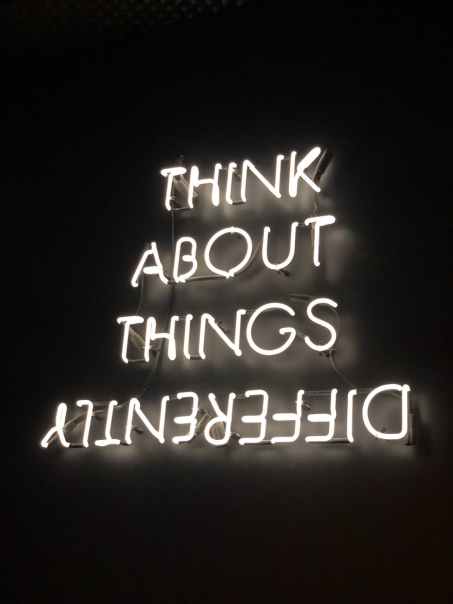
neon signage
Photo by Ivan Bertolazzi


When people learn that I have a Ph.D. in Higher Education Administration, they are often surprised; that should bother me a bit, but it doesn’t. When my self-esteem was at an all time low a few years ago, the one thing I did not doubt was the significance education has had in my life. I am not a scholar, I will never be a scholar, and I never wanted to be a scholar. What I am is curious and ambitious. If I must put myself in a box, these are two boxes I don’t mind being in.

My ambition, from as far back as I can remember, was to make a difference in the world and be better than what my birthright dictated. My mother was a barmaid and my father was an immigrant who worked in a restaurant. As a result of our socio-economic situation, the messages that were relayed to me as a child, were clear:  you will never amount to anything. I should be clear that those messages did not come from my parents. I was fat, closeted and of average intelligence; therefore, my existence was discounted. I did not come from parents who valued education; not because they looked down on it, but as a result of their own upbringings. They didn’t understand it, but I like to think that by the time they passed, they got it.

One of my favorite stories about my dad says it all. My father retired to Florida and lived in a very modest condominium complex with mostly former blue collar North Easterners. They were good, hard working people, proud of their heritage and happy with what they were able to carve out for the later part of their lives. I would visit my father as often as possible. I enjoyed the weather, the environment, and I loved seeing my father relaxed and happy. One morning I was doing laps in the condo swimming pool and my father was sitting near the edge of the pool with his friend Charlie. This was a community of like-minded people who enjoyed meeting the friends and family of their neighbors.

I wasn’t paying much attention to the two men as I concentrated on my laps. Over the sound of my arms slamming the water, I hear my name called out; first softly and then louder and more startling. I raise my head out of the water and see my father motioning me to swim to the far edge of the pool where he and Charlie were sitting. I swim over somewhat frustrated, however, always obedient.

My dad bellows, “I was telling Charlie here about your P.h.C.”

“I don’t have a Ph.C. dad, I have a Ph.D.”

“Oh,” he says, “Is that better than a Ph.D?”

I’m not sure my father ever realized how much his boasting meant to me. The fact that my father didn’t truly understand what my degree meant, did not matter in the least. You might wonder if perhaps he was joking. Although not formally educated, he was not a stupid man. The reason I am fairly certain that he did not really understand my degree, is that he gave me a pretty hard time about continuing to go to college after I completed my bachelor’s. Even though I worked throughout my education, my father thought that I was missing opportunities to make “real money.”  My explanations about wanting to specialize in a specific discipline were, for him, an excuse for staying in school. I believe at one point, he thought that I was avoiding “real work.”

When I finished my Ph.D., he watched me graduate on stage at Carnegie Hall with all of my doctoral regalia; I am fairly certain, it was one of the proudest moments of his life. He might not have understood the educational system and how it worked, but he did know, that his son achieved something worthy of pomp and circumstance.  Having both my parents cheering for me that day, made it all worthwhile; I had always sought their approval and in many ways, I still do.

My mother often embarrassed me by telling my story to anyone who’d listen. I resented her boasting because each time she told the story, I had either acquired awards I had never been awarded or job titles I had never achieved — she embellished without apology. I realize now that for my mother, it was all about living through me. Any success I ever achieved should have been her own success; the only reason it turned out to be me, is that she had many children and that had gotten in her way. My mother thought she was smarter than anyone else and that anything I achieved came from her gene pool. We argued about this a lot. I wonder if she might have ever imagined that it was my own intelligence and ambition that might have gotten me there.


How My Degree Changed Me

Well into my five or sixth year of working on my terminal degree, I went into a deep funk. My dissertation advisor was concerned about me and asked me what was troubling me. I told Dr. Smith that I felt as if I was doing hours and hours of research for nought. His response has remained with me throughout my entire adult life.  He told me that in truth, he would probably be the only person who would read every word of my four hundred page dissertation. Actually, he also said that my mother would read it, but he was very wrong about that. He said, “You’re not writing so that you’ll be published or so that you prove your hypothesis, you are writing to document what you have learned and that acquired knowledge will always remain with you. The purpose of this requirement, is to teach you how to think critically. You need to question everything you believe and prove yourself right or wrong.” His words apply to so many things in my life:  my politics, religious beliefs, relationships, values, to name a few.

My family would argue that my education made me part of the liberal elite. Of course I can’t be certain about what they think since they don’t really share their thoughts with me. I get an occasional compliment; usually passive aggressive and back handed. You know the saying, “That which doesn’t kill you . . .”

The biggest part of doctoral work is research:  considering a hypothesis, completing required studies, investigating and reviewing the academic and scholarly perspective, reading and embracing the literary canon. You learn patience and perseverance, you learn laser focus, you learn to trust yourself, you learn how to listen, you learn that small rewards keep you motivated; I had a carrot that dangled in front of me throughout my studies. I wanted to be Dean of Students at a major university and I know that without that degree, it would never happen. After awhile, it wasn’t just a goal, it became an obsession. I imagine in many ways, it was an obsession that might have been applied to something a lot less positive and for that I am grateful.

It didn’t hurt that I was studying at a prestigious university in the middle of New York City. At the time, New York University was highly regarded in the field of higher education administration and I have always felt fortunate to be in the right place at the right time. Had I not been employed at Hofstra University, just outside the city, I may never have learned about a position at NYU which eventually led to my acceptance in the doctoral program.


Time

Time is life’s most precious commodity and I’ve often wondered if the time I spent working on my doctorate was time well spent. I have to remind myself that during that time in my life I had a devastating breakup; it was my studies that saved me from going down a deep, dark hole. By keeping my eyes on the prize, I was able to endure a great deal of emotional pain — running helped too. The answer is:  yes, I believe it was worth my time.


Opportunities

I am certain that had I not acquired a doctorate, I would have never been hired by the French Culinary Institute; a position that married food and education and turned out to be an opportunity of a lifetime. I was able to practice my craft, work with tremendously talented people, travel extensively, and live in New York City. Opportunities come your way when you make the effort and prove your worth. In our society, a terminal degree opens doors.


Money

This is a difficult one to quantify. Clearly, I made more money in my life as a direct result of my doctorate. Would I have been as successful is something I will never know. While I pursued my Ph.D., I had about nine years where I did not earn to my fullest potential –because I was at University. You cannot put a monetary value on education. The time I spend studying may not have been profitable in terms of financial gain; however, all of the less tangible gains add up to something far more valuable than money.

My tuition at NYU was waived because I was employed by the University. If I would have had to pay for my doctorate, the total would have been close to $160,000. If you look at it that way (and I do), I came out on top.


Would I Change Anything?

I would have studied less and partied more. I don’t think it would have hurt to get a few more Bs and a few less As. I put way too much pressure on myself and I continue to do so.

“The purpose of life, after all, is to live it, to taste experience to the utmost, to reach out eagerly and without fear for newer and richer experience.”

Eleanor Roosevelt


“It is not the years in your life but the life in your years that counts.”

Adlai Stevenson


Image result for college party cartoon


Why I am Telling My Story

I’ve been thinking a lot about education lately:  why it is so undervalued, who controls who gets to be educated, what one does with knowledge, why we repeat history, etc. I am concerned about the powerful elite who are doing everything possible to prevent a certain sector of society from being educated. Without going into theories which can be debated and debunked, I believe that education is being used as a tool to keep the white elite in power. Power means control and wealth and those who have both, will never freely give it up.

I was born during a time when education was valued by change makers. I was provided with opportunities which no longer exist due to economics and the people in power (i.e., full tuition remission, federal grants, low interest loans). However, knowing what education can do to open your mind and broaden your perspective, makes me sad for those who are no longer provided with these opportunities.

Education should be right up there with healthcare and climate change, as a top priority. Denying basic rights to humankind will be our undoing. If we keep this up, in the end, nobody will win.


Two Endnotes:

I am getting a bit of grief for speaking out about what I believe are political crimes. Admittedly, I don’t like that kind of attention; however, I am exercising my free speech rights and hoping to provide some of the facts for those who are willing to listen.

A shout out to Mitt Romney for being true to his faith and to the American people. I disagree with him about most political issues, but in the end what matters is truth. Thank you Mitt; you’ll be remembered for this.


Being Less Cynical/Shiraz Has Arrived in Faro

This week, I would like to explore the topic of cynicism.  I hear this out of Chris Cuomo’s mouth as I type, “You are so cynical.” He’s talking to Stephen Colbert on The Late Show. They’re in the middle of a playful repartee about the impeachment trial. I turned up the volume to hear what they had to say. Two intelligent and refreshingly sane men, talking about the current state of political affairs in the United States. Americans, people in general, have always been cynical, however, it feels as if cynicism is currently at an all time high. I’d like to explore my own cynicism and how I might become less so.

sky clouds cloudy earth


This is a difficult time for many of us. Sorting through truth and lies is never easy, but it seems as if conflicting news dominates the airwaves. Listening to individuals you thought you could trust, spin lies, makes it difficult to believe in justice and honesty. Trying not to be political here, because in truth, I’m not certain this is about politics. I think the problem is systemic and I can’t help feeling like we might be headed for the moment in time when it all comes to a head. I ask myself if what I am feeling is cynical or mistrust and what is the difference.

cynical
/ˈsɪnɪk(ə)l/
adjective
  1. 1.
    believing that people are motivated purely by self-interest; distrustful of human sincerity or integrity.
  2. 2.
    concerned only with one’s own interests and typically disregarding accepted standards in order to achieve them.

I cannot help feeling that a lot of what I’m hearing from our leaders is rhetoric which promotes a personal agenda. I don’t want to believe this; I want to see the best in people and believe they are sincere.

Image result for cynicism quotes


Why I Care 

When people say derogatory things about me, they probably say I’m controlling, opinionated, way too liberal, stubborn, talkative, dismissive, and possibly that I am self-indulging. I’m not sure I could argue about these character traits when they are applied to me. I’m being honest with myself; it’s not cynicism, I know who I am and I know that I can be controversial. People cannot truthfully say that I am cynical and I’d like to keep it that way. And I don’t mean occasionally cynical; there is a difference.

I am concerned about my own health and wellbeing. Doubting other people’s intentions stresses me out. It causes worry and anger and none of that is good for me. When I erase these doubts and tell myself that people are inherently good, that we all go adrift or make mistakes, I tend to feel better. It’s obviously a defense mechanism, but we possess these tools so that we can work on ourselves and be happier people.

When I start to think unpleasant thoughts about friends or family members, it changes how I feel about food, drink, travel and the rest of the things I love — my taste buds are soured and all things become tainted. I’m not as profoundly affected when I’m cynical about politicians; these days I almost expect them to lie and push their own agendas, no matter what the cost.


How Do I Prevent Myself From Becoming Cynical

If I have learned anything since I relocated overseas, it is that I need to be patient with myself. With good intention, I’d like to think that I can be a better version of my former self, if I truly put my mind to it. What it takes is practice and patience. When you repeat a behavior or practice over and over, it will become part of your automatic, natural reflexive, go-to, inventory of responses.

For example:  I’m at a dinner party and a friend announces that she is going to organize a fundraiser for children with cancer. She talks about a grand venue and the “who’s who,” who will be invited, the table centerpieces, etc. My mind might go to the reason she is planning this event. One might cynically believe that she’s doing it to make herself look good. It’s unfortunate that this is where your mind might go. In truth, does it really matter? If the end result is that a million dollars will go to help those children and their families, how you got there (as long as it’s legal) is irrelevant. I’d like to instead, go straight to the positive and praise her for her good work. We never truly know what motivates people, so why not think the best of them in all most cases.


Next Steps

Mindfulness — awareness of a problem or issue is a huge part of correcting the problem. Now that I am aware of my unintentional cynicism, I can work on moving toward a different way of being:

  1. Identify the pattern that causes a cynical thought or response (e.g., questioning another’s motives).
  2. Break down the cause. Did you ever discover that someone you cared a lot about, had self-serving motives? Did those motives affect the final outcome?
  3. Explore your feelings. Not as easy as it sounds; it means facing your skepticism and demons.
  4. Try out alternative responses and find one or two that serve you better; cause you less heartache or discomfort. Create a toolbox and learn how to retrieve those tools.
  5. When you immediately go to cynicism, push that thought away and use one of your new tools or thoughts. This tool is extremely effective — give it a try.
  6. Practice this over and over again until you go in a positive direction without having to think about it. Practice, practice, practice.
  7. Take inventory of your responses every so often. Sometimes we take two steps back without realizing it — as you well know, old habits are hard to break.
  8. Consider how your positive outlook and behavior has influenced others. How has this new way of looking at life affected your health and well-being? How has this affected your relationships?
  9. Celebrate your success.

If you have another way of dealing with this issue, I’d love to hear about it.


When People Are Just No Good

Sorry is that sounds cynical. Seriously though, there are people in this world that are just plain evil. I’ve come across a few in my life. When you discover this to be the case, my advice is walk away and don’t look back. We are sometimes cynical for good reason. Bad actors usually show their true colors over and over again. Cynicism can be a useful mechanism for defending yourself against these individuals.


Shiraz Has Finally Opened and You’ll Want to Visit

Shiraz Restaurant in Faro, Portugal (Pre-opening visit previously blogged)

Just a reminder that I am not a food critic and that my intention is only to promote good food.

I love the food in Faro, however, I often complain that there is not enough variety here. Prior to eating at Shiraz, I had never eaten Iranian (Persian) food; or at least I don’t believe I have. I have eaten dishes from that part of the world; however, as you well know, each country has its own unique cuisine.

Shiraz adds another interesting dimension to the Faro food scene and that makes me very happy. When the Portuguese locals experience how good it is and see for themselves the number of tourists eating at Shiraz, they will be more open to other ethnic cuisines coming onto to the scene (e.g., Korean, African, Malaysian, Turkish — to name just a few).

Shiraz has been plagued with issues that prevented an on-time opening. I have heard that it’s difficult to open a new restaurant in Faro:  work permits, old infrastructure, contractors, etc. Mr. Thomas, owner, persevered and I belief his tenacity will pay off. He recently shared that it took him three years to make it happen. I only met Mr. Thomas a few months ago, however, I find his patience and positive attitude refreshing. He is pleased to be working with Chef Ram.

Chef Ram specializes in Kababs and there are several to choose from on the menu. There are a few different preparations and meat choices featured. Simple dishes such as basmati rice topped with saffron are delicious and beautifully presented. I had a Kabab Negini (pictured below) which is made with chicken and grilled tomato sauce. The Baklava, which I learned is made with 21 layers of puff pastry, was the best Baklava I have ever tasted. Toasted almonds, pistachios and a caramel sauce made this delicacy a standout dish.

Chef Ram is extremely talented and has a smile as big as his heart; stop by the kitchen and say hello.


Social Media Has Me Flummoxed

It’s nice to know I’m not alone. And now you will know everything (well, almost everything).


As I grow older and hopefully wiser, I cannot help but contemplate the impact social media has had on my life. I am a frequent user; very frequent. Daily. Always before 6:00 a.m. and sometimes after midnight. Not the kind of addiction that might send me to rehab, but when I add up the hours, it does give me pause. Outlining the benefits, the pitfalls, the pros, the cons, and the dangers, is a good exercise for any addict.

The Good

I’ve said this before and I feel it in my heart and soul, I love social media simply for the fact that I can easily keep up with friends and family all over the world. A quick text, an email, a post or even my blog, allows for contact that keeps us connected, however vapid a connection it might be. I truly hate being on the phone for more than a few minutes; therefore, the thought that the telephone might be our only means of staying in touch is not even a remote possibility. For this, I am grateful to social media. I’ve had over twenty friends and family visit Portugal and I am certain that social media helped make that happen. I’ve only posted the best of my newish home; I keep the unsavory parts to myself. Deceptive? Yes, but effective nonetheless. Once you get here, you’re free to see for yourselves.

Another great love of mine is photography. True enough that these days almost anyone can take a good picture; actually I’m okay with that. There are still creative and talented photographers out there that blow me away. Still, allow us amateurs to have our fun. I for one enjoy seeing what people are up to; it allows for a glimpse into the lives of the people I care most about and it’s a bit of fun to be a voyeur; a sneaky voyeur at that. Our smartphones enable us to take some pretty cool photos. The professionals will continue to dazzle us with their talent.

Social media and the smartphone has given me a gift that I will not take for granted. I have always hated waiting. I’m chronically early for everything, which has meant a great deal of idle time my entire life. Nowadays, I always have my smartphone which means that I can pass the time playing with social media and reading emails and articles.

I am noticing some incredible creativity on Instagram, Tik Tok, YouTube, Facebook, etc. The ability to have your work and talent be viewed by so many people is remarkable. This aspect of social media exposure was just not possible only a few years ago. The ability for individuals to shine publicly is a very positive benefit. I am also noticing on Tik Tok and other sites, that people are working together to create content. Since I have always viewed social media as a lonely endeavor, I’m thrilled to see this happening. I think there are and will be more and more applications designed to encourage social interaction and creativity.

Social media has also provided a broad platform for individuals to share their travel and dining experience. Admittedly, you have to sort through the garbage out there; however, once you learn how to be discerning, you will find a great deal of content in this area helpful. There are places I would never have visited had I not viewed a video on YouTube or photos on Instagram. I can now research spots prior to travel, knowing what to do and where to go before leaving home. Magazines and brochures targeted a very specific audience in the past and frankly, I’d prefer to listen to those who are sensitive to my discretionary income.

I recall a while back  when people started having these brief reactions on Facebook. I’m fairly certain I didn’t like it. LOL (which I thought was “lots of love” for the longest time), LMAO, TMI, BFF, and so on, I hated all that; I thought it was all silly and vacuous.  That is until I started abbreviating my own feelings. Suddenly it was fun, cool and easy. I started watching for reactions to my posts — all part of the addiction. Did people give me smiley faces or type little pictures like this: :p? Was it a trap or was it a passing faze? If it was a faze, it sure does have a lengthy shelf life. I bet most people can’t even recall a time when we didn’t have emojis and abbreviations as part of our vernacular.


The Bad

I’m going to list these in order of how much these things annoy me, starting with the most annoying first:

  • You’re sitting at a table having a meal with family or friends and they spend most of their time either staring at their phones or texting. Hello?
  • I truly despise dating sites like Match.com or Tinder. The days of having a cocktail at your local bar and meeting someone for a pre-date conversation is long over.
  • People post the stupidest stuff that no one cares about. Sorting through the good and the bad takes time and can be frustrating.
  • There are many lies on social media and sometimes it’s hard to tell the difference between truth and fabrication.
  • Society’s young people are the most impacted by social media. I have nieces and nephews who spend most of their day locked up in their bedroom.  Social media has replaced person-to-person contact and that’s very dangerous. Texting and playing with Tik Tok, Snapchat, and Instagram, will never replace the up close and personal. I sound like an old person.
    Snapchat and Instagram Are the Most Popular Social Media Platforms among American Teens.
    • 76 percent of American teens age 13-17 use Instagram.
    • 75 percent of teens use Snapchat.
    • 66 percent of teens use Facebook, essentially flat from 2015, when data showed 71 percent of U.S. teens using the site.

I have friends who have given up on their children, claiming there is nothing they can do to stop the behavior. Is that true?


The Ugly

  • No matter how you slice it, lies are bad for everyone.
  • A false sense of beauty can damage one’s ego just as easily as a belief that one’s self is unattractive. A person posts a picture of themselves and they get 1000 likes and just as many flattering comments. They walk around thinking that they are superior and that false sense of superiority affects everything they say and do; eventually it backfires and then you have the crash. I’m seeing it with a family member and there is little I can do to remedy the problem. It becomes a perpetual cycle. I think it’s as bad as any ailment or illness.
  • Selfies are problematic. A selfie with friends every so often is harmless; however, I’m seeing individuals who are taking dozens of selfies a day. What are these people looking for?  Is it acceptance, flattery, feedback? Is it narcissism at its worse? Whatever it is, it’s unhealthy.
  • Individuals are losing perspective on life. Some see everything through the lens of social media. That reality is distorted and dangerous because it’s not real. Some individuals get all of their information this way; unfortunately their decisions are based on what they read and see on social media; little good can come from that.
  • Hours and hours of one’s life can be lost surfing the net or playing silly games. People are becoming more isolated and often restless because they are sitting staring at a screen. Like everything else in life, moderation is key. The question is:  what is moderation when it comes to time with social media and how does one cut back or modify their daily routine.
  • Woke (/ˈwoʊk/) as a political term of African-American origin refers to a perceived awareness of issues concerning social justice and racial justice. It is derived from the African-American Vernacular English expression “stay woke“, whose grammatical aspect refers to a continuing awareness of these issues (wikipedia). When I first heard the term I wondered what could possibly be wrong with being “woke?” The issue seems to lie once again in how we judge one another and this is where it gets ugly. If someone is not as woke as you’d like them to be, does that make them a bad person? How do you really know how woke someone is? Are you judging yourself or others harshly? Social media has sparked this movement and it feels counterproductive.


The Future

Self-discipline is difficult. I’m experiencing it right now as I try to learn Portuguese. It’s so easy to play with my phone or laptop instead of focusing on learning. I can justify idle time to myself in a million different ways:  my brain needs to rest, I have all the time in the world to learn a language, I need balance in my life, I have to stay fresh and relevant and social media can help me do that, and so on.

No “smartphone” zones are already a thing, but I think we’ve only seen the tip of the iceberg. I imagine a world where it will almost be like “no smoking” areas and they’ll be everywhere. I have made a habit of leaving my phone at home when I am going out to dinner with friends. There has been a time or two when I couldn’t get an Uber home, but I can think of worst things than having to walk off a meal.

I have mentioned creativity a couple of times throughout this blog. I’m certain that what we have seen on our tiny devices is just the beginning of a creative and cultural revolution. I’m looking forward to this part and I hope that you are too.

New ways of reigning in young people and their use of social media is a big consideration. I don’t know where society is going with this, I only know that it cannot continue to move in the current direction.


adventure backlit dawn dusk
Photo by Pixabay on Pexels.com


Resources:

Is Social Media Bad for You? The Evidence and the Unknowns

Eight Dangers of Social Media We Are Not Willing to Admit

Are Social Networking Sites Good for Our Society?


PACO

For those of you following Paco’s health issues, his red blood cell count is now normal and he’s gained some weight — the antibiotics are working. He’s nearly out of the woods and I couldn’t be happier.

91af179a-1609-48bb-85a8-58e2d5a40f67
Paco already has his favorite spots for relaxing at home