You never know if and when your kettle is going to boil over. She sat across from Henry on the city bus almost every day. Same time, same route, same rude behavior. Her phone would ring loud enough for the passengers on a passing bus to hear it and she’d always answer it; she spoke as if she were in her living room or the middle of an empty football field. Wouldn’t matter if he’d been on the back of the bus or the front of the bus, because everyone could hear her on her phone.
Some people acted like she wasn’t there and others just stared in her direction. She was oblivious; either she didn’t notice or she didn’t care or perhaps both. One day someone standing over her politely asked her to keep it down. She waved her hand as if to say, “If you don’t like it, don’t listen,” and then she crossed her legs and raised her voice. Henry knew that if they’d been in New York City, she’d have to shut up or be thrown off the bus. He hated that about Portland, the people were just too easily intimidated.
This went on for weeks and months until Henry couldn’t stand it anymore. He started waking up in the middle of the night hearing her voice and seeing her tiny little vacant eyes. Weeks prior, he’d gone to his supervisor to see if he could change his work schedule by 30 minutes, but it couldn’t be done. He’d thought about quitting his job; he thought about other alternatives that were even more drastic. One night Henry woke in a cold sweat as he pondered getting rid of her.
Just threatening her wouldn’t be enough. She’d bark back or ignore him. Henry could be confrontational, but most people just laughed at him or shrugged him off. He found himself pushing most exasperated thoughts back into the deep, dark corners of his deranged mind. But these intrusive thoughts kept resurfacing; each time clearer and more likely to be manifested. A recent break-up left him melancholy, bitter, and lonely; no one wanted to be with him.
The woman on the bus had to die and it had to look like an accident. Her death would provide the greatest satisfaction of Henry’s life. He wished he could take a survey of the bus passengers to see who would be happy to see her gone — he suspected all of them would cheer. He would have to be on the bus the day after the deed to see and hear the reactions of the other riders. Being there would complicate things just a bit, but the reward was too great to pass up.
He’d have to study her closely over the next few days; what did she do on a daily basis that left her vulnerable. She always had an iced coffee in her hand, she carried a shoulder bag, she wore heels, and she never let anything out of her sight. She entered the bus across the street from Joe To Go Coffee Shop and she got off the bus at SW 10th & Burnside; the busiest intersection in Portland.
His best bet was to poison her iced coffee, but how? And would it be enough to kill her? How could he get her to put it down long enough to do the deed? One morning he waited for her at Joe To Go. He watched as she ordered her coffee and waited for them to call her name. That was it, he’d cause a distraction at the shop after they called her name. He’d quickly grab her coffee, add the poison, and place it back on the counter.
The distraction would be easy. He’d plant a recording device near the counter with the sound of fireworks that would imitate gunshots and last about 30 seconds. Everyone would take cover and Henry would quickly poison her coffee.
He learned her name was Carla while waiting in the coffee shop. If Carla ran from the shop, he’d have to come up with Plan B or abandon the plan altogether.
AI generated photo. This is too much fun!
Henry could be very patient. He’d wait for the right day to add atropine to Carla’s iced coffee. He was able to purchase the atropine in Morocco a number of years ago. At the time it was for emergency purposes; a home invasion or his future mother-in-law. He was certain it would kill Carla and never be traced back to him.
The initial effects would cause Carla to hallucinate on the bus — now that would be something to see. If she stayed on the bus while the atropine was doing its job, she’d eventually pass out and die soon after. Everyone would get to watch her writhe and wretch. Henry became more and more excited as he imagined Carla’s demise.
Days before Henry was scheduled to fulfill his greatest act to date, he was called into his supervisor Jason’s office. Jason proceeded to relieve Henry of his duties. He was told budget cuts and downsizing were the reasons, but the truth was that his co-workers found his behavior to be off-putting. He left his office for the last time at 10:00 a.m., not seeing Carla on the bus during his ride home. His thoughts shifted away from Carla for the first time in weeks. It was Jason he was focused on now, but how would he settle the score.
Include your email address for a drop in your mailbox whenever a new fictional story is posted. Thank you.
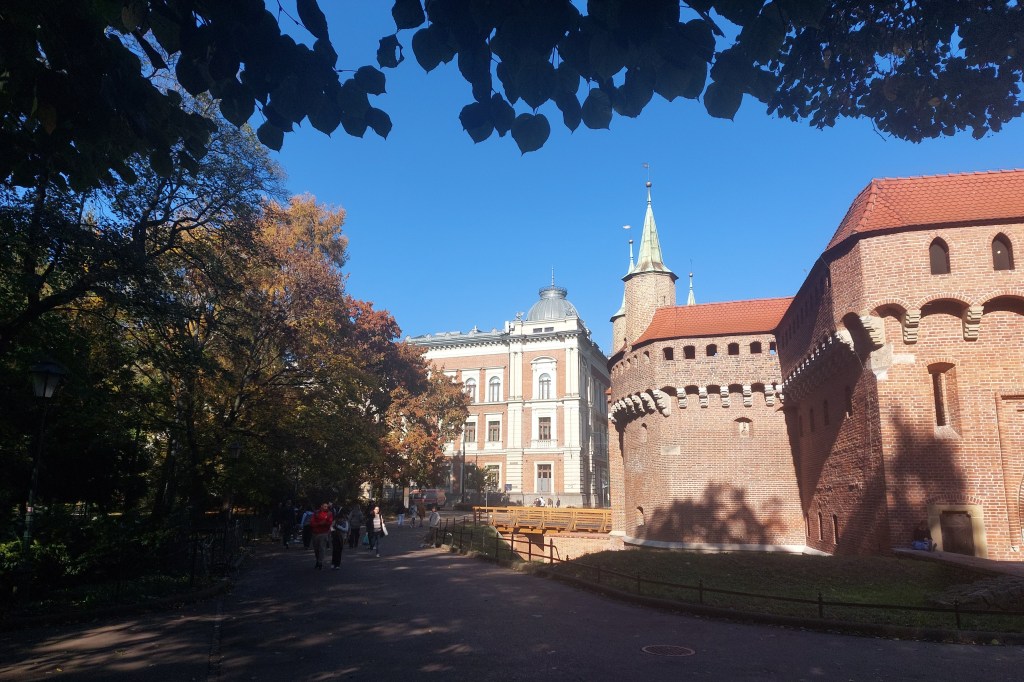
Weeks away from a trip to Warsaw and a bit of renewed perspective. Years ago I discovered that I need a dangling carrot. I consider it a reward for this and that; mostly that. No matter why or how, I need it soon.
Have a good day and don’t use your cell phone on a crowded bus.
I never thought much about life after the office . . . after loyalty and denial . . . after years of deception. We didn’t ruin any lives, but we sure did wreak havoc for quite a few. I wasn’t aware of it from the start. It was good money and decent hours. Rena seemed harmless enough when I met her at Fred’s dinner party. An ambitious, educated woman who started a legitimate business. That’s all I thought I needed to know. It doesn’t matter because it’s over now, Rena’s headed for prison and I’m on my way to Costa Rica to start a new life.
I worked for Rena for thirty years. She was a bulldozer with little patience for cowards and naysayers. An icon in the real estate industry and I had an interest in dabbling. I’m not sure why she chose me. I guess she figured I’d stay out of her way and out of the limelight. Who knew one day my photo would be all over social media.
The night of that fateful dinner party was like many others at my friend Christie’s apartment. She was known for bringing like-minded people together. I had mentioned my interest in real estate to her at some point, so seating me next to the famous Rena Borne was not a big surprise. I had heard of Rena, but I was at a low point in my life, therefore, zero interest in talking to anyone about anything. Looking back, I’m pretty sure Rena would have talked the ear off of a carcass.
I remember Rena asking me what I do. I thought about making something up, but I thought I might get found out, so I told her the truth.
“I work in the city morgue.”
“Doing what?”
“I prepare bodies for the refrigerated units, where they stay until they’re either claimed or taken to the city’s cemetery.”
“And I thought real estate was depressing.”
It went on like this for a bit and then she asked me if I liked my job. It’s a question I was quite use to being asked, but for some reason I said the following:
“If I tell you that I hate it will you offer me a job?”
And she did. She said that if I was willing to do grunt work, she’d sponsor me for real estate school. I could work in the office while I pursued my license. For the first time in a long time, I perked up. It would have been stupid to refuse, so I agreed to meet her at her office the following Monday.
Twenty years later, I’m kissing real estate and my old life goodbye. There are a few things I have to admit right up front. Early on I allowed Rena to charm me. She’d take me out to fancy restaurants. She’d massage my ego and make intriguing promises. And she’d write me big bonus checks at times when I didn’t think I’d earned the money. She often treated me better than her own family members. I was young, hungry, and damaged.
So what did I know about her business tactics? In the beginning I was completely in the dark. After a few months I became the office manager. I studied for my license, passed the test, and I listened and learned. Rena was slow to let me in on the workings of the business. I basically set up meetings, kept files in order, and got her coffee. She kept her door closed and her business private. She was married to her work, childless, and she kept long hours. She asked little of her staff and even less from me.
Me being me, I was curious from the start. I paid attention to office chatter and I read the fine print. Rena’s success almost seemed accidental. Yes she was charming and intelligent, but I suspected she was making a whole lot of money on the down low. It wasn’t so much her lifestyle, it was just a gut feeling. I wondered why she wasn’t flaunting her success; why she kept so few brokers, and why she did most of her own administrative work. She’d occasionally say something like,
“No matter how much you make, the government takes most of it,” or “At the end of the day, everything is suspicious.”
It took a few years before I started realizing the secret meetings and business trips were adding up to something illicit. I dared not ask her about it, knowing she’d just let me go like all the rest who ended up packing up their cubicles; expendable casualties all. I liked the money and the flexible hours. She never let me work on deals larger than half a million dollars, but I didn’t mind as long as good money was coming in.
About fifteen years into my tenure, things started changing, big things. First it was a couple of lawsuits from buyers. Rena wrote it off as buyers remorse and par for the business, but it felt different. Over the next couple of years the number of lawsuits increased and our accountant hanged himself. Rena said he was clinically depressed. What did I know, Rena discouraged socializing in and out of the office, my co-workers were strangers.
I left the office a bit earlier than usual one day, stopping at a café for a coffee on my way home. I was approached by two gentlemen while I waited in line. They told me they were FBI, flashed their badges, and asked me if I had time to talk. I didn’t feel like there were options.
Over the next two hours I learned more than I imagined could be true. I knew Rena’s deals were probably not 100% legal, but I didn’t own the business and she kept me out of her affairs. The agents informed me that they knew I wasn’t directly involved, however, because I worked for Rena, I was complicit.
Rena was buying up swamp land, filling it with landfill, and doing it all under the radar. More than likely gifting, dining, and paying off politicians. It took a good ten years for numerous houses to be swallowed up by sinkholes and for sewer systems to implode. That was the tip of the iceberg. The FBI promised to go easy on me if I cooperated. I had mixed feelings, Rena’s bonuses had made me a very comfortable man, but all of those people who’d lost their only asset left me with a sick feeling. I had to cooperate, keeping in mind that Costa Rica is a new start I could live with. We all know how powerful denial can be.
Stories are fictional unless otherwise noted.
Please provide your email in order to subscribe. Thank you.
I was never crazy about August (except for when I lived in Maine): too hot, insanity at the airports, and most of my friends leave me. Alas, autumn is almost here: darkness comes earlier, chilly nights, and cool enough to be in the kitchen cooking.
I’ve had a couple of people tell me that they preferred when my blogs were non-fiction. I’m sorry for that, however, I’m enjoying this type of writing and at this time in my life . . .
“The reason I talk to myself is because I’m the only one whose answers I accept.” ― George Carlin
There was a deafening silence before he played the answering machine. When Ron walked in and saw 16 messages on his machine, he knew in his gut that something terrible had happened while he was away. Time seemed to stand still for an eternity. He took a deep breath and played the first message. It was his sister Carrie, sobbing, barely able to get the words out; gut wrenching grief. Their brother had been found dead that morning. That part didn’t register at that moment, but it explained all the messages. He hated that fucking machine more than just about anything. He was out for less than two hours for fuck’s sake.
He took a deep breath, turned out all the lights and sat in the stillness for what felt like hours. He was aware he’d eventually have to fly home, but not at that moment; Georgia would have to wait. There were only two people who truly knew Ron and one of them was now gone. Not gone as in moved across the country or disappeared for a couple of days, gone as in dead, no longer breathing. Ron needed to process losing his brother and best friend. He slapped himself thinking he was asleep. Didn’t he dream his sister fell to her death a few months ago?
Suicide; haven’t we all considered it at one time or another? Doesn’t your rational mind usually take control? Who takes their own life? It’s selfish, it’s desperate, it shouldn’t happen. It didn’t happen.
Jay did it; Jay took his own life. That asshole left his family to clean up the mess. His daughters were too young to lose their father. Five year old innocents with nothing but crinkled photos and his stupid baseball hat. What was he thinking? Where are you Jay?
Jay loved baseball. It seemed at times that he loved that stupid game more than he loved anyone or anything else. Everyone joked and laughed about it, but maybe it wasn’t so funny. Maybe baseball gave him some peace. Ron hated when the game was on television at Thanksgiving. He mocked his brother; said stupid things like “you’re out” and “game over loser.” What an asshole Ron had been.
Ron picked up his phone to call his father, then he threw it down. Why did he have to make this call? Did Jay even think about their father? Did he even consider what it would do to him? To us? Could his father’s heart even take it? What about Jay’s ex-wife? She wouldn’t give a shit, but somebody to tell her so that she could tell the girls. They were five years old for fuck’s sake. Gorgeous twin, now fatherless. Ron paced and picked up the phone again.
“Dad, are you there dad?”
“Yea Ron, what’s up?”
“I have some bad news dad, Jay . . . Jay took his own life this morning. You there dad?”
“Oh shit, shit, shit . . . fuck! How, how did he do it? Shit Jay. No, don’t tell me, I don’t wanna know. Damn it Ron, was Jay upset about something, did something happen to the girls, to Sally?”
“No dad, nothing happened to the girls and Sally doesn’t know yet.”
“Oh no Ron, are you sure about this? Jay wouldn’t do a thing like this.”
“Listen dad, don’t go anywhere. I´ll be there in a bit, I just have to make some calls. Are you okay?”
“Ron? Did Jay take pills? No, don’t tell me.”
“I’ll be there in a bit dad, I have to call Sally.”
Ron covered his face with his sweaty hands and thought about his next move. His anger toward his brother was palpable; he was fighting emotions he detested, holding back tears and punching in the walls. Ron was the guy everyone counted on in a crisis, but this time he was letting everyone down. He needed to call Sally.
Sally was calm, detached even. She said she’d tell the girls, but that she wasn’t sure she’d let them attend Jay’s funeral. Ron was too caught up in his spiraling emotions to argue. He let her know that someone would send her the details of the funeral.
The whole family had issues with Sally. She obviously couldn’t be blamed for Jay’s suicide, but she’d certainly end up a scapegoat. She loved Jay at one time, but the depression, alcohol abuse, verbal assaults, all became too much for her and she needed to protect her daughters. Sally’s grief would not be acknowledged by anyone in Jay’s world; she’d have to deal with it on her own.
Ron was relieved that his mother had passed last year; Jay’s death would have surely killed her. Without his mother Leslie, Jay became despondent; Leslie was his only champion. Jay pissed off most of the people in his life. Still, no one sensed his desperation; maybe they did, but didn’t care.
What should Ron and Carrie tell his friends? Should they tell the truth and deal with awkward moments and stupid questions or do they say he had a heart attack? How many heart attacks were actually suicide? The twins deserved the truth about their father so that the healing could begin. Is it even possible to heal?
Include your email address for a drop in your mailbox whenever a new fictional story is posted. Thank you.
I know this story is dark, however, it doesn’t hurt to be reminded that people close to us may be hurting and need our love and support.
Coney Island had three things going for it: Amusement parks, beaches boasting big waves, and Nathan’s hot dogs. As a child, I took all of that for granted. Being a kid is about being in the moment, not so much thinking about the past, and only having time for the immediate future. I was not your typical kid; I was certain the space beneath the boardwalk was my bunker and my gateway to paradise.
I was six years old and going to the beach was always a treat, but not for the reasons you might think. I hated two things that the beach offered; hot sand and seaweed. I thought seaweed was way too slimy; I avoided it like you’d avoid a swarm of bees. Hot sand burned the bottom of my feet, confining me to our blanket or a beach towel. So why did I love the beach? I could easily hide under the boardwalk where it was cool and quiet. What made it even more attractive, was the fact that it was off-limits to everyone.
I’m still not sure why my mother allowed me to sneak away and hide there. Wasn’t it dangerous? Couldn’t someone have come along and snatched me? Didn’t bums go there to take a shit? So many questions, but none I was concerned about.
I remember the first time I discovered I could easily shimmy between the boardwalk and the sand. I felt invincible and oh so cool. That’s how I felt, but I looked like the Pillsbury Doughboy. Nobody judged me under the boardwalk.
After squirming my way under, the first thing that struck me back then, was how the light sliced through the wooden boards. It made these diagonal stripes across the sand; I was certain this was not a common occurrence. I wondered if it was possible that this place was meant to be my place; only mine.
You might be wondering how I passed the time under the boardwalk or if I ever went there with anyone else. The thing is, time was different there; time could not be counted or clocked — time only passed above the boards.
Under the boardwalk I was a warrior; fighting off the enemy — whomever the enemy might be. Mom’s friend Vito, pow, pow, pow. Vito drinks too much and grabs my mom’s ass. Not while I’m in charge. Margie, our neighbor who stinks up the neighborhood with her horrible cooking; didn’t mean to slam that oven door down on your head Margie. Uncle Gary leaving his stink bombs all over the dining room . . . somebody keyed your car Uncle Gary, isn’t that a shame. I couldn’t be caught as long as I had my hiding place.
Nobody could hurt me, touch me, ignore me, or scream at me under the boardwalk. There was a homeless guy living under another section of the boardwalk, but it didn’t bother me. As long as he stayed in his own area, I pretended he was on neutral ground. I had my own little arsenal of weapons that I hid there. None of them could kill, but they could do some damage when provoked.
This one time I was daydreaming about a birthday party my mother threw for me. All the kids in the neighborhood were there; even kids I didn’t know. Some of the kids were fighting over who was my best friend. I knew who my best friend was, but I didn’t say anything because Vinny doesn’t know he’s my best friend. I suppose he may never know — doesn’t matter, so long as I know. Vinny could have even hid with me if he wanted to.
My mother once asked me what exactly I did when I was under the boardwalk. I told her that I didn’t do anything and that seemed to be enough for her. She just told me to be careful. I’m not sure why I needed to be careful, why would anyone have hurt me in my hiding place.
I’m twenty-six years old now. I’ve traveled to many places, I’ve dreamed, and I’ve come close to dying. No place that I have been since that time I spent under the boardwalk has ever come close to being as magical. It wasn’t the light or the temperature; it wasn’t the sound of the waves crashing close by, it wasn’t even the self-proclaimed hero I knew in my heart I was, it was the solitary fact that my mother trusted me enough to allow me to be there by myself, with myself. I’m there right now. I’m under the boardwalk, won’t you join me?
Insert your email address to receive the latest published story in your inbox. Thank you for subscribing.
A reminder that this story is a work of fiction. I’m having fun writing these stories; stories that live inside my head.
One of the best things about being in Oslo for the month of July (aside from the weather), was the magnificent selection of wines from all over the world. Unfortunately, not the case in the Algarve where only good Portuguese wine is on offer. I like variety.
Peter was fortunate to have come into extreme wealth while he was young enough to enjoy it. His father, Martin Crowner was part of the Andy Warhol “Factory” crowd of the 1960s to the 80s. Among his useful friends were famous artists such as Basquiat, Herring, and Banksy. They were not famous at the time, but Martin and his wife Perdy, had a hunch about the potential of some of these pop culture trendsetters. The two of them were vanilla and inconspicuous and could allow their artist friends to be in the spotlight.
Andy Warhol liked Martin and Perdy because they never fawned over him. Both were aware that Warhol had a cult following and anything he touched seemed to turn to gold. Martin watched to see who Warhol was courting and promoting. During this very prolific period, Martin quietly collected 28 art pieces, which he stored in a secure unit in Queens, New York.
When Martin died, Peter became acutely interested in his father’s past and made it his business to learn more about who he knew, what he knew, and how he came upon such a lucrative collection. Why had he kept his ownership of the paintings and the storage of them, to himself? Peter was relentless in his pursuit of nibbles of truth he could use as a jumping off point in his very private and personal investigation.
When he was a young boy, he recalled a man coming over to the house early in the morning asking his father to “come clean.”
The angry man must have asked the same question ten times, “Where are you keeping the artwork Peter?”
He recalls his father saying he had no idea what the man was talking about. This incident seemed to take place around the time that Warhol was shot in the stomach while working in his studio. Did his father have anything to do with the shooting? Peter had a vivid imagination and his parents revealed no clues.
There were parties at Peter’s house throughout his lonely childhood. He’d wake up and see people he’d never seen before sleeping on the sofa or outside on the pool deck; sometimes sprawled out in their unfinished basement. He often felt invisible as he curiously wandered among the seemingly dead bodies. His parents would wake and coax people to the front door — never an argument or fight.
Some returned for future parties and others were never to be seen again. Peter didn’t have a sense back then that their lives were any different than anyone else’s. What he did think was strange, however, was his father’s detachment. These people were all around them, but his father seemed more an observer than a participant and his mother appeared to be, just playing along.
Sometimes Peter would ask about certain people, “Why is that man dressed like a woman?
“Do you take drugs too daddy?
His parents always had the same answer, “Keep quiet Peter, nobody we know takes drugs — mind your own business.”
Martin worked in advertising. He would often run ideas by Perdy, who was interested, but oddly aloof. His father would get frustrated and say,
“Thanks Perdy, you’re always so helpful.”
Martin, ever the sarcastic prick. Perdy rarely paid any attention to what he said. Peter, forced to remain in the shadows.
Perdy died of ovarian cancer when Peter was 12 years old. No family was allowed to visit during her illness. Martin stayed with his wife day and night; she remained stoic till the end. A small funeral followed her death; Warhol, Edie Sedgwick and a few others he recognized stopped by the house to pay their respects. None of them recognizing Peter.
Martin had been a reserved man who faded into the background, but Perdy’s death amplified his insecurities. He mostly remained home when he wasn’t at work; pouring over papers and watching hours and hours of television, probably for the advertising. Peter stayed in his room; talking to his father was not an option and Peter had no idea what Martin was thinking.
Martin, a complicated man for sure, but how did he acquire all those paintings? Was he gifted the artwork? Did he steal them? Did he have proof that he was the rightful owner? Peter had to know the truth. He hoped he would eventually learn how it all went down.
But how would he get to the bottom of it? He could no longer ask his mother, his father didn’t seem to have any real friends; the artists whose paintings he inherited were all dead, and as far as he knew there was no provenance documentation. Peter couldn’t go public until he knew all the facts and he could prove ownership of the paintings.
Peter cold called dozens of artists who may have known someone who knew the artists who painted the pieces Martin had stored. After months of getting nowhere, he finally talked to a friend of Keith Haring. Gerry Parma was Haring’s lover back in the 80s. Gerry told Peter that Keith often spoke of Martin.
“Oh yea, Keith told me more than once, that your father was a power broker in the artworld and that he hoped Martin would help him become famous. This call led him to four or five people who all said the same thing about his father. One friend of a friend agreed to meet Peter for a drink.
A few days later Peter met Will Penbrook at The Chelsea Hotel. Will introduced him to a staff member who’d been at The Chelsea for forty five years. Ron said he knew Martin and Perdy fairly well.
“I knew both your parents. Sometimes your mother would show up to pick-up packages. I’m pretty sure they were paintings, but I’m not sure.”
Helpful, however, no answers to speak of. A year after the death of his father, Peter received a letter from Chase Bank. They told Peter that his father had a safe deposit box at the bank and they were inquiring as to whether or not Peter would be renewing the rental. Peter informed the bank that he was the sole recipient of the Crowner estate, but that he did not have a key to the box. In fact, he’d never heard about this safe deposit box. The Chase manager said that as long as he could verify that he was the sole heir, he could acquire the contents of the box.
The next day Peter went into Chase to clear out the safe deposit box; he had no expectations. When he opened the box he found several things: his mother’s jewelry which he assumed his father had sold after her death, a letter addressed to Peter and proof of ownership of all 28 paintings in storage. Peter walked out of the bank in a stupor. His father´s secrecy lingered even after his death. Why had he not told Peter about any of this? Peter decided to open the letter later that evening, where he could be in a quieter place with a gin martini, his father’s favorite.
Dear Peter,
I know you’re wondering why I didn’t make you aware of this letter sooner. My attorney was not very happy with me for handling the matter this way, but as you already know, I lived life on my own terms.
First, I want to apologize for my failures as a father. Early on in our lives, without meaning to, your mother and I became involved in a dangerous, cut throat world of schemers and thieves. It was a rabbit hole we had no choice but to protect you from.
I looked around me and saw dealers exploiting the art market by bidding higher than the paintings value, creating the illusion of a frenzied market, and then stockpiling paintings until the value exploded. I couldn’t sit by without finding a way to legitimately capitalize on it. I had to be very discreet and professional in order to gain the trust of those insecure, doped-up artists. Most of them had little or no talent, but every once-in-a-great while I witnessed raw talent I knew I could exploit. With the help of your mother, who became a trusted broker, we promised fame in exchange for a painting or two. My sole responsibility was to create buzz around an artist who had potential. Our inclusive parties, dinner engagements, and artist friends, all helped to boost the fame of a select few.
Your mother was cunning and always gracious. We acquired the paintings along with signed and notarized letters gifting the paintings to you Peter. Every painting in storage has provenance and enormous value. Over time I sold off the paintings I knew would never increase in value. At the time of the writing of this letter, the value (before taxes of course) of your paintings is over a billion dollars. All legitimate, all done without bloodshed. And you were not involved in a single transaction.
We loved you very much Peter. You were our only authentic creation. We protected you from the moment of your birth until we could no longer do so. I know this treasure trove will cause you consternation, but hopefully, over time you will come to enjoy the collection. Do with it what you wish; museums, sales, hang them in your home, give them away — you decide. For your mother and I, the thrill was in the acquisition. Neither of us had any regrets. If you don’t already know this by now, the world is made up of passive bystanders and ferocious capitalists. We were the latter, and we raised you to be the former. I hope you come to appreciate our selfish intentions.
Please destroy this letter after you read it. There are some secrets better kept hidden forever.
Love,
Dad
For several years, Peter struggled with the legacy his parents left behind. They weren’t thieves or murderers, but what they did was deceptive. It was his hope to grow his fortune and use it for good. He knew his father was right about the failings of humankind; he also knew that his own legacy would one day be admired.
Insert your email address to receive the latest published story in your inbox. Thank you for subscribing.
A reminder that the story is a work of fiction.
A few more days in Oslo, Norway and then back to Faro for the rest of the summer. Krakow, Poland in the fall and Bristol, England in the winter — didn’t I tell you I wouldn’t be traveling as much this year. Faro in the fall will be glorious (I just have to get through August; hopefully with a cool breeze off of the Ria Formosa).
My first time using AI. I typed in Harris versus Trump for president and this is what I got. I think Trump looks more like Trump. Let the games begin!
Each and every time I see someone genuflect, it reminds me of my uncle, Father Simon. My father’s brother was larger than life; pious, soft spoken and a deplorable pedophile. Twenty years after his death, and not a single family member is willing to call him out for who he really was and the damage he did. I can no longer remain silent.
Father Simon, not sure why, but that’s what I was forced to call him. He would come for Sunday supper after delivering Mass in the Bronx. His parish was in the Bronx; one of the only things I was grateful for. Whenever he walked through the door, it was as if Jesus himself appeared. The women in the family would yell and scream and the men would hug and kiss him. Nobody ever said anything bad about Father Simon. I mostly hid in the shed outside the house.
The shed was always musty and dark, but it was safe because Father Simon would never go there. He would always be looking at me, didn’t anyone notice? He’d pick me up to kiss me when I didn’t want to be kissed. He’d bring me candy, but I didn’t want it.
“You’re such a sweet boy and you look just like me.”
“Come here Sean, sit on your uncle’s knee. Come here so I can tickle you. Let me put sunscreen on you.” Let me violate you.
Father Simon was a drunk too. He liked red wine. Nobody cared that he laughed too loud or drank too much or that he fondled me in my bedroom. I asked him to stop touching me, but he would tell me that uncles were allowed to touch their nephews and that priests were doing God’s work.
“It’s a way of showing you my love Sean. I love you very much. But if you tell your parents, you’ll go to hell — they’ll go to hell. Remember I am a man of God and he always listens to me.”
When I was 10 years old I put six Ex-Lax pills in Father Simon’s chocolate pudding. He stayed in the bathroom for three hours that day. I didn’t care where he ended up so long as he stayed away from me.
This business of Father Simon putting his hands all over me went on for years. When I was 14 years old I threatened him with a pair of scissors and he never came near me again. I was angry at myself for being mean to Father Simon. Everyone loved him, so it had to be me that was the problem.
I’ve been in therapy for several years; although I think it’s helpful, I know that I am damaged goods; emotionally and psychologically. A recent conversation with my mother went like this:
“Mom, do you have any idea what Father Simon did to me when I was a child?”
“Come on Sean, that was a long time ago and things were different back then.”
“Are you telling me that you knew what was happening?”
“I didn’t know anything back then Sean, and for the life of me I don’t understand why you want to talk about this now. Your father and I loved your uncle very much. He did so much good for his community and he was adored by so many. Telling people about what happened to you will not change anyone’s mind about Father Simon; he was a man of God and we need to let him rest. You’re going to put your father underground if you keep this up.”
I’m not sure what is worse, the abuse or the denial. How can I love a God who would allow this to happen to so many innocent children? Trust that there is a reason so many suffer? I am sorry, but Father Simon destroyed any faith I may have had. There are two things I know for certain: first, there are known monsters among us who are permitted to destroy lives in the name of God, and second, they need to be stopped.
Insert your email address to receive the latest published story in your inbox. Thank you for subscribing.
Just a reminder that my current stories are fictional. I have never actually had a priest lay a hand on me.
State-of-Mind
The scary and precarious political situation in the United States is throwing me off-balance. My thinking is dark, therefore, my writing is darker. I’m not sure where we are headed and despite what’s going on all around me, I am hopeful — I know it’s Pollyanna, but I’m not sure how else to be. I am very concerned about Gaza and Ukraine, I cannot imagine that the current state of affairs in either place is sustainable. Innocent people are dying due to extreme positions around religion and land ownership. I cannot imagine any favorable outcome.
I pushed the tiny box as far back into my dresser drawer as I could. It wasn’t so much that I was hiding it, as that I preferred not to see it. I have this terrible habit of keeping things out of sight. If I can’t see it or nobody else knows about it, it never happened; at least that’s what I tell myself.
A year ago, I was hiking in the Adirondacks on a crisp, cloud covered morning. It was late November and frosty mornings were the norm. You know, the kind of morning when you don’t want to get out of bed or take off your pajamas. It was early; very early. I keep this little notebook where I tell myself what I’ll do and how I’ll do it and who I’ll do it with; way too many imperatives. I planned that I’d go for a hike on that particular morning. The sun was just coming up behind the clouds, a breeze rustled the trees, and my hiking boots were one size too small. I wish I could say I was enjoying the hike when I happened upon it.
It’s still difficult for me to name it. It was sitting beside a fallen tree, covered in dirt and some other grimson colored goop. I crouched down and looked at it more closely. At first I was certain my eyes were playing tricks on me. I stood up, shook my head and started to walk away. They say you can’t unsee something once you’ve seen it. I stopped and looked back, hoping I’d look again and see a rock or a flower; anything other than what I thought I’d seen.
Human curiosity can produce an awfully foreboding feeling. I wanted to just keep going and let somebody else deal with it, but no, not that day. I walked back and looked down, focusing more closely on it this time. Yup, no denying it, what I was seeing was a blood covered human ear. It looked as if it had been chewed or torn off its owner’s head. All sorts of possibilities went through my mind as I looked around; a bear, a jealous lover, a prank? I hoped it was a prank; part of a costume.
I looked for a napkin or a piece of scrap paper, but I had nothing on me. I took off one of my socks, picked the ear up by its lobe and dropped it into my sock. Why did I do this? If I could tell you I would. I carried it out of the woods like it was contaminated.
When I got home, I thought about calling the police. The thought left my mind quickly; they’d ask all sorts of questions and I didn’t have the time or patience. So I put it in a box and tucked it away.
By the time dinner came, I’d pretty much forgotten about the ear in the box. After dinner I turned on the local news, poured myself a brandy and finally took a breath. Five minutes in, they announced that a hiker reported finding a thumb about a half mile from where I’d found the ear.
So now I’m concerned. An ear, a thumb, what’s next, a leg? I get really fidgety and I start pacing? What if somebody out there is hurt badly and they’re bleeding to death because I failed to call the police? What if it’s someone I know. I was certain that I waited too long. If I called the police now, they’d question me about why I waited and if there was a crime, I could be considered a suspect or an accomplice. I went to bed on pins and needles, riddled with guilt.
After a restless night, I tuned on the news first thing in the morning. The local news reported that the person whose thumb was cut off, was located and they were able to sew his thumb back on. They were being very cagey about the circumstances, but from what I could gather, it had been foul play. Okay, so he’s alive, that’s good. But I had his fucking ear sitting in a box in my dresser. Shit, shit, shit.
Hours slowly crept by, thoughts of possible cameras in the woods, someone having seen me getting into my car; I was distraught. Having seen countless hours of Law & Order and having read way too many crime novels, I was certain I was fucked and headed for prison. Every minute that went by made it more impossible for me to go to the police, ear in hand, engulfed in shame and remorse.
A couple of days passed and the news networks were still not revealing the name of the individual that lost his appendages. On one hand I was relieved that he was alive, but the guilt I felt was all consuming. I’d thought about returning the ear to the woods, but my fear of being seen kept me from following through. I couldn’t tell anyone about my situation, knowing I’d be chided for my bad judgment.
Weeks turned into months as I finally let go of the dread. I hadn’t killed anyone for Christ’s sake. I knew by then that no one had seen me and that my secret would remain a secret. The only person I lied to was myself and I guess I’d have to live with that. I stayed away from the hiking path; out of sight, out of mind.
Months later I was walking out of my house and noticed a moving truck parked on the curb. I knew the house had been sold and that I’d soon have new neighbors. I went to work hoping that they’d be nice people. I thought I might go over to say hello when I got home.
When I pulled into my driveway that evening, my new neighbor came over to my car to greet me. He seemed friendly enough; his wife, standing by their front door, was a bit standoffish. His name was Jake and hers Suzanne. Jake told me that they would be having a barbeque in two weeks and he hoped that I would join them. I said that I certainly would be there.
A few nights later I turned on the news. At the close of the regular broadcast there was an announcement that they would be interviewing the man who had lost his thumb and ear months before. Apparently he was ready to tell his story. I almost turned off the television; I had moved on and I wasn’t sure I wanted to see the man’s face or hear his story. After all, his left ear remained hidden in my house. My curiosity got the better of me and I waited out the commercials for the interview. I got up to get a beer out of the refrigerator and I heard the news anchor introducing the man being interviewed. When he spoke, I thought I’d heard his voice before. When I walked into the living room, my new neighbor Jake was on the screen speaking about what happened to him in the woods. I stood staring in shock. Jake explained that he was jogging that day and a man jumped out of the bushes and hit him over the head with a bat. He said that he’d blacked out and woke-up some time later and staggered out of the woods to his car. His cell phone had been stolen and he was bleeding, but he didn’t realize how bad it was. He drove himself to the hospital and learned a short time later that his thumb had been recovered.
The interviewer talked about how fortunate Jake was that they could re-attach his thumb and then he asked Jake why he chose to remain anonymous. I kept shaking my head in disbelief. Jake said that he was fearful that the person who’d done this to him may have thought that Jake had seen his face. He was afraid the guy would want to finish him off. He further explained that the police had searched the woods for his left ear, but that there was no appeal to recover it because the surgeon explained that it was too long since the incident and they would be unable to re-attach it. Jake was calm and showed no anger toward the individual who may have found his ear and failed to report it.
I turned off the television, sat back on the sofa; all of the guilt rushing back, except that now, the guy whose ear was in my dresser lived next door. What would I do, what could I do? Jake could obviously never know that I found his ear and failed to contact the police. I’m not sure, but I think his wife Suzanne suspects that I have it. It was the way she looked at me the day they moved in. I will of course decline the barbeque invitation — I will decline any invitation from them. My plan was to drive the ear to the lake later that day. The bottom of the lake was a safer hiding place; hopefully denial will help with the rest.
Enter your email address in order to have my stories sent to your mailbox when published. It’s a freebie. Thank you.
I’m enjoying this folks; thank you for indulging me.
This fictional piece was written in Oslo, Norway, where I am enjoying summer rain, an occasional fire, and delicious wild Atlantic Salmon. Paco’s first flight, but by any means, not his last.
Steven dreaded the holidays with his family. He could handle the drama and the snarky comments from his older sister Claire, but the looks from Claire´s husband Roger, were always hard to take. His brother-in-law behaved as though his Harvard degree put him above the rest. He wasn’t sure this visit would end well — he wasn’t sure about anything anymore.
Christmas was a week away and Steven had not yet secured a plane ticket. He wondered if he could use the “I couldn’t get a flight,” excuse. Claire would surely cut his balls off if he failed to show up. She knew what buttons to push and how and when to push them. Steven wasn’t around when their mother was dying, Steven couldn’t afford his own rehab treatment, Steven couldn’t hold onto a job, and her list of his ineptitudes went on. She’d use sharp words and veiled threats to hammer home his failings.
It was not until 3:00 a.m. the following morning that he went on-line, secured the last ticket, and got a seat in the very back of the airplane. Dallas would not be welcoming to this northeasterner. Christmas would be all about cracked and too warm concrete and a whole lot of Texas fake charm. Being home in time for a New York, New Year’s eve celebration, would be the only thing keeping him breathing while away. He sent Claire a text to let her know his plans. Her one word, “okay,” reply only reinforced his disdain for her. He was certain Roger would be disappointed that he’d chosen to make the trip.
The reading of his father’s will was scheduled for the morning of December 26th. He booked his ticket home for that afternoon, thinking the shame he’d feel would accelerate his desire to leave as soon as he could. He didn’t share his plan with Claire knowing she would oppose his hasty exit. She and Roger sitting across from him gloating following the reading, would be way too much to bear.
He’d been thinking about his father a lot lately. He knew his independent and defiant nature was a disappointment. His father warned him that a career as an artist would be a difficult life; fighting poverty and harsh public criticism. But Steven had to follow his dream to paint, with or without his father’s approval. His father was a man of few words, always working and avoiding homelife. Now it was time to hear from his father from the grave; ultimately having to have his rejection spelled out in front of the two people he disliked most.
In the taxi on the way to Claire’s house he considered turning back and flying home. There was no law that said he was obligated to be at the reading. The voices in his head told him to grow up and face life head on — it would be over soon enough.
When he arrived at Claire’s house, at first he didn’t think they were home. He’d told her what time he’d arrive, but greeting him would have been out-of-character. He walked around the back of the house where Claire and Roger were having a drink on the patio. Claire got up to put her cheek in his face for a kiss, Roger stayed seated. They asked him about the trip south, but neither truly cared to listen to his response. After a few awkward words, they told him that his room was ready. He carried his bag up the stairs and closed the door. If he could, he would have stayed there until the day after Christmas.
The house was not decorated for the holidays, calling it sterile would be an understatement. It was soulless, lifeless and always frigid cold. As he lay in the bed staring at the ceiling, he contemplated his options. Calling his childhood friend Ben to provide an escape seemed to be the only solution he could stomach. Ben was thrilled to hear from him and they made plans for dinner that evening.
When he finally had the nerve to go downstairs, Claire asked him why he wasn’t ready for dinner. Steven attempted to tell her that he was unaware of dinner plans, but she screeched, scolded and told him that he was insensitive. He canceled his plans with Ben and went back upstairs to change. He wished he could have a shot of something strong to take the edge off, but Claire and Roger were way too righteous to drink.
Steven ordered a cocktail at the restaurant and they both gave him a judgmental look. They talked about the weather; he hoped Claire wouldn’t bring up their dad, but his hopes were quickly squashed.
“Don’t you even care about what he was like at the end?”
“I know what he was like Claire, you’ve told me numerous times.”
“And you think I’ve told you everything?”
“I think what you shared was sufficient.”
“Did I tell you that during his final moments he asked where you were. You disappointed him right to the very end.”
“Thank you for that Claire. You know very well that I had flown here twice before only to learn that he could live that way for months and in fact he did.”
“But why didn’t you come when it was certainly the end? Why did you leave everything to me like you always did?”
“Because Claire, you do whatever you want to do. You act as if I’m not even in the room. It’s pointless for me to even try. But does any of it matter now? Let’s just leave it Claire.”
Roger sat seething until Steven tried to put a stop to the badgering. He was waiting for the last word.
“You have no idea how pathetic you sound Steven. Your father never had to look very hard for reasons to resent and dislike you, you made it easy. You were a terrible son and you’ve been a useless brother. You’re a failure at everything you attempt.”
Steven slowly folded his napkin and motioned for the check. He threw down cash to cover the bill and started for the door.
“You’re not going to wait for us to drive home?”
“No Claire, I’ll walk back. Please leave the door open, I’ll see you the day after Christmas. I’ll be out tomorrow.”
Claire threw back her chair and stood up as Steven walked away. She didn’t try to stop him, knowing that Roger had gone too far. She didn’t mind it though, she hoped he’d spend Christmas somewhere else.
Steven tried his best to enjoy Christmas at Ben’s house. It was warm and welcoming, just the kind of Christmas he’d never had with family. He and Ben talked a bit about the reading of the will. Steven assured him that Claire would walk away with the house, the money, and God knows what else — Steven didn’t know what his father had accumulated in his mostly hidden life. For him, the will would be closure. He wasn’t angry. Relief was closer to what he knew he’d feel. The death of his mother Sheila, two years prior, was difficult. She was a woman who wore resentment like a badge of honor. She never wanted children and marriage was a ball and chain. She and Claire battled to the end; Steven did everything he could to stay invisible. Their father turned a blind eye and never said a word. His mother’s bitterness robbed his father of any happiness he hoped to enjoy. They were four people searching for anything other than what they had.
Steven woke early the day after Christmas. He grabbed his overnight bag. When he went downstairs, Claire was waiting.
“What do you think Dad will leave you Steven? Are you here because you think you deserve something? Why did you come? Why show up now?”
“Are you ready to go, Claire?”
“Answer me Steven, do you think you earned dad’s money? I’m certain Dad wished you’d died before him.”
Steven held his tongue. He knew Claire was doing her best to twist the knife so that she could watch him squirm. The last comment was a zinger, but he wouldn’t give her the satisfaction of a reaction.
Roger drove silently to the attorney’s office. Steven’s bag was next to him in the back seat of the car. Neither Claire nor Roger had commented on it. Steven carried into the office.
The attorney, Mr. Brenner, seated them facing his desk, Roger in the middle of his wife and brother-in-law. There was no small talk, no questions, and no smiles. Attorney Brenner explained that the will had been written by Steven Sr., after their mother’s death; updated two months before their father’s death. Their father, Mr. Steven Forrester, was of sound mind and body when he updated the will. There were two witnesses who could attest to the aforementioned. Steven was struck by the absence of emotion on the part of Mr. Brenner. He was well aware that this man and his father had attended Yale undergrad together, played golf, and remained good friends throughout their lives. Claire had contact with Mr. Brenner through the years, but you’d never know it based on their interaction. The attorney had left Steven a message urging him to attend the reading and he didn’t understand why it was so important.
Mr. Brenner asked if there were any questions and all three shook their heads from side-to-side. The first three sentences were standard legalese. Steven noticed Claire tapping her left shoe against the desk. Roger also seemed anxious as Mr. Brenner continued reading.
“I am well aware that my decision regarding my belongings and holdings will not please everyone. Therefore, I would like to state the following: I have known that our family has not been a happy one for a very long time. Mistakes were made and resentment built up over the years. I unfortunately had very little say as it concerned your upbringing, your daily life, and your education. Had I been able to, I may have chosen a different path for all of us as a family. That being said, I believe I did my best to provide for the family and keep you out of harm’s way. It is my assessment that Steven got the worst of it. Sheila never truly acknowledged her son and from where I was sitting, never showed him the love and affection a mother normally shared. Claire on the other hand, at least experienced a fraction of Sheila’s guarded mothering.
Steven’s path, although unorthodox, was authentic and brave. Without any support at home, he thrived and remained true to himself. In an effort to provide ammunition for a future legal battle, I will leave it at that. To make up for what Steven had to endure, I am leaving the house, valued at three million dollars, to Steven. To Steven I also bequeath all my art collection, valued at six million dollars (all vaulted for safe keeping), and stock holdings valued at four million dollars. I leave my life insurance policy valued at $200,000 to Claire. I appreciated the care she gave me over the last few months.”
The room was silent for several seconds.
Claire stood, turned toward Steven, pointed her finger into his stunned face and said,
“I will fight this until I am certain you do not see one cent of dad’s money. He hated you Steven, mother told me so.”
She motioned for Roger to stand and the two of them walked out and slammed the door behind them.
Mr. Brenner looked at Steven and asked if he was okay. Steven just stared straight ahead.
“Your father didn’t know how to be a father Steven, but he told me that he loved you and he was very proud of you. It is his hope that you will find joy in life and ultimately, share some of this money with those who have had to fight like you have fought since the day you were born. As a friend of your father’s, I’ve watched you grow up from the sidelines, I have no doubt you will make good use of his money.”
Steven shook Mr. Brenner´s hand, grabbed his suitcase, and walked out into a future he never could have anticipated. There were children whose lives would improve due to his father’s generosity. He could see all clearly now.
As he waited to board his flight, Steven couldn’t help but think about Claire and Roger and what it must be like in that loveless house at that very moment. He didn’t feel sorry for his sister, in fact, he felt nothing.
Enter your email address in order to have my stories sent to your mailbox when published. Thank you.
Writing to you from cozy Oslo. July and I’m sleeping under a down comforter.
Majorstuen, Oslo, where I will be for all of July.
There were few things Ryan feared more than going up to bat. The judging stares of the other boys and his mother’s heavy expectations. Ryan figured if he swung the bat, missed the ball, and repeated the same pattern in rapid succession, it would be over quickly and he could return to hiding. He hated being a disappointment; scrawny and perpetually chewing his nails and sucking on bloody cuticles. His bedroom was his only safe space; Lady his only friend.
Ryan had one wish when he blew out the candles on his twelfth birthday, he wished he’d die before his next birthday. He longed to be understood. Lady, his scrawny terrier, got him, but she was the only being who didn’t judge or tease. To be invisible and no longer an embarrassment was all he ever wanted.
Lady tugged at his jeans hoping to pull him away from the darkness as she watched him descend. She feared the worst; spent hours wondering how she might warn Ryan’s mother. She understood a mother’s love, she felt that love for her own not too long ago. She nuzzled him, sidled up to him to distract him from his hopelessness, and tried to lick away his despair. Lady was certain that she could save Ryan from himself.
Saturday came too quickly and Ryan would once again be expected to play baseball. To behave as if this was the thing that would ultimately make Ryan a real boy; a boy that was prepared for manhood. The dread was so overwhelming, getting out of bed was an impossible effort. Taking Lady outside to relieve herself was his only motivation, she knew that and showed him her gratitude. Today was going to be horribly difficult for Ryan. He wished he could share his fears with his mother, but he knew she would tell him to shrug it off, man-up, just aim for the ball.
Lady tried to keep Ryan away from the lake. She headed in the opposite direction hoping he’d follow. She even faked being too tired to go on. Ryan was in some far off place where she couldn’t reach him. When he reached the lake, Lady ran off to warn his mom. When she got to Anne she wined and tugged until Anne finally seemed to get the message. Lady led her to the lake as fast as she could, panting and worrying herself the entire way.
Anne saw Ryan’s floating body as she approached the dock. He lay face down and still, as the shadow of the sun formed a halo around his fragile figure. Lady knew and she howled in despair. Ryan’s mom jumped in and dragged him to the dock. She lifted him up and he hit the dock hard. Anne frantically tried to revive him, but he’d been gone for too long. She called the police and held him while she waited for the medics to come and perform a miracle. She rocked Ryan in her arms and screamed into the silent nothingness.
Anne immediately started to blame herself. Was she too hard on Ryan? Should she have stayed with his father despite her hatred for him? Was Ryan trying to tell her he was hurting? Deep down she knew she could have been a better mother, but she also knew she would never know what Ryan was feeling as he threw himself into the lake on that quiet and torturous Saturday morning in July.
Insert your email address and hit subscribe to receive my stories when published.
Hoping to increase awareness of suicide in gay and troubled young people. The statistics are staggering. Thank you for reading, it means a lot. The first of many.
“Bullying of LGBT youth is a contributing factor in many suicides, even if not all of the attacks have been specifically regarding sexuality or gender.[4] Since a series of suicides in the early 2000s, more attention has been focused on the issues and underlying causes in an effort to reduce suicides among LGBT youth. Research by the Family Acceptance Project has demonstrated that “parental acceptance, and even neutrality, with regard to a child’s sexual orientation” can bring down the attempted suicide rate.” Wikipedia
To be honest, I’m surprised this blog has survived as long as it has; over six years of over-sharing. It was fun, therapeutic, a consistent companion, and exactly what I needed at this particular time of my life. When I arrived in Portugal I didn’t know a soul and I needed something to keep my mind off of the distance between me and the people I care about. Things have changed, I’m in better touch with myself and I have a lot going on in my life. It’s easy enough to see that a lot of you are no longer engaged (the site provides stats). What that tells me is that some of you or most of you are tired of me telling you about how bad my life was versus how good it is now. You know I’m exaggerating, but you also know, there is some truth in my words. It’s time for change.
“Without change something sleeps inside us, and seldom awakens. The sleeper must awaken.”
~ Frank Herbert, Dune
The most poignant philosophy I have ever heard about living life, involved doing what you love. I love writing and I love storytelling — not so much oral storytelling, I get a little flustered when I notice people aren’t listening; my biggest pet peeve. What I have decided to do is write fiction whenever I am moved to do so. I will remain on this platform and keep this blog address. I obviously can’t get frustrated when readers of my stories stop reading, I won’t know any better. The older I get, the more I appreciate being oblivious.
Writers draw from their own personal experience; therefore, there will be bits and pieces of me and my past in my prose. I will always protect the living; however, if you see yourself in my words, that’s on you.
My stories will be short. I will try my best to entertain, provoke, and keep you wanting more. Having a provocateur in the mix will hopefully keep it interesting. Your feedback will help of course. I have found my readers to be fair and honest — sometimes appropriately candid, never mean. Well, there is this one family member, but he’s a loose cannon who hates everyone.
“Good writing is supposed to evoke sensation in the reader – not the fact that it is raining, but the feeling of being rained upon.”
― E. L. Doctorow
Future Travel
Oslo, Norway with Paco for all of July (with visits from friends throughout the month), Krakow, Poland in October, Bristol, UK in December and a much anticipated trip to the Puglia region of Italy in April 2025. Booked an NCL Greece/Turkey/Egypt cruise for fall 2025. A spring MSC Mediterranean cruise out of Lisbon, mainly to ports I have never been to, will be one of my easier excursions (anyone care to join me on either? Not in my cabin, but there is room on the ship). The United States in the late fall/early winter of 2025 or 2026: Brooklyn, Florida, Portland, Maine, Baltimore, Maryland, and Charlotte, North Carolina. Lots of my peeps to see. Everyone knows, I’ll mostly be there for the food.
If you tell me you’re interested in where my travels take me, I can keep that bit in. I’m pumped about this, change is good; I think some of you will enjoy this new format.
Please forgive typos and grammatical errors. Obrigado.