Category: Stories to Share

  • Caring Too Much or Too Little

    Developing a balance between empathy and good health is a formidable goal and this is a good time to work on it.


    65 Compassionate Empathy Quotes (2019)


    I have always been a bit too sensitive. I was bullied as a child because I cried easily (and I liked playing with girls . . . and I hated sports). I get the crying part honestly, my dad wept without shame. The problem with feeling intense empathy is that you often feel as if you have the weight of the world on your shoulders. Managing these feelings and mitigating your health and well-being are essential.


    What it Feels Like

    I have been reluctant to look at the number of deaths around the world due to the Coronavirus. Denying a problem exists or refusing to acknowledge it, has long been a defense mechanism. However, in this case I believe empathy matters. I need to be able to experience what is happening all over the world so that I can do my part to help. I’m forcing myself to look at the numbers and think about what people are going through. It’s surreal, it’s painful, it’s difficult and it’s morbid, but it’s necessary. We’ve been told what we can do and we need to listen, learn, and hold ourselves accountable. Doing your part helps you to be empathetic without drowning in sorrow.

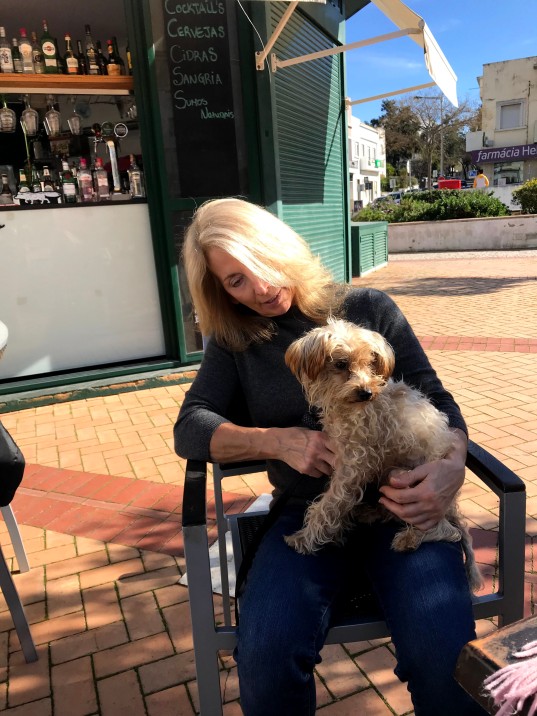
    A brief story of too much empathy — very recent and still fresh:  When I adopted Paco in January, he had only been found on a country road two weeks prior. He weighed just over five pounds and his bones were protruding everywhere, his fur was extremely matted, and he was deathly ill from a virus. When I saw him for the first time, I wept. Each time I thought about him fighting for his life, alone and abandoned in the woods, I wept. Admittedly, this extreme sensitivity went on for weeks. This is the reason I had to leave my volunteer position at a pet shelter; I had too much empathy. Learning how to compartmentalize my feelings and thoughts was and is, necessary. By the way — Paco has fully recovered and he’s out of danger. I still worry, but it’s under control. The crying has stopped.


     Family

    The reality of family members who are not as strong as I am or who might be struggling with emotional and/or financial issues is ever-present. How much of their worries are my worries? How much of their suffering can I or should I take on? What can I do to ease the anxiety I impose upon myself? There are a number of considerations when discussing problems with family members. First and most importantly, in some cases, they have families of their own. Therefore, when you get involved, there may be others in your family that are also affected and that complicates matters further. There is a risk of alienating family members who may be embarrassed or who may see things differently.

    Most people prefer privacy, even if it means not sharing with their own family. This could be the topic of a whole other blog. I’ll leave it at this:  there are times when it is best to keep family problems at arm’s length. You may have to be clear about that when approached. “Sue, I think it would be better to discuss that with Greg; your husband is my brother-in-law and one of my favorite people in the world, I don’t want him to be angry with me for taking sides.” Sue doesn’t exist. Just an example of the language you may have to call upon when communicating. Remember, most people prefer candor and authenticity. Those who don’t may not deserve your time or energy.

    There is always the advice that is unwelcomed. Family members who are not ready or willing to face their problems will sometimes push you away and resent you for getting involved. In these situations, you have to be either willing to handle the confrontation or in some cases ignore the radio silence.


    Friends

    Our friends are our chosen family. We love them dearly and sometimes that love might cause us great pain. When you see a friend in trouble and you cannot help them, it can tear you apart. Two of my friends are alcoholics. One of these individuals will no longer speak to me because I tried to help and he does not want to acknowledge his problem. The other is in treatment and doing well so far. The only way I can live with myself in situations like this (be it a friend or a family member) is to try to help in some way:  support, resource, friend, caregiver, etc. Doing nothing makes me feel useless and more like a failure. On the other hand, if I reach out numerous times and the friend refuses my help, I have to be able to accept that I’ve done all I could do and walk away. Speaking from experience, I’m not insinuating this part is easy; in fact, it may be one of the more difficult things in life you will have to do. Friendship is like any other relationship, empathy is imperative and it must be conveyed delicately. People who are suffering emotionally cannot always handle empathy when you’re feeling it, they may need time to process and prepare. As a friend, you need to understand boundaries and know when it’s the right time to help.


    Our World

    We live in complicated circumstances with over seven billion people inhabiting the planet.  Unfortunately, 734 million of the world’s dwellers are considered to be living in absolute poverty (wikipedia); that’s a lot of people. Horrible reality like this can keep you up at night. The number of people with cancer and no access to care, the number of people in abusive relationships, the number of children without food, the number of refugees without a home, self-serving politicians, and on and on. It is important to consider the difficulties all around you and do what you can to help; however, it is equally important to consider all that you have to be grateful for.


    How to Manage it So that it Doesn’t Take Over

    Meditation is a self-help practice I mention regularly. People often think of it as a waste of time or new agie. For me, it is a way of keeping things in perspective. Sometimes I make life too much about me and I have to remind myself that it is not at all about me. At other times, the weight of everything around me is so difficult to manage, I have to shed some of it by logically thinking it through.

    Exercise is one of my top three ways of sorting through life’s difficulties. When you’re overly concerned about everything, you have to have a way to balance the gravity of all of these concerns or it will consume you. Exercise is like a release valve. There is no doubt in my mind that I have developed an addiction to working out. Exercise and chocolate are the only two addictions I can honestly say I embrace without guilt or self-punishment. I do not often give myself a free pass to indulge; therefore, I am grateful for the freedom to just enjoy these two gifts.

    Volunteering your time is not a panacea for solving the world’s problems. However, it is a way for you to feel empowered. Everything you do to help will yield rewards.

    “Volunteers are not paid — not because they are worthless, but because they are priceless.”

    — Sherry Anderson


    You know as well as I, that no matter how thoughtful you are or healthy you may try to be, your emotional state of mind (mood), often determines how you feel. You might have a good night’s sleep and wake up feeling so much better than the night before. On the other hand, you might do everything right and have a restless night’s sleep and wake up angry at the world. I have learned to just go with it. If you try to push it away or sweep it under the rug, you are likely to either experience it with greater angst or have it rear its ugly head at the most inopportune time. If you breathe and treat yourself kindly during these difficult periods, you will come through the difficulty with less collateral damage.


    Talk Through it With Someone You Love and Trust

    For some, talking through your worries is a learned behavior. Some of us are hesitant to burden others with our problems or confused thoughts. We’re quick to want to help others, but when it comes to our own issues, we retreat and suffer in silence. I’m a big fan or running things by people who are not directly involved and I believe, can be objective. Be sure to ask if it is okay to share. Do not judge or dismiss an individual’s thoughts. You can be certain that if you disrespect a generous listener, you will never be able to solicit advice again.


    “Empathy is the medicine the world needs.”

    — Judith Orloff. M.D.


    Resources:

    How to Be More Empathetic (NY Times)

    Importance and Benefits of Empathy (Very Well Mind)


    I hit a milestone with 100 blog posts last week. I wish I had been aware of it, I would have celebrated sooner.
  • Isolation

    “Isolation is a way to know ourselves.”

    — Franz Kafka

    I am certain I could not write about anything else this week. There is the kind of isolation I have experienced since moving overseas and then there is this. As I have said in the past, I am a introvert, therefore, I enjoy my alone time; the difference is choosing to be alone versus having the choice made for you.


    My Concern

    There are many people in the world who need social interaction in order to survive. I had a very intense conversation with a U.S. based recovering addict yesterday. I learned about a support system for addicts I was not aware of. Apparently there are group meetings by phone, sponsors, and other ways of reaching out. That made me feel a little bit better for Americans in quarantine. I’m not sure the same support system exists in Portugal or other parts of the world, although family ties in Portugal are very strong; I have observed a great deal of support for family members in need since I arrived. You also see a lot more elderly people living with their children. Somewhat of a thing of the past in the U.S.

    I’m also concerned for individuals, non-addicts, not connected to any social network. These individuals would normally be able to go the mall, a bar, or to their local coffee shops; in some places this is not possible at the moment. I went out today and I was happy to see some of our coffee shops are open. People were sitting far, however, still interacting. [They have  been ordered closed by the government.]

    I realize that we need to focus on the deadly virus; however, there are those in the fallout who are not sick with the virus and should not be forgotten.

    Personally, I’m fine. I’ve lived alone for quite some time. I love the quiet of the early morning when I wake and the stillness of the night when I drift off to sleep. I’m strong enough to endure isolation for a very long time. A cell or windowless room would do me in, but fortunately I have a view of water, trees, and Paco sleeping in his comfy bed. As long as my internet doesn’t go down; I have many on-line interests. Fortunately, Portuguese television is more American than Portuguese. The weather is springlike and my terrace flowers are blooming. I have no right to piss and moan.


    An Observation

    Compassion and rage . . . I’m seeing a great deal of both right now on social media. I guess it is to be expected considering the times. This is the first time in my lifetime that I have ever experienced a global crisis. This crisis leaves no one behind.

    I’m very concerned about the number of unstable people in the U.S. with access to dangerous weapons. If the economy continues to go south and people do not have money to eat, no telling what some will resort to. I’m hoping the 1% who have 90% of the wealth will see fit to share a portion of it with those who truly need it; I believe some are already stepping up. Perhaps the threat of death will help some individuals see that they do not need billions to live a good life. Maybe Trump should be an example to others and make a massive donation? I know.
    AND ALSO…THIS
    What’s seen a rise…
    Hate groups. Earlier this week, the Southern Poverty Law Center reported that the number of hate groups in the US grew 55% since 2017. The SPLC attributed the increase in hate groups – and associated attacks – to President Trump’s rhetoric, using terms like “invasion of illegals” and saying there were “very fine people” at the 2017 deadly rally in Charlottesville. But it also mentioned that in the last year, the FBI has made racially motivated violent extremism a “national threat priority” and placed it on the same level as combating ISIS. (source:  the Skimm, 3/20/2020).


    I witnessed masses of people come together for 911, maybe something similar can happen now. And do we ever need it.

    Some of the late night hosts are filming from their homes. It’s actually much more intimate and natural — I’m enjoying it, but I would prefer things the way they were.


    What We Can Do or What I’m Doing

    These are some of the steps I am taking in order to make this easier:

    • I am contacting all of my friends that may be home alone
    • I am contacting any of my friends who have an illness
    • I am changing my reservations (two out of three of my trips for the next two months have been cancelled)
    • I am cleaning some areas that I usually don’t think about (closets, ceiling fan, the bottom of my pots)
    • Journaling more often
    • Baking and freezing
    • Reading more
    • Catching up on Netflix shows
    • Long walks with Paco
    • Meditation
    • Spending more time on preparing dinner
    • Discovering BroadwayHD — oh my, if you can’t be there


    Where I Am

    I’m getting lots of telephone calls from friends and family. Fortunately with Whatsapp, Facetime, Facebook, Skype, you can be made to feel as if you’re right there in the same room. And people seem more comfortable remaining on the phone a bit longer; not rushing off to work or some social gathering.

    It’s only been a few days, but I can see that this will get old. I’m just grateful that I have Paco; walking him and seeing neighbors do the same with their dogs, is very comforting. And I am ever grateful that you can still buy food.


  • Why I Chose to Move to Portugal (reblog)

    I will be rewriting an update for my almost two years living in Portugal for next week’s blog.

    img_1810
    Magnificent architecture in Faro:  Moorish, Roman & Gothic throughout the city.

    When you make a big and unexpected decision in your life, people are curious about why you went in a particular direction; it’s a reasonable curiosity. I’ve spent a bit of time on why I moved to Portugal in previous blogs; however, I thought since I am frequently asked this question, I would answer it thoroughly.

    One of the most important things I learned throughout my career is to question “why” before you do anything. You want to start a business? Why? You want to get married? Why? You want to move overseas? Why? Asking this important question and answering it thoroughly and honestly, will help to insure that you are doing whatever you are doing for the right reasons — well most of the time.

    So when I started to feel that U.S. politics were the cause of a good deal of my anxiety, I asked myself why I was wallowing in pity rather than working to change my situation. I had done some letter writing and personal campaigning for Hilary and then of course, I blamed myself for not doing enough. After a lot of soul-searching, it occurred to me that it wasn’t just that Hilary lost the election, it is the direction politics in general is going in, in the States. I’m not going to do a deep dive into politics; however, the big issues for me are gun control, healthcare, taxation, greed in Washington, and the negative perception Americans have of democratic socialism, www.dsausa.org/what_is_democratic_socialism. The conclusion that I came to was that I had to move to a country where the values of the government and the people more closely matched my own. In other words, why stay in a country where values will not be changing anytime soon.

    Some “Why” Questions:

    1. Why am I leaning in this direction?
    2. Why is now the right time?
    3. Why is my heart telling me to do this?
    4. Why am I struggling with this decision?
    5. Why not?
    6. Why am I questioning the status quo?


    Why Overseas?

    Politics in the U.S. has become more conservative over the past few years. Some say it happens whenever you have a power base in office that leans in a particular direction (surprise, I lean left), the majority will tend to swing in the opposite direction the next election — that certainly is what happened in November 2016. This is likely to occur in any democratic society; however, in many European countries liberal policies and attitudes have a strong foundation, therefore, the bar is set higher.

    The other reason I decided to move overseas is that I have never resided outside of the United States. I tend to agree with those who believe that life is not a dress rehearsal; this was an opportunity I may not have had again.


    Why Portugal?

    I have considered many other countries over the past few years. At one point I was certain I’d end up in Concon, Chile. I had been there a couple of times and fell in love with the coast and the lifestyle. Well then they had a big earthquake and read that there would be others. Sure enough, a short time later they were hit with a second large earthquake. I thought I had tempted fate far too many times to buy a condo in a high-rise there. I’ve thought about Italy because it is my father’s birthplace. I love visiting Italy; however, the instability of Italy’s government and economy concerns me. The Caribbean is too humid and has those pesky, life-threatening hurricanes; Norway, Sweden, and Denmark make it very difficult to reside there; and frankly other places were too expensive or too risky.

    I had read a good deal about Portugal and decided to check it out. I’ve been told that it is dangerous to decide on relocating to a place having only visited once. Knowing that some advice is sound advice, I decided to do my homework. I read articles about retiring in Portugal, I joined a couple of expat groups on Facebook, I had several conversations with individuals who have made the move, and I returned to spend more time here.


    Why Faro?

    Most expats who decide to live in the Algarve DO NOT choose Faro. I discovered on several trips prior to moving to Faro that there are expat communities in many towns all along the coast; however, most people see Faro as a place to land or switch trains. I do not mean this in a disparaging way, so I hope no one takes it that way:  I did not want to be in the center of a tourist destination. Don’t get me wrong, tourists visit Faro; however, compared to other towns in the Algarve, Faro is not overrun. In fact, there are very few Americans in Faro.

    The following are some of the wonderful things that drew me to this beautiful city:

    Culture — music (Fado), theatre, festivals, food, ceramic tiles, history and art.

    Portuguese — A majority of the people living in Faro are Portuguese or immigrants from struggling countries. I recently learned that when the European Union decided how many migrants each country should take based on their population, Portugal said, “We’ll take double that number.”

    Faro is not as much a tourist city as say Lisbon, Porto or other parts of the Algarve. I’m happy about that.

    Restaurants — I can find traditional Portuguese, Japanese, Chinese, Italian, Turkish, Indian and several other ethnic foods and the quality and value is outstanding.

    The Market (Mercado Municipal) — in a huge open space (indoor) close to my apartment, it is probably the gift I will never take for granted.

    Walking city — I can walk to just about every place I need to go.

    Access to everywhere else — Faro is the capital of the Algarve; therefore, the airport, trains, buses, and highways, can get you just about everywhere and quickly.

    Architecture — Preserved, historic, eclectic, and beautiful. Everything is understated.

    Government offices — all of the Portuguese government offices I need to deal with are here in Faro.

    What more can I ask of a city?

    Image result for faro portugal
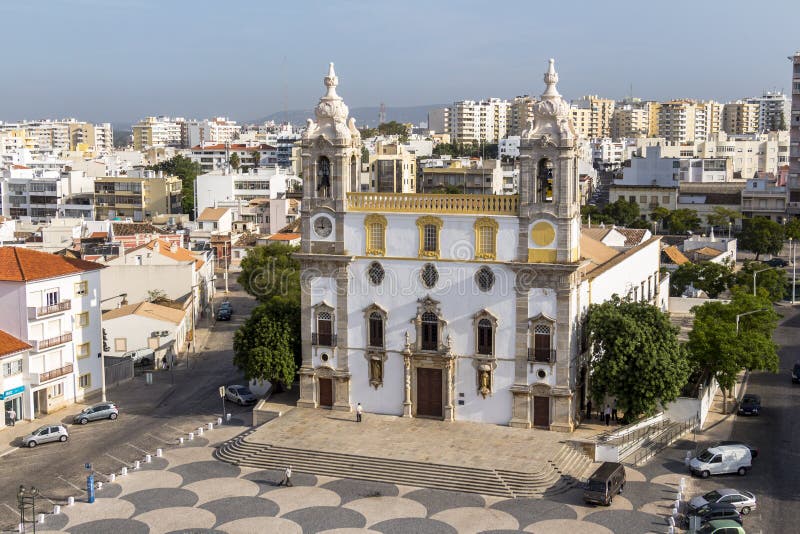
    Catholic Cathedral in Old Town — a short walk from my apartment and where the outdoor market is on Sundays (stock photo)


    I took these photos when I was walking to the ferry yesterday — beside Faro Castle. This is Old Town, Faro and it dates back centuries. It’s a 15 minute walk from my apartment. I come here often to read, walk and eat. Some of the remains are from the 9th century.

    And by the way . . . that blue sky is real (no touching up or color added). There is no smog to speak of here.

    Image result for faro portugal
    There are several islands off the coast of Faro that offer spectacular beaches.
    Image result for faro portugal
    Farol Island’s lighthouse is just a ferry ride through the Ria Formosa. A 5 Euro round trip ferry ride is a great way to go to the beach.


  • Being Less Cynical/Shiraz Has Arrived in Faro

    This week, I would like to explore the topic of cynicism.  I hear this out of Chris Cuomo’s mouth as I type, “You are so cynical.” He’s talking to Stephen Colbert on The Late Show. They’re in the middle of a playful repartee about the impeachment trial. I turned up the volume to hear what they had to say. Two intelligent and refreshingly sane men, talking about the current state of political affairs in the United States. Americans, people in general, have always been cynical, however, it feels as if cynicism is currently at an all time high. I’d like to explore my own cynicism and how I might become less so.

    sky clouds cloudy earth


    This is a difficult time for many of us. Sorting through truth and lies is never easy, but it seems as if conflicting news dominates the airwaves. Listening to individuals you thought you could trust, spin lies, makes it difficult to believe in justice and honesty. Trying not to be political here, because in truth, I’m not certain this is about politics. I think the problem is systemic and I can’t help feeling like we might be headed for the moment in time when it all comes to a head. I ask myself if what I am feeling is cynical or mistrust and what is the difference.

    cynical
    /ˈsɪnɪk(ə)l/
    adjective
    1. 1.
      believing that people are motivated purely by self-interest; distrustful of human sincerity or integrity.
    2. 2.
      concerned only with one’s own interests and typically disregarding accepted standards in order to achieve them.

    I cannot help feeling that a lot of what I’m hearing from our leaders is rhetoric which promotes a personal agenda. I don’t want to believe this; I want to see the best in people and believe they are sincere.

    Image result for cynicism quotes


    Why I Care 

    When people say derogatory things about me, they probably say I’m controlling, opinionated, way too liberal, stubborn, talkative, dismissive, and possibly that I am self-indulging. I’m not sure I could argue about these character traits when they are applied to me. I’m being honest with myself; it’s not cynicism, I know who I am and I know that I can be controversial. People cannot truthfully say that I am cynical and I’d like to keep it that way. And I don’t mean occasionally cynical; there is a difference.

    I am concerned about my own health and wellbeing. Doubting other people’s intentions stresses me out. It causes worry and anger and none of that is good for me. When I erase these doubts and tell myself that people are inherently good, that we all go adrift or make mistakes, I tend to feel better. It’s obviously a defense mechanism, but we possess these tools so that we can work on ourselves and be happier people.

    When I start to think unpleasant thoughts about friends or family members, it changes how I feel about food, drink, travel and the rest of the things I love — my taste buds are soured and all things become tainted. I’m not as profoundly affected when I’m cynical about politicians; these days I almost expect them to lie and push their own agendas, no matter what the cost.


    How Do I Prevent Myself From Becoming Cynical

    If I have learned anything since I relocated overseas, it is that I need to be patient with myself. With good intention, I’d like to think that I can be a better version of my former self, if I truly put my mind to it. What it takes is practice and patience. When you repeat a behavior or practice over and over, it will become part of your automatic, natural reflexive, go-to, inventory of responses.

    For example:  I’m at a dinner party and a friend announces that she is going to organize a fundraiser for children with cancer. She talks about a grand venue and the “who’s who,” who will be invited, the table centerpieces, etc. My mind might go to the reason she is planning this event. One might cynically believe that she’s doing it to make herself look good. It’s unfortunate that this is where your mind might go. In truth, does it really matter? If the end result is that a million dollars will go to help those children and their families, how you got there (as long as it’s legal) is irrelevant. I’d like to instead, go straight to the positive and praise her for her good work. We never truly know what motivates people, so why not think the best of them in all most cases.


    Next Steps

    Mindfulness — awareness of a problem or issue is a huge part of correcting the problem. Now that I am aware of my unintentional cynicism, I can work on moving toward a different way of being:

    1. Identify the pattern that causes a cynical thought or response (e.g., questioning another’s motives).
    2. Break down the cause. Did you ever discover that someone you cared a lot about, had self-serving motives? Did those motives affect the final outcome?
    3. Explore your feelings. Not as easy as it sounds; it means facing your skepticism and demons.
    4. Try out alternative responses and find one or two that serve you better; cause you less heartache or discomfort. Create a toolbox and learn how to retrieve those tools.
    5. When you immediately go to cynicism, push that thought away and use one of your new tools or thoughts. This tool is extremely effective — give it a try.
    6. Practice this over and over again until you go in a positive direction without having to think about it. Practice, practice, practice.
    7. Take inventory of your responses every so often. Sometimes we take two steps back without realizing it — as you well know, old habits are hard to break.
    8. Consider how your positive outlook and behavior has influenced others. How has this new way of looking at life affected your health and well-being? How has this affected your relationships?
    9. Celebrate your success.

    If you have another way of dealing with this issue, I’d love to hear about it.


    When People Are Just No Good

    Sorry is that sounds cynical. Seriously though, there are people in this world that are just plain evil. I’ve come across a few in my life. When you discover this to be the case, my advice is walk away and don’t look back. We are sometimes cynical for good reason. Bad actors usually show their true colors over and over again. Cynicism can be a useful mechanism for defending yourself against these individuals.


    Shiraz Has Finally Opened and You’ll Want to Visit

    Shiraz Restaurant in Faro, Portugal (Pre-opening visit previously blogged)

    Just a reminder that I am not a food critic and that my intention is only to promote good food.

    I love the food in Faro, however, I often complain that there is not enough variety here. Prior to eating at Shiraz, I had never eaten Iranian (Persian) food; or at least I don’t believe I have. I have eaten dishes from that part of the world; however, as you well know, each country has its own unique cuisine.

    Shiraz adds another interesting dimension to the Faro food scene and that makes me very happy. When the Portuguese locals experience how good it is and see for themselves the number of tourists eating at Shiraz, they will be more open to other ethnic cuisines coming onto to the scene (e.g., Korean, African, Malaysian, Turkish — to name just a few).

    Shiraz has been plagued with issues that prevented an on-time opening. I have heard that it’s difficult to open a new restaurant in Faro:  work permits, old infrastructure, contractors, etc. Mr. Thomas, owner, persevered and I belief his tenacity will pay off. He recently shared that it took him three years to make it happen. I only met Mr. Thomas a few months ago, however, I find his patience and positive attitude refreshing. He is pleased to be working with Chef Ram.

    Chef Ram specializes in Kababs and there are several to choose from on the menu. There are a few different preparations and meat choices featured. Simple dishes such as basmati rice topped with saffron are delicious and beautifully presented. I had a Kabab Negini (pictured below) which is made with chicken and grilled tomato sauce. The Baklava, which I learned is made with 21 layers of puff pastry, was the best Baklava I have ever tasted. Toasted almonds, pistachios and a caramel sauce made this delicacy a standout dish.

    Chef Ram is extremely talented and has a smile as big as his heart; stop by the kitchen and say hello.


  • Meet Paco: Adopting A Pet

    Adoption is the only way to go. It reduces the number of animals being euthanized and provides a home for those in need.


    This is Paco shortly after he was found shivering in a storm in the hills of Estoi, Portugal. The generous and compassionate Scottish couple who found him, shared that he was in a state of shock, hungry and badly matted. It appeared from his skeletal, tiny body that he had not eaten for some time. They took him to the vet to have him checked out. He had a serious eye infection, he was starving, and he had worms. The vet told them that he is less than a year old. He also had a chip, however, his information had never been entered in the system — it appears that he was abandoned. The couple’s dog Deano, did not really care for Whisper (a friend of theirs named him) and tried to attack him several times. Clearly, keeping Whisper was not an option, but they were quickly becoming attached.

    The friend that was helping them cope with the situation posted a plea for adoption on Facebook and I responded immediately. I had a conversation with the friend and explained that I could adopt Whisper, but since I had a pre-planned trip to Spain with my friends Michelle and John, I could not take him home until I returned to Portugal. She said that would not be a problem and she asked me to please come and meet Whisper. My friends were joining me in Faro a few days later and I had hired a rental. I committed to going to Estoi directly from the car rental. John and Michelle are dog lovers and they knew Giorgio his entire life (my dog that passed from a heart valve problem a little over a year ago) and they were excited to meet my potential new pet.

    I arrived and spotted Whisper behind a gate a few feet away and knew immediately that he would be my new companion. He is now called Paco. He looks like a Paco and he is my Paco. I have a deep fear that the previous owner will return and snatch him away from me. It’s a fear I will have to live with for awhile. The lack of data attached to his chip leads me to believe that there is a good chance he will remain with me — we’re destined to grow old together.


    Our First Day Together

    Paco has been through the horrible trauma of being abandoned. I cannot imagine what he is feeling right now. He has been with his foster parents for a few weeks and he has grown fond of them; after all, these kind people rescued him. And now they are leaving him with me. I was sensitive to his fears and apprehensive feelings.


    Settling In

    The hand-off wasn’t easy. I was excited to have Paco see his new home, but his foster mom was very sad and had a difficult time saying goodbye. We sat at a café wondering when would be the best time to leave with Paco; there was no best time. She’s gone back and forth about whether or not she wants to see him or hear about how he’s doing. I’m going to give her time and she can decide. She left me with articles of her clothing so that Paco would have her scent. She also left a piece of her heart.


    img_5221

    Michelle and I walked him home. Paco was noticeably skittish; not very familiar with traffic noise and these new surroundings. We got to the apartment and John was sitting out on the terrace. Paco ran outside and went straight for the railing where there are slats that I am certain he can squeeze through (he weighs about five pounds and he’s tall and thin). I screamed for him to stop and he froze. I know it scared him terribly, but it was my only option. We decided that I would need to cover the slats with mesh — this had never occured to me before he arrived.

    We stayed outside where he was obviously much more comfortable and Michelle calmed him down. He eventually settled. Soon after, Michelle began cutting some of the knots from his coat; he’s very badly matted from the time he spend in the hills searching for food, water and a safe home. Most of the matting is close to his skin and will need to grow out before it can be cut. I’m going to give it some time. Michelle leaves for home in a few days and I can’t help wondering how I am going to manage without her patience. Paco responds to her kindness and soft voice. Thus far, I have been a distant observer. Part of me feels as if I am betraying Giorgio and the other part wants to love Paco.

    The mesh has been added to the terrace, so it is now safe for Paco to be outside without supervision. He slept most of his first day with me. Michelle got him to eat and I took him out a couple of times. He walks with coaxing, but he’s obviously uncertain of his new surroundings. I know it will take time. He is alert and responds to my commands.

    He slept quietly through the night in the bed his foster mom brought to me. She had also given me his eye medicine, a lead, collar, and hand written notes about the time he’s been with her and her husband. When she found him a little over two weeks ago his eyes were infected and almost completely shut. They are now open and healing; we have an appointment with my vet tomorrow.

    Our first morning walk was difficult. He peed outside, but he really didn’t want to walk; clearly still not sure what this is all about. When I hold him, he tucks his head under my chin. I keep wondering what is going on in that frightened little head of his.

    He seems to be house trained. It’s hard to tell because he’s spending so much time curled up in his bed.

    Day Two

    A soothing bath and some cutting off of the matted hair; not all the matting, just what is no-so-close to his skin. He doesn’t seem to mind being pampered.


    First Vet Visit

    Paco tried to run out of the vet’s office and slammed into a glass door. It was the first time he had run away from, me so I was startled by it. Good thing the door was closed because he would have run out into traffic and I’m not sure my heart could take the possible outcome.

    My vet was concerned about how thin he is and said he needed to take blood. Ten minutes later he had bad news for me. Paco tested positive for two tick borne bone marrow viruses; apparently common for dogs left outdoors to fend for themselves. He really frightened me by telling me that not all dogs recover for this type of illness. He’s on antibiotics and I’ll know in 30 days whether or not he’ll fully recover. My vet said that if he’s responding favorably to the antibiotics, I will notice it. I asked my vet why he doesn’t bark and my vet replied,

    “There are enough dogs that bark in Portugal so consider yourself lucky.”


    The Next Day

    Paco had another night of sleeping soundly. He’s very well behaved, but I have to keep in mind that he is in a constant state of discomfort because of his illness; apparently a low white blood cell count and arthritis are the reasons he sleeps most of the time. We were able to deal with the heavy matting so I think he is more comfortable now. He loves the sunny terrace and his dog bed. Sometimes he curls up next to me and stares at me intensely; I think he knows I’m going to take care of him.


    Day four

    I’m an early riser and Paco is not. He slept in the first few mornings, but alas, I think he’ll be a morning pooch by the end of the week. He slept in my bed last night, curled up at the base of my back. I believe that lots of nurturing and comfort is going to give him the will to heal and stay alive. He’s a quiet dog; sleeps soundly and doesn’t stir when I get up to use the bathroom. He gets out of bed and lets me know that he is ready for breakfast. Standing by his bowl is a fairly good indicator. I feed him a mix of wet and dry food and he eats it all. I will eventually switch him over to all dry food because I think it’s a better diet for his stomach and his teeth — his vet agrees.

    Giorgio, my last pet, was always more concerned about going out than eating; however, Paco seems to be quite the opposite. He eats and then takes a morning nap. I’m walking him at about 7:00 a.m. It allows us both time to ease into the day. He does his business moments after we hit the grass. It’s as if he’s reading my mind — I’m not fond of long walks.

    I’m noticing a big difference in his disposition; he’s less skittish, more confident and more alert. I assume it’s a combination of being comfortable with me and that (hopefully) the antibiotics are working. I’m pretty certain he is house trained since he hasn’t gone to the bathroom inside — time will tell.

    c591b53e-9642-4a2f-85e8-ea1255776237
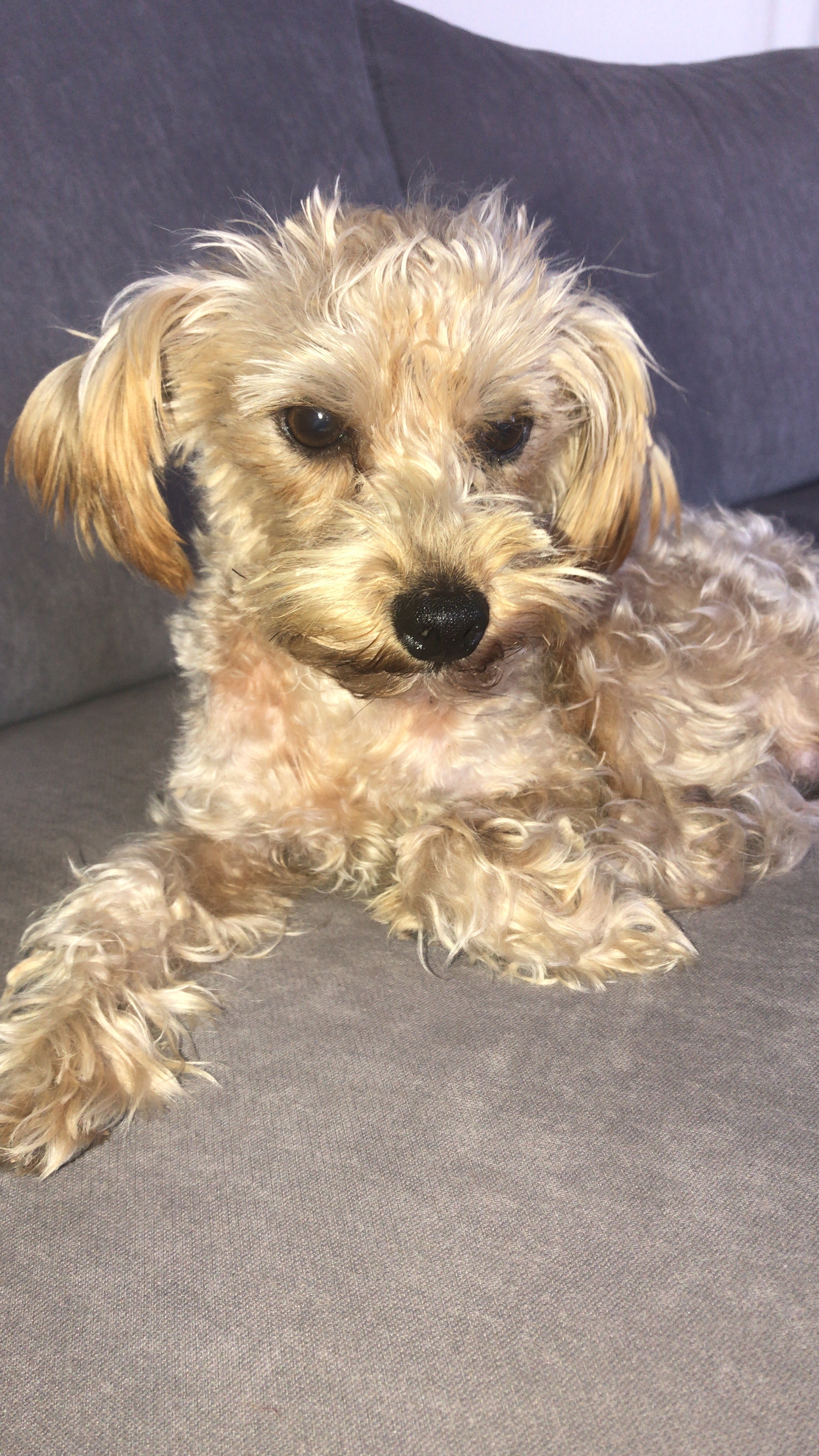
    Paco today; looking a whole lot better than when he was found.

    On day five Paco actually did a complete twirl when I put his food down. His personality is starting to come through. Being alone with him has been good for both of us; we’re finding our way without distractions.

    Paco found his voice yesterday and responded to a barking dog outside; he sounded like a puppy. After three woofs, Paco looked over at me and sighed.


    The Future

    It is obvious to me and to Paco’s vet, that he was traumatized prior to being rescued. I’m not sure if it was his original owner(s) or the time he spent abandoned in the countryside. Whichever it was, I’m going to do everything I can to get him to trust again. I’m already sensing a strong bond between us. I was fortunate to have found a pet so full of love.

    His rescuers have reached out to me, anxious to know how he is adjusting and the status of his health. They are not invasive and have offered to do anything they can to help. I’m feeling more confident that the people who abandoned him will not be showing up at my door. Honestly, since there was a concerted effort to locate these folks over the last several weeks, they’d have a fight on their hands if they did show up.


    How I Found Paco

    If you live in the Algarve in Portugal, check out Algarve Dog Rehoming, a fantastic group on Facebook. That’s how I found Whisper (now Paco). You will find many, many people who will want to assist you in finding the right pet to adopt.


    Helpful Pieces Before You Adopt

    Ten Questions to Ask Before Adopting a Pet . . .

    Eight Things You Need to Know . . .

    Image may contain: 1 person, outdoor, possible text that says 'lesen DONT BREED OR BUY WHILE SHELTER GAN ANIMALS DIE S I bet I won' t even get one share.'


  • Tips From A Seasoned Traveller — Part I

    Tip #1:  If you can fly non-stop and it doesn’t cost you an arm and a leg, do it.

    These days connections are killers. A delay in your first flight can mean hours of stressful time spent in an airport; sometimes even overnight or if you’re lucky, in an airport hotel. Keep in mind that the airline will not put you up overnight if the travel issue is beyond their control and just about everything is beyond their control.


    dc58cfac-2abf-44d6-81da-476d2c308e9c
    I recently acquired this Pan American Airlines  (iconic airline that went under in 1991) travel guide published in 1970 (7th ed.). Fun reading.


    It’s good to be home after several weeks away. I had a five city, three country holiday and it was exhilarating and exhausting. French air traffic controllers and French metro workers managed to mess up my travel on two separate occasions; not in a minor way. These days travel can take its toll on the body and mind; add disgruntled workers to the mix and you’re in for some major stress.

    How airlines, hotels and Uber, handle these delays and glitches is key to how well we cope. I thought I might share some stories:  how I reacted to people along the way and how they responded to me. I’m going to name names because I think you should know how some businesses handle customer service. In a couple of cases I believe my reaction was justified and in other cases, I may have overreacted. I tend to judge myself harshly.

    Tip #2 — You have to be your own advocate.

    Being quiet and meek is not the way to go when you’re either on a schedule or you have been treated poorly. Many airlines or countries today have rules about delays and compensation. The airlines are responsible for providing “passenger rights” either in writing or on-line. It is well worth your time and energy to become familiar with these.


    Prior to setting out for my long journey, I decided that I would not blog about the cities I visited — sometimes it’s more fun to just experience a vacation and keep the memories to yourself. I’m going to stick to this decision, however, there were some highlights that warrant mentioning. I also captured some moments on camera that I am pleased to share.

    Tip #3 — When you travel by plane or train, always have your confirmation/reservation numbers handy. The same is sometimes true for hotel reservations.

    If you need to rebook, revise, reschedule, or reference your booking, it’s a whole lot easier when you have this number handy.


    My journey began in Lisbon with a text from British Airways sometime in the wee hours of the morning. I usually fly in and out of Lisbon because it is cheaper than flying from Faro; 3.5 hours away by train. The BA text let me know that I might have flight delays due to the French air traffic control strike. I was unaware of this strike because my news is all Trump, all the time.  Sleep was impossible after reading the message and so I decided to be proactive and call the airline. I was able to connect with a customer service representative fairly quickly due to the hour of the morning. I explained that I would like to be rerouted in order to avoid flying over France — it was after all east of Lisbon and I was headed west to Baltimore. The very cordial representative explained that she had limited options for me. She told me that the best she could do would be to put me on a later flight from London’s Gatwick airport. It would provide a cushion in case I missed my connection to Baltimore. She was fairly certain that I was not going to make the connection. I would have booked the later flight, however, that flight would take me to Dulles airport in Washington, DC; a minimum of 80 minutes by car to Baltimore. She informed me that I would have more options working with an agent at the airport. I thought there might be a more direct option. In fact, I knew there was, but would I get it.

    Since sleep was elusive, first because of the possible delay and second, because I had discovered I had brought the wrong computer charger and I was wondering how I was going to be away for over two weeks without use of my laptop. I packed up and went to the airport, arriving at about 7:15 a.m. A very kind British Airways agent informed me that the agent I needed to speak with would be at the counter at 8:25 a.m. I took a deep breath and waited. At about 8:20 a.m. the original agent walked over to me with good news. He said the delay to Gatwick had been reduced from two hours to 45 minutes and that I should have no problem making my connection. He said that I would be landing in terminal 3 and I need to go to terminal 5, but I “should” have enough time. Minutes later the check-in desk opened and I handed a different agent my passport. She called her supervisor over and told her supervisor that she was concerned that I might miss my connection because I was landing at terminal 3, not 5, where my connection would be.

    The supervisor said, “No, you will be landing at terminal 3 and your connection will be at terminal 3.”

    I replied, “Are you sure because your agent (I pointed to him) told me my connection would be at terminal 5.”

    She said, “He doesn’t know.”

    I walked away confident that even with a delay, I would make my connection. You know what I’m going to tell you next, don’t you? The pilot came on the loudspeaker and greeted us warmly. He said that he was glad that we had received an opening to depart and that we would be leaving soon. An hour later he greeted us again, telling us that he was cleared and then uncleared, three times. I was concerned at this point, however, I chose to remain calm, knowing that being anxious wouldn’t get me there faster. The flight finally took off about an hour and 15 minutes after it was scheduled to leave. When the pilot spoke to us again, he told us that we were landing in terminal 3 (by this time I had learned that my connecting flight would be at terminal 5). The flight attendant calmed me and said that I needed an hour to make the connection and although it would be tight, if I was fast, I’d make my flight. For the next hour I took about a hundred deep breaths. Just before the plane landing the flight attendant came over to speak to me, informing me that the pilot had contacted the connection flight’s pilot and that the Baltimore bound pilot would wait for me. I was impressed with how I was being treated and sat back and relaxed. Planes that were landing in London were backed up and we were an additional 20 minutes late landing. At this point I had exactly one hour to make my flight. I hustled, followed the purple signs to “connecting flights,” and made it to terminal 5 in 30 minutes.

    When I got to terminal 5 I had to use my ticket to gain entrance to the terminal’s check in area. I attempted to gain entry and was denied. The readout said that I needed to see an agent. Two minutes later I was speaking with a British Airways agent and I explained what just happened. She informed that I was re-booked on the Dulles flight. I pleaded with her to allow me to try to make it to the gate. No can do, there are rules you know. She told me that I needed at least 35 minutes at that point to make the flight and that I only had 30 minutes. I put on my best “you cannot do this to me face” and told her that I had to get to Baltimore in time for dinner. She handed me a meal voucher and apologized.

    Curious to see whether or not I would have made it to the gate for the flight I was originally booked on, I headed that way. You guessed it, I made it to the gate with time to spare. I didn’t even approach the desk knowing that my luggage was on the plane going to Dulles. The gate was open for at least another 20 minutes. One more reason to do carry-on if you can. I’m not sure they would have reticketed me anyway.

    I proceeded to head toward my new gate. I wanted to drink alcohol, but I thought it might prevent me from getting some much needed rest on the flight. The departure time was “on time” and so I waited at the gate. Just when they were about to board the computers went down and they were forced to board manually; more delays.

    I landed in Dulles three hours later than I would have landed in Baltimore. The passport line was over an hour long and I knew a car was waiting for me on the other side — dollar signs flashing before my eyes, I was beyond exhausted. My friend Adam had said he’d pick me up, but he wisely sent a car instead; he had three days of his daughter Emma’s Bat Mitzvah festivities ahead of him.  I stupidly totalled the hours I had spent getting to Baltimore and it was just under 24 hours. I cursed the French, British Airways and my anal retentive personality. I walked into the arrival area searching for my name on a big card. The area was swarming with people waiting for their loved ones and there were many men holding up cards with last names on them . . . none of them mine. I was about to contact the car service, but decided if I didn’t pee first, I would wet my pants. Standing by the bathroom was a massive human with my name across his tiny iphone — I should add that my name was spelled correctly for a change.

    I said, “Hi, I’m the guy you’re waiting for.”

    His reply, “I’m Nick, can you wait right here while I go pee. I’ve been standing here a long time.”

    Of course I let him go first. You know when you’re weary and angry and blurry eyed and you just want to go to bed; decisions are never easy — we could have peed at the same time. The 90 minute trip to Baltimore is just a blur. It was 4:00 a.m. back home and I couldn’t keep my eyes open in the car.

    We arrived at the hotel and I asked Nick if I was supposed to tip him. He smiled and said it was all included. I didn’t want to think about what “all” meant. I dragged my bag and backpack to the hotel door and the door was locked. I looked for another entrance and that one was locked as well. I stood in the cold — a lot colder than what I am used to — and started thinking about how I might contact the hotel desk. I had no phone service in the States and I didn’t know if I’d find an internet supplier out on the street. Defeated and at a loss for solutions, I was about to sit on the curb when a gentlemen opened the doors and invited me in. They could have stuck me in a closet or office and I would not have noticed. Fortunately, it was Hotel Revival (a Hyatt property) and the room was very nice.

    The next day I wrote to British Airways needing to share my story. It was a two paragraph complaint and I included every reservation number, flight number, times, details, the size of my underwear; hoping for some compassion. The reply was laughable, but expected. “You’re flight delay was due a problem with the handicap ramp.”  What? I wrote back and asked if they had even bothered to read my email. The second reply was a bit more thorough, basically informing me of time restrictions and airport travel time, yada, yada, yada. I wrote a third email and finally got somewhere. Even though “it was beyond our control” they were willing to reimburse me for the car service to Baltimore. I did not know that an airline can redirect you up to, I believe, two hours from your destination airport without being responsible for getting you to your original destination.

    I got the receipt for the car service from Adam and I discovered why Nick did not expect a tip:  $211 for my ride to Baltimore. The receipt has been submitted and a reimbursement is in the works . . . pending any unforeseen delays.

    None of this was made up. Well maybe the underwear comment.

    Tip #4 — Unless you want the added expense of a rental car or lots of taxis/Ubers, choose a hotel in the centre of town. If you can avoid a main street or bar/restaurant street, you’ll have a quieter night.

    Walking around a city or town is the best way to get to know the landscape. I use Hotels.com and they do a good job of sharing which sights they are close to and how far they are away from the airport and other forms of transportation.

    Tip #5 — It seems as if delays are inevitable these days. If you are checking your bags, make sure you have a carry-on bag which will have your necessities:  water, snack, phone charger, laptop charger, lip balm, travel itinerary, passport, make-up, reading glasses, a good book, a small pillow (there are some nice inflatable pillows on the market), etc.

    Purchasing some of these items can be expensive (an Apple laptop charger can cost you up to $80). The more you have at the ready, the more comfortable you’ll be.


    Baltimore was my first stop. Emma’s Bat Mitzvah, good eating, time with friends and family, two very nice hotels, a bit of gambling, and my delay a distant memory; all made for a very pleasant first five days in the States.

    Next week:  London, Bath, Paris and Bordeaux. Stories to share from the same holiday.


    Sharing:

    I am not opposed to sharing recommendations for hotels, Airbnbs, airlines, restaurants; however, I prefer you send me a message with any specific requests. I did not keep copious notes this time, but I’m happy to rely on memory and an internet search or two. As always, I must mention that these are only recommendations and my needs may differ from yours.

  • My Head Still Hurts


    Image may contain: 3 people, including Christopher Papagni, people smiling, people sitting, table and indoor
    In my sister AnnMarie’s Port St. Lucy home, April 2019. Kat in the middle and AnnMarie on the right.

    Image may contain: 2 people, including Christopher Papagni, people sitting and indoor

    This is my older sister Kat (short for Kathy, which she doesn’t like to be called). I love writing or calling her ‘my older sister.’ No matter how old we get, Kat will be my older sister. I know when she reads this she’ll say, “You fucker.” I’m going to tell you a story about Kat and me. What I am going to tell you took place 54 years ago, so I can’t swear by some of the details. What I can promise is that it happened and for some reason unbeknownst to me, the incident has come back into my consciousness dozens of times since.


    A Hard Hit on the Head

    I was not a well-behaved child.  Two of my older sisters, AnnMarie seven years older and Kat, six years, pretty much took care of me throughout my youth. My sister Marguerite is older, but she did not live with us; her presence in my life has been significant as she is my Godmother and we share the same father. When I was a small child, my mother didn’t have the time or patience to be a mom. AnnMarie was stern and Kat was happy-go-lucky. They took turns babysitting for me and my younger siblings. I had a lot of energy and I rebelled against authority, I still do — rebel against authority. My sisters knew how to handle me. AnnMarie only had to look at me a certain way and Kat would sweet talk and bribe me. They never had to play good cop, bad cop; as rambunctious as I was, I respected them. I also knew at an early age, that it wasn’t fair that I was dumped in their laps.

    Early on, I was their play toy. They diapered me, dressed me up, paraded me around in a baby carriage, and smooched me until I screamed for them to stop.

    IMG_4956
    I was two years old and it’s a 58 year old photo.

    I got older and a bit harder to handle. This particular memory is vivid and somewhat painful and bittersweet. I was about six years old and it was Kat’s turn to babysit. I must have been wired-up and not listening very well because I remember my sister was not her usual cheerful self — keep in mind that if I was six, Kat was 12. Considering all that she was responsible for, a fairly mature 12 year old I’d say. I recall an ultimatum:

    Probably something like, “Stop horsing around or I’ll go get AnnMarie.”

    I continued to act out and Kat grabbed a glass platter (Kat says it may have been plastic, but I honestly believe it was glass) and broke it over my head. The platter broke into many pieces and I stumbled, a bit stunned, and a little dizzy. Kat must have regretted doing what she did, but I didn’t notice any remorse at the time.

    She said, “That shut you up.”

    Admittedly it did, but only for a minute and then I got up and said something I have regretted ever since.

    “I hope you die in your sleep tonight.” Or something like that.

    She told me to go to bed and to close my bedroom door. I’m going to say it was about 6:00 p.m. We were normally sent to bed at about 7:00 p.m.; which I still think was too early. I got under the covers and wept; I wept for a long time. Kat didn’t come in to check on me. I’m sure it was one of those tough love moments I remember so well.

    The guilt I felt about what I’d said to my sister tormented me. What if she’d died in the middle of the night? I couldn’t imagine what that would have been like. I actually believed that I had the power to make her die just by saying the words out loud. I knew that the only way to prevent her death would be to apologize to her.

    Sometime later that night, I left my bed to see if she was breathing. I tiptoed into her bedroom and saw that she was. Relieved, I shook her shoulder and whispered her name. At that time it was okay to call her Kathy.

    “Kathy, I have to tell you something.”

    She opened her eyes and said, “What’s up Chris?”

    “I’m sorry I told you that I hoped you would die. I love you.”

    Tears streamed down my cheeks as I imagined what could have happened had I not gotten to her in time. My sister smiled and lifted the covers, motioning me to climb into bed. I sniffled and wiped the snot from my face with my pajama sleeve and crawled under her blanket. I don’t recall ever sleeping with Kathy before or after, come to think of it.

    She pulled me close and said, “I love you too, now go to sleep.”

    It was at that moment that I learned about forgiveness and the importance of my words. I don’t believe I have ever uttered anything that hateful again in my 60 years of living. Of course I have been angry and I have said things I regret, but I have never wished death on anyone — well maybe one person, but since millions feel the same way, it doesn’t count. I feel like I was given a pass that night. Either somebody wasn’t listening or some angel from above gave me a reprieve — whatever it was, my sister was spared and I am forever grateful.

    As time progressed, Kat was my confidant. When I was bullied at school, it was my sister I cried to; when I thought something bad was happening inside my body, it was Kat whom I told; and when I was ready to tell someone that I was gay, Kat was the first person I shared it with. On Kat’s wedding day, there were three men who could have given her away (her father and two step-fathers), but it was I she asked to escort her down the aisle. When my sister’s only child had a full body cast removed when she was two years old, it was me my sister wanted by her and my niece’s side, at hospital. When my sister was arrested for carrying a gun without a permit, I was her one call from the police station. In my late teens I left home and needed a place to live and my sister took me in; I should also note that I had my Great Dane, Dana with me. I never told my sister that I was in a very bad place back then and that her love and generosity saved my life. She probably knew.

    Like most close relationships, our has had its ups and downs. Blame and who has been right or wrong is not important. What matters is that we have a bond that comes from a life of sharing pain and joy. That bond should never be broken or taken for granted.

    I have a special bond with each of my surviving siblings. I am closer to some than others; I imagine this is natural. Personalities, daily life, history, all play a part in the symbiosis of our relationships; however, what binds us is love and moments we have shared and will continue to share.

    Kat never broke another plate over my head or put a hand on me after that incident. I can’t speak for my sister, but it’s my guess that we both learned a life lesson that day. We are fragile creatures and our time here is limited. I’m at a place in my life where I only want to celebrate our love.

    AnnMarie, the stern one, a few years ago. My sister’s strength and steadiness is and always will be an inspiration to me. 


  • If it Were My Last 24 Hours on Earth

    “No one here gets out alive.”

    — Jim Morrison

    sky earth galaxy universe
    Photo by Pixabay on Pexels.com

    Not to worry, not checking out anytime soon, just reminding myself how fragile life can be. The last thing I want to do is hurt anyone; therefore, I think it’s best for me to respond in the abstract and not name names.

    What if you knew that you were going to die and you had 24 hours or less left to live? Would you want to be surrounded by those you love? Would you run away and hide from everyone? Would you tell people you cared about? Would you share things you have been holding back? Would you look back at memories? Would you end your life sooner in order to control the situation?

    These are the kinds of questions I ask myself when considering just how finite life is.  And by the way, the questions come up occasionally, not every day. There are statistics that guide us when we consider our lifespan. There are formulas based on how long your parents lived. Then there are calculations based on lifestyle. Genetics sometimes come into play. However, an accident may make all of those theories insignificant and irrelevant.

    I had a pretty bad accident a couple of years ago that made me question life, death and how I feel about both. Up until the accident, I was fairly certain that I would grow old and cranky. If I’m going to be honest, I have to say I’m well on my way.

    I attended a dinner party a few days ago and raised my blog topic for this week. It’s interesting to hear what people have to say in a relaxed social setting. I don’t usually share my own thoughts until after I’ve heard from others. As with any difficult subject, some people prefer to avoid the matter altogether and this time was no different. One of the things I love about people is how very unique we all are. It’s for this reason that I try my best not to judge. Our prospective can be polar opposite based on things like upbringing, religious beliefs, the truth we hold on to, and so forth. I would be untruthful if I didn’t admit to feeling strongly about my own beliefs; the power of personal conviction is essential for many reasons. Keeping that in mind, I don’t claim to be right, but I do think that what I am espousing is true for me; sometimes, that’s all that truly matters.

    I posed the question to a small group of people sitting at the table after lunch:

    If you knew you had 24 hours or less to live, what would you do? 

    The answers I got were interesting and understandable:

    “I wouldn’t change anything; I’d want it to be a normal day.”

    “I wouldn’t tell anyone because all they would do is cry and pity me.”

    “I would be with a very small group of people I love very much.”

    “I wouldn’t do very much because I would want time to slow down. When you do a lot of things, time speeds up.”

    “I might consider ending my life sooner — when I decided it should end.”

    “I would have a couple of conversations I have been avoiding.”

    “Why, do you know something I don’t know?”

    The thing is, do we truly know how we would behave until we are actually in a particular life altering situation? I could easily say I wouldn’t tell anyone that I was going to die, but in truth, if I knew it was the end and I became extremely emotional or scared, I might need to tell or want to tell someone.

    What follows are some thoughts on why we live our lives as if there is no expiration date:

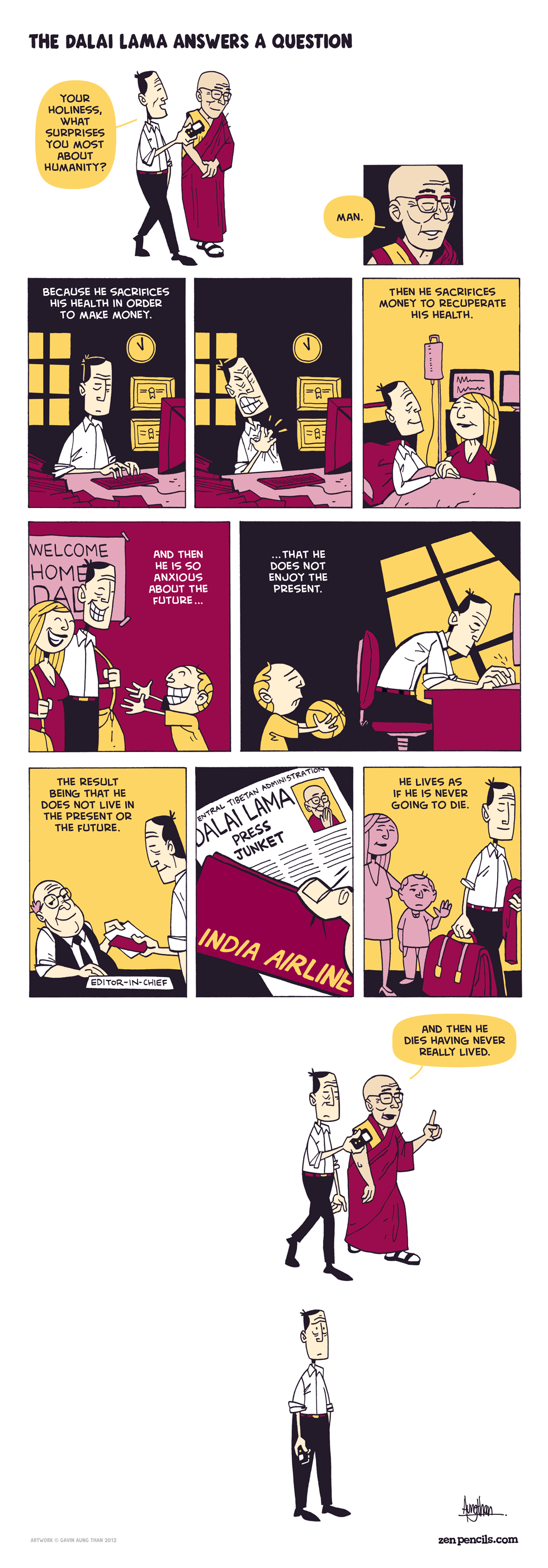
    I love this poignant comic included in Brian Lee’s piece on living life as if we’re never going to die at Lifehack. Check out www.zenpencils.com.DALAI-LAMA-answers-a-question

    We are complex creatures with hopes, fears, frailties and misgivings. Our highly developed brains allow us to tuck away thoughts and focus on things that make us feel good; I should note that some of us are better at this than others. We often behave as if our daily actions do not have consequences for the future. Vices and health related toxins are often imbibed or eaten without concern for longevity. It’s a curious human occurrence considering that most of us would like to grow old. So what drives us to recklessness? It’s as if there is a little switch in our brains that we choose to turn off when desire overpowers restraint.

    It is no accident that the precise timing of our death is unknown. Imagine the chaos and emotional instability that would ensue. I think that animals have a better sense of death and what it means than we do and, therefore, have better dying coping skills. I’ve been with several dogs at the end of their lives and the sense of peace and acceptance I felt from these animals was both life affirming and beautiful. We live and we die and that is the true miracle of life.

    As I consider complicated mechanisms for denial and delusion, it once again brings me to how I might deal with knowing when my own demise is just around the corner. Here are some thoughts that come to mind (not necessarily in order of importance):

    1. There is no doubt in my mind that I would want to truly enjoy the wonders of the earth. The sunrise and sunset continue to amaze me and I take both in as often as possible. The smell of flowers and the feel of earth between my fingers, gives me great pleasure. I can only imagine that knowing these wonders would no longer be accessible would heighten my desire to experience them.
    2. The people in my life who have shown me love and devotion would be on my mind at the end; I would hope that these cherished few would be nearby. I would want to let them know how much I love and appreciate them. I still do not know that I would share the inevitability of my passing. We all know that we should be showing our love and appreciation often, not waiting until we are sick or dying.
    3. I have loved food since I could smell my dad’s pizza in the oven when I was a wee toddler. My relationship with good food has never waivered and I hope I remain true to my passion until the day I die. I have been reading research about taste buds and how our sense of taste diminishes with age. I refuse to believe that this applies to me. My father and aunts and uncles on my father’s side, all enjoyed savory dishes well into their 80s. If I knew that my death was near, I would want to devour my favorite foods:  shellfish, pasta and cake and a nice red of course. I know that knowing it was almost over would probably have an effect on my appetite; however, knowing how I sometimes eat and drink to feel better, I imagine I’d be hungry and thirsty. A very expensive armagnac would be a must have.
    4. Being present and cherishing every moment of what life I have left, would likely be my mode of thinking and feeling. I have never feared death, therefore, I’m fairly certain i would be at peace with it.
    5. I would want to be comfortable; the right temperature, the right place, and the right people around me.
    6. I would probably want to be on a good dose of xanax.

    I have had many people in my life pass:  my grandparents (three before I was even born), my parents, several siblings, close friends, teachers, co-workers and acquaintances. My mother’s brother died of a massive heart attack in his 50’s; how could I not consider the possibility of dying at anytime? Personally, I don’t find this morbid or sad.

    Long ago I decided that if I had a fatal illness, I would travel (if I could) to a place where you could choose to die with dignity. If this were to happen, I would have an opportunity to decide how I would spend my final hours; all of this provides great comfort. I am not obsessed with dying, I am focused on living and making sure my quality of life is the best it can be.

    The purpose of this blog is twofold. First, it is my hope that it will get you thinking about how you live your daily life; what are your priorities and do you consider and cherish the people and things that bring you the greatest happiness. Second, it is my belief that we as individuals have the power to change the course and direction of our lives. I felt stuck, misguided and unhappy in Maine. It wasn’t so much the place or the people, but an environment that was too comfortable and unchallenging. I moved to Europe in order to reboot, recharge, and start afresh. It’s not right for everyone, but it has taught me more about myself than I anticipated. Self-discovery and change can be as exciting as a new relationship; driving gleefully into the future with renewed hopes and dreams. Fear is what usually holds us back. Fear of the unknown, fear of failure, fear of death. Put all of your fears aside and go for it. The unknown can be a wonderful and rewarding future. Focus on the image of a door opening to a paradise you never imagined existed; more often than not, we have the ability to manifest our dreams. I choose to manifest those dreams while I am still alive.

    Image result for manifest dreams quote
  • Why Eindhoven, Netherlands?

    A trip to Holland Worth Sharing:

    I am starting my blog with this travel story because it captures the essence of why seeing the world is so important to me. Sharing my experiences with you cements them into my conscious mind forever.

    ee25f682-458e-4f5c-bd29-e1fac9d8e54d

    A Delicious Restaurant Story

    It was my last full day in Eindhoven. I had just seen an early showing of Downton Abbey. I had to pay twice the price I pay for a film as I pay in Faro, but no matter, it was Downton Abbey and it hadn’t arrived in Faro yet. The film was delightful and delivered on every level; I may have even been whistling when I left the theater. Whenever I feel really good or really bad, I want pasta. I typed “good Italian restaurant” into my browser and found Ristorante Sicilia nearby. I walked in and noticed no one in the restaurant. It was 12:30 p.m. on Monday in a touristy part of town. There were two people in aprons in the kitchen, so I waited by the bar. The chef spotted me and walked into the dining room. He said hello in Italian and I said, “Are you open for lunch?” He held up a finger and went back into the kitchen. He was speaking in a whisper to his colleague. A minute later he walked back into the dining room and said, “Please, take a seat wherever you like.”

    What happened next almost seems like a fantasy out of a novel. This very good looking, authentic Sicilian chef, took my order, prepared my meal and served me. The entire time I sat there, no one else walked into the restaurant. As I type this I’m wondering if this really happened or did I dream it.

    The chef came to my table by the window and showed me a menu. He spoke to me in Italian and that was fine; it might have been because I thanked him in Italian when he told me to sit anywhere. I ordered a vino rosso della casa and he brought me a full glass of  delicious red. There are times in life when you do not ask questions and this was one of those times. When he returned I ordered a Stracciatella and a tagliatelle arrabbiata with prosciutto, olives and onions. The chef asked me a question in Italian and I said, “Non capisco.” He replied in perfect English, “Do you like it spicy?” I said, “Si, si, si.”

    I’m no longer in Holland at this point; I am in a hillside town somewhere in Italy and I am one happy fella. The soup is rich, tasty, and hot. It was every bit as good as my father’s Stracciatella and that’s saying a lot. My pasta was perfection; al dente, perfectly seasoned, full of ham and green olives and the right portion size. I asked the chef for some bread and he told me that the bread would be delivered later in the day; he looked sad. About 5 minutes later — and not too late — he brought me some homemade biscuits. I grabbed one and dipped it in my sauce while he was standing over me. He gave me a huge smile and went back to the kitchen. From the time I entered the restaurant until I paid the check, it was just me and the chef interacting. I told him that my father was an incredible cook, but that his food was outstanding and I would never forget the experience.

    Looking back, I don’t think the restaurant was open for business. I think the chef was prepping for dinner and decided not to turn me away. It was an act of kindness I embrace with gratitude. There is something about cooks and feeding people that I find incredibly unselfish and heartwarming. I will of course review the restaurant on-line and pass along my five stars; however, this will be a small gesture compared to what was done for me that day.

    Image result for Restaurant Sicilia Eindhoven
    From the internet — I did not take a photo (in the moment)


    The Joys of Travel


    When I moved to Portugal I expected to see more of Europe, however, I did not expect to see so much of it, so soon. Since losing Giorgio, I have visited several countries and I have seen some breathtaking cities. I recently heard the news that RyanAir will no longer be flying in and out of Faro Airport as of January. Although I know that some of the other budget airlines will probably pick of most of their routes, I decided to take a final trip flying Ryan in and out of Faro.

    I looked at the list of places Ryan flies to from Faro and realized that I have already been to many of these cities already. To be honest, there were some I had no interest in seeing — sometimes it just a gut feeling. I spotted a city on the list I had never heard of before, Eindhoven. I googled it and I liked what I saw. It’s still pretty hot in Faro (high 80s) and so I thought temperatures in the 60s would be a nice change. I didn’t realize that it rains a lot in the Netherlands in the fall, but that’s okay because we get so little rain in the Algarve.


    Eindhoven 20th Century [Wikipedia historical info]

    By 1920, the population was 47,946; by 1925 it was 63,870 and in 1935 that had ballooned to 103,030.[11] The explosive growth of industry in the region and the subsequent housing needs of workers called for radical changes in administration, as the City of Eindhoven was still confined to its medieval moat city limits. In 1920, the five neighboring municipalities of Woensel (to the north), Tongelre (northeast and east), Stratum (southeast), Gestel en Blaarthem (southwest) and Strijp (west), which already bore the brunt of the housing needs and related problems, were incorporated into the new Groot-Eindhoven (“Greater Eindhoven”) municipality. The prefix “Groot-” was later dropped.

    People of Eindhoven (during World War II) watching Allied forces entering the city following its liberation from Axis forces on 19 September 1944.

    A first air raid in World War II was flown by the RAF on 6 December 1942 targeting the Philips factory downtown. 148 civilians died, even though the attack was carried out on a Sunday by low-flying Mosquito bombers.[12][13] Large-scale air raids, including the bombing by the Luftwaffe on 18 September, 1944 during Operation Market Garden, destroyed large parts of the city. The reconstruction that followed left very little historical remains and the postwar reconstruction period saw drastic renovation plans in highrise style, some of which were implemented. At the time, there was little regard for historical heritage. During the 1960s, a new city hall was built and its neogothic predecessor (1867) demolished to make way for a planned arterial road that never materialized.


    Anton Philips

    Born to a Dutch family of Jewish heritage, Anton was the second son to Maria Heyligers (1836 – 1921) and Benjamin Frederik David Philips (1 December 1830 – 12 June 1900). His father was active in the tobacco business and a banker at Zaltbommel in the Netherlands (he was also a first cousin to Karl Marx). In May 1891 the father Frederik was the financier and, with his son Gerard Philips, co-founder of the Philips Company as a family business. In 1912 Anton joined the firm, which they renamed Philips Gloeilampenfabriek N.V. (Philips Lightbulbfactory NV) — wikipedia

    Anton was a well known and highly respected resident of Eindhoven. The city erected a statue of him and you can see it in the city centre.


    Van Abbe Museum

    Fortunately for me, the Van Abbe Museum was very close to my Airbnb. I visited the museum my second day in Eindhoven and walked past it numerous times. It’s next door to a micro-brewery and some noteworthy bars and restaurants.

    The museum exhibits modern and contemporary art on five floors. The exterior of the museum is architecturally stunning and you’ll find the temporary exhibits to be relevant and worth viewing. There were a good many interactive installations; my kind of artwork — you can touch it and sit on it. The permanent collection was a bit of a disappointment, yet still somewhat impressive. There were way too many copies exhibited. I always want to see the real thing.


    Catharina Church and Square

    St. Catherine ‘s Church is a Roman Catholic church in the inner city of the Dutch city of Eindhoven , dedicated to St. Catherine of Alexandria.

    The church and square are magnificent and worth a visit if you happen to be in Eindhoven. Personally, as a fallen Catholic, I find these kinds of churches to be garish and full of excessive amounts of gold and shiny objects. I think a majority of the interior  should be sold off to feed starving children all over the world.


    Synagogue

    It was not allowed for Jews to settle in the city of Eindhoven until 1772, when Stadtholder Willem V summoned the city council to open its doors for Jews. Not until 1796 however were Jews totally free to settle in Eindhoven – between 1772 and 1796 the city council succeeded in summoning numerous orders to make Jewish settlement in the city incredibly difficult. Because of the prohibition for Jews to settle within the city, nearby villages contained fairly large numbers of Jews. However, from 1796 onward, the Jewish presence in Eindhoven started to grow considerably. Most of the Jews were immigrants from Germany, specifically from CologneKrefeld and Bad Kreuznach. They were all Ashkenazi. A synagogue was put into use. After another period of growth after 1850, the city became the seat of the chief rabbinate for the province of Noord-Brabant (wikipedia).

    Eindhoven has a rich Jewish history and the Jewish Quarter commands your time and attention.

    Prentbriefkaart van de synagoge in Eindhoven, ca. 1920


    The Railway and Bus Station 

    The station is in the center of the city. It’s a very attractive, with lots of space, shops, easy to read signage and it seems to run efficiently. There are several bicycle parking lots around the station. People love to cycle in Holland; therefore, auto traffic is light and the city is not noisy. You do have to watch out for cyclists, but for the most part they obey the traffic laws. I noticed they stop for lights and smile when you cross in front of them. And it’s great for the environment. When I use my bicycle in Faro, I pray to my higher power for safety.

    0013797c-35bb-4082-a572-0a77e6927a2b


    Places to Eat

    Spice Up — excellent Thai food; unpretentious and delicious.

    Street Food Eindhoven (a corner restaurant)– trendy, but a great spot for people watching and good chow.

    Rodeo — great steak from Argentina. Recommended to me by my Airbnb hosts. This is a trendy, busy restaurant and I was glad I made a reservation. I was seated at the bar and loved the eye candy I enjoyed with my meal. My tenderloin steak was juicy and tender and cut like butta.

    Noedobar — Asian Street food — good and reasonable. I ordered Thai coconut chicken soup (my favorite) and excellent pork dumplings. They also had a charger for my iphone — I love when that happens.

    Arigato’s — Japanese — couldn’t get in; however, the restaurant was beautiful and they had great reviews; high-end dining.

    Ristaurante Sicilia — see story at the top of blog

    I found the food in Holland to be much better than expected. I have been to Amsterdam, The Hague, and Rotterdam, several times in the past and I have been disappointed. I was very pleased to see that the food scene has improved. I have to say that this has been my experience just about everywhere; even Salisbury, North Carolina, which I was certain was hopeless (to my family:  there is still room for growth).


    ‘s-Hertogenbosch — Den Bosch

    Below are some of my memories of Den Bosch. I spent the day with my friend Annelies from Amsterdam; we haven’t seen one another for over seven years. I was there on Saturday and the outdoor market was in full swing. We hadn’t planned to be there for the market, but we happened to hit Den Bosch on the “right” day. The full name (above) of the city is difficult for foreigners, so the nickname Den Bosch was created for people like me. I’m told the locals prefer the “real” name. It’s a beautifully preserved city and very easy to navigate. Canals and cafés everywhere and smaller and less crowded than Amsterdam. I could see myself spending a week here.

    STADSBISTRO CHRISTOFFEL — We had lunch at this restaurant in Den Bosch (translation Christopher, but we didn’t know it until we left the restaurant). The food was excellent and the service was even better. They took our order at the bar while we waited for our table. We were seated 15 minutes later and our food was delivered to us immediately — very civilized. The crispy chicken was sublime.

    MonQui Koffiebar (see first pic) — was a delightful coffee shop near the train station. The coffee was exceptional and the decor a delight for the senses. Annelies and I loved it.


    75a8dc81-3c5d-495b-8ce8-80ea359cbb70
    This little guy was clearly the king of this beautiful carpet shop. 


    An Easy Time Traveling (for a change)

    Have you taken a trip by air where you thought:  Wow, that was seamless. These days that would be a rare thing indeed. This was one of those adventures for me. The flight check-in was quick and easy; right to the gate and all the lines were short in both directions. Buses and planes were on-time and reasonably priced, my Airbnb was in a great location and very comfortable, the weather cooperated, I won five Euros at the casino, and I felt well-rested when I got home. Can’t ask for more than that can you? You know there is little to complain about when the only thing you can piss and moan about is the fact that your Airbnb host did not supply soap for the shower.

    Two disclaimers:  Once again, I did not mention a few restaurants that were not noteworthy and I did not take very many photographs. I have been working on enjoying and being in the moment and when you are truly taking in all of the sights and sounds around you, it is mental photographs and visual/audio recordings that are occupying your mind.


  • Doing the Right Thing

    Image result for do the right thing quotes


    I’m not sure when it was that I started feeling the pressure of doing the right thing. I do know two things:

    1. I spend way too much time thinking about this. The right thing for me or for others; I think about both.
    2. When I do the so called “right thing,” I sometimes spend time wondering if the right thing was the best thing.

    Breaking down the issue, I think I can safely assume that #1 will never go away. There comes a time when you just have to accept who you are and what you can or cannot change. I live with a lot of guilt:  gay guilt because I was closeted for the first 28 years of my life and I lied to a lot of people; Catholic guilt, having been raised Catholic and forced to spend too much time with authorities from the church; sibling guilt, being in the middle of 10 whole, half and step siblings; and DNA guilt — I am certain that I got the guilt gene, perhaps more than one.

    When you put it into words, no wonder you find it overwhelming. Fortunately, I have found a way to tuck most of it away in little boxes that I can set aside and keep closed.


    Gay Guilt

    If you truly believe that people no longer care if you’re gay or straight or transgender or how you define your sexuality, do not read any further or even better, read with an open mind [There are actually people who have said to me, “Things are different now, nobody cares anymore. Right.]:

    I count myself as one of the lucky ones because I came out at 28. I know gay men well into their seventies who are still closeted. I cannot imagine that kind of pain. So when I talk about doing the “right thing,” I mean what is right for you, not what others think is right for you.

    I continue to feel that people look at me differently because I am gay. I know that I have family members who have very little to do with me because of my sexuality. Anyone who says they don’t care is lying to themselves and others. Yes it makes me stronger and more determined to be my true self, but it can also sometimes make you feel as if you’re living on an island. The messages on television and magazines have changed, however, we continue to live in a heterosexual world and I cannot imagine that changing anytime soon. Navigating that world can be exhausting and troublesome.

    What does doing the right thing look like for you straight or closeted folks?

    1. Show some interest, ask questions.
    2. Ask to be a part of someone else’s world. My brother asked me to take him to a gay bar about 10 years ago and I was pleased and excited to show him a part of my life.
    3. Read articles and books on the subject matter.
    4. Be an ally whenever possible, it truly matters. It’s the reason we have come so far.
    5. Just be with someone who needs you, often that’s all they need.


    Catholic Guilt

    If you were raised catholic (I cannot speak for other  religions) there were clear messages about the sins of the world. I went to Catholic Catechism and was basically taught that it wasn’t evil to think about someone of the same sex sexually; however, it was a sin to act on those thoughts — how’s that for a scary and confusing message. Too many mortal sins to worry about when you’re Catholic. A clear way to push someone into swearing off (sorry) one’s religion.


    Sibling Guilt

    I have a number of half brothers and sisters and I have a step brother. I have a good deal of guilt about being a brother and not having a closer relationship with several of my siblings. We tend to want to spend time with people we connect with and we don’t always connect with our siblings. In some cases, it might be their spouses or partners that are problematic. Nobody wants to be put in the middle, therefore, I personally do not confront siblings about their problematic partners. Then there are partners that are more pleasant to be with than your siblings, best to stay away from that one. It’s difficult not to feel alienated and judged when you receive feedback about something said about you by a family member. The right thing for me is usually distance; stay clear of conflict, it’s painful and impossible to mitigate. Is this the right thing to do or is it the smart path? I admit there are times that I choose the easy way out.


    Baby I was Born This Way

    This is not just about sexuality . . . telling someone that you were born this way is often an excuse for explaining away a personality flaw. For example, I have a relative who is a compulsive gambler. He claims that he was born with a gene that makes it impossible for him to stay away from gambling. I can’t argue whether or not there is such a gene, however, I do know that when someone has a gambling problem, there is a way to get help and overcome the addiction. In some cases you have a choice about whether or not you care to address the problem. I am sympathetic about addiction (I have my own), but I also know that if you care about yourself and the people around you, you can seek help. For me, admitting that you need help and getting help can be the definition of doing the right thing.


    Miscellaneous Guilt

    The guilt one feels which cannot be named. This kind of guilt causes self-doubt, anger, pain, loss, poor decision-making, unhappiness, regret, and so on. You have to ask yourself difficult questions about why you feel guilty. Guilt is often an indication of a problem you may be having around a moral dilemma; did I do something wrong? How do I make it right? If you are the kind of person who lives life without guilt, well then, you needn’t concern yourself with it’s symptoms. Unfortunately, I am not one of those people.


    What is the Right Thing?

    The “right thing” is different for each of us. We each have our own moral compass, our own values, and our own personality. Most of us know the difference between right and wrong; that might lead one to believe that doing the right thing would be easy, but we know it’s not always easy. When making big decisions, consequences are usually at play. Dealing with those consequences, is usually a better alternative than doing something that might not be right, which usually comes back to bite you in the ass.


    A short story:

    Many of us can recall a situation at work where the environment became toxic and difficult to endure; this has been a lifelong issue for me. For reasons too complicated to outline here, I tend to link employment with self-esteem; specifically personal failure. Rather than admit the time had come to walk away, I stayed and endured a great deal of emotional instability and pain. In several cases, I stayed for years. What this does to one’s physical and psychological well-being cannot be measured; however, the damage was greater than I care to admit. Had I cleared my conscience and walked away sooner, I might have saved myself from having several surgeries and the work of repairing a lost sense of self.

    I am aware that doing that repair work is part of life and growth; however, I also believe that we often do damage that is beyond repair (i.e, divorce, in my case). Another life can be greatly impacted by your deceit.

    What I have learned is valuable for me:  think about possible outcomes before making a big decision; think about how it might impact others; think about the worst case scenario; and think about what is right. Some people just go with their gut feelings. That may work sometimes, but I have found that my gut is not always right. I may be so wrapped up in the desired outcome, that I’m not thinking about the process. The way we go about achieving a goal is as important as winning. You might not be happy with yourself if you got to goal by hurting people or being dishonest — we don’t always know the truth about ourselves and we have to face that truth.

    “You know you have made the right decision when there is peace in your heart.”

    — Unknown


    Thank you Linda Halasa (a good friend) for proofreading this week. I will be reblogging next week due to family visiting Portugal. The following week will coverage of Eindhoven, Netherlands.