Understanding Immigrant vs. Expat: Perspectives on Relocation

A brief diversion from my short story posts

I’m using the word “immigrant” throughout this piece, versus expat, because many believe that individuals who have relocated to a foreign country use that word as if expats are superior in some way to immigrants. It’s all about perception and marketing.
expat noun

  1. a person who lives outside their native country.

immigrant noun

  1. a person who comes to live permanently in a foreign country.

I think the angry sentiment has a lot more to do with how immigrants are being perceived and treated throughout the world. Let us not forget that many individuals fleeing their home country have very little choice but to leave. People like me leave the United States for many reasons, however, they are not leaving due to ethnic cleansing, bombs being dropped on their homes, the inability to feed their children or themselves, religious persecution, and other unfortunate possibilities. To be void of compassion for these people is horrific. The absence of empathy in our time is astonishing.

I’m writing this piece for two reasons: first, people often say to me, “You are so fortunate not to be living here right now,” or second, “If things were different, would you come back?” I want to respond to both candidly. At first I thought I’d be setting myself up for ridicule and judgment, but in the end, I don’t really give a shit what people think of my responses/explanation. This is my platform for self-expression and I will continue to share what’s on my mind. That’s not to say I don’t care about what people think; I do. But if I’m being honest about what is in my heart and I am judged for it, that lands in the “that’s your opinion box,” In the end, it’s a whole lot healthier to refrain from listening to people who might be righteous, jealous, or brainwashed. When you lay down your head at night and you think about your actions, there truly is one person you answer to. If you’re religious, you might answer to god. As a non-believer, I answer to myself.

Why Did I Leave?

As with many things in life, it’s a multi-faceted, complicated, explanation.

First and foremost, after years of travel and discovery, it was always my intention to experience a new place that is vastly different: including language, culture, cuisine, art, music, landscape, etc. I never felt tied to one place, ever. Whenever I was living in a place and I began to feel that it might no longer be a good fit, I would move on. Why that feeling might happen is also complicated. I would have to say much of it is on me: restlessness, resentful of the behavior of people around me, financial strain, career choices — all have had an impact on my past decisions and may affect future decisions.

I loved Brooklyn, however, a work situation became untenable, therefore I quit the job. I relocated to Maine knowing that in order to remain in Brooklyn, I would need a high salary position which would only lead to more stress and health issues. I started a consulting business in Maine which took-off after three years. I was enjoying new friendships and the liberal attitudes in Portland, but when Donald Trump was running for president the first time (2016), I vowed to leave the country if he won. I was naive and jaded due to the places I had recently lived and the people I surrounded myself with. When Trump won, I immediately began the process of leaving the U.S. I would have moved to Europe eventually; therefore, in my mind I was just speeding things up a bit.

Why Portugal

At the time of my decision, Portugal was quickly becoming the number one place for individuals seeking a better life in a foreign country. There were tax and other incentives, further, acquiring a visa was not as difficult a process as it has become. Portugal is in a much stronger place economically and its citizens have had enough with the influx of people who buy up properties at a premium and receive tax breaks. I definitely can understand their resentment. On the other hand, immigrants have helped Portugal become more economically independent. In addition, vast infrastructure and aesthetic improvements have been made. Many Portuguese people would argue that these improvements have come at too high a cost; in fact, some believe that the overall quality of life has not improved, but has worsened. That’s a debate for people who know more about these things. I like to think that I add value to the overall quality of life.

I chose Portugal because of its close proximity to the U.S., its beautiful culture (music, cuisine, landscape, history), and its warm and gracious people. I’ve never looked back. In my heart I believe it was the best decision of my life . . . after coming out of the closet.

How I am Treated

The Portuguese people who are curious about my decision, often ask me the same question: Why did Americans put Trump in Office? He’s not very well liked by most citizens of Portugal and they don’t feel that they get honest answers from the media or Portuguese Politicians. Portugal has a long standing friendship with the United States; politically, poking the bear is not an option. When people find out I’m from New York, they are confused about why I would live in a place like Faro. Most are thrilled that I love their small city. For many in Portugal, New York City is a dream (just based on feedback I receive, not verified data).

Many Americans no longer agree with what the Lady in the Harbor stands for.

How I Feel About Being An Immigrant

I know it’s not practical and could never be the case, but still, I believe everyone should be allowed to live anywhere. Criminals, individuals who’d rather live off of others, and people who enjoy making others miserable, should have their privilege revoked. Who decides all that is one of the reasons it probably wouldn’t work.

I moved to Portugal because I have the means to do it. My roots in the United States are not deep. Friends and family can travel; also I do reluctantly go back every now and then. I know that there are people in the U.S. who firmly believe that I have abandoned my country and there are people in Portugal who believe I don’t belong here. As a gay man, I have always felt like an outsider, making dealing with these types of people easier. If you don’t like me or you don’t appreciate what I stand for, kindly go back into your own lane. I have developed some beautiful friendships with people here, but in truth, I will never really know what non-friends think of me.

I enjoy going to the market and attempting to speak Portuguese to the vendors. They correct me and laugh with me and I love that. I get very excited when I’m driving in a roundabout and I realize I’m in the correct lane (it’s an art form). I love discovering new dishes I have not tried before. Believe it or not, sometimes I take an eight minute, nine euro Bolt to Faro airport one hour before an international flight — only if it’s a 6:00 a.m. flight (first flight of the day). I breeze through security and I’m at the gate in 15 minutes. I love when there’s live Portuguese music at the outdoor local market on a blue sky day. Fortunately, the Algarve averages 300 days of sunshine a year. I laugh when Algarvians talk about rush hour traffic. “It took 20 minutes to get home instead of the 10 minutes it takes on a Saturday.” And imagine how awful it is to have to circle your block once or twice to have to find free parking near your apartment. One of my favorite things is paying seven euros to see a film and not having to wait in line at the cinema (and popcorn is five euros, not ten). I know it’s directly correlated to salaries and the Portuguese economy, but I don’t mind the benefits. There are so many upsides to being an immigrant in Portugal, I can’t possibly name them all. I recently learned that Portuguese people hate when anyone says Portugal is cheap and I can’t say I blame them. It’s all relative.

I’m not rubbing your nose in it. I’m sharing these things because people are often curious. It’s human nature to want to know. Except for some individuals who can spend three hours sitting next to you at a dinner party and not ask you a single question about yourself. There are a few people from the States here who are like that. Unfortunately, they are too self-involved to see it. I’m not bitter, no.

Sure there are some negatives: Americans who will only interact and be friends with other Americans, people who relocate to Portugal and never attempt to learn Portuguese. “Why should I learn Portuguese when the Portuguese prefer to speak English?” That one really gets my goat. Or “I don’t understand why they don’t carry Tylenol here.” So many of these kinds of comments. The Portuguese (generalization, my apologies) are very private people. They enjoy their families, they drive fast, they’re often too proud to admit they might be wrong, but they will run to your aid in a quick minute, they will greet you with a smile, and they will not judge you based on your socio-economic status. Healthcare is excellent and reasonable, car insurance is reasonable, and milk and eggs are reasonable. Sorry, I couldn’t help but throw in some more positives and I didn’t say cheap.

You know you’re in the right place when you have no desire to live somewhere else. I came to Faro with the knowledge that I could always go back to the U.S., that I could move to a different European country if I wanted to, or I could move to a different place close to where I live now. For the first time in a very long time, I am content to stay right where I am. I know that if I’m dissatisfied with something I can speak up. But more often I think, I am a guest in a country that has welcomed me in, it is better to behave like a guest and graciously accept some of the very minor inconveniences. I hope that answers your questions. If not, drop me a line.

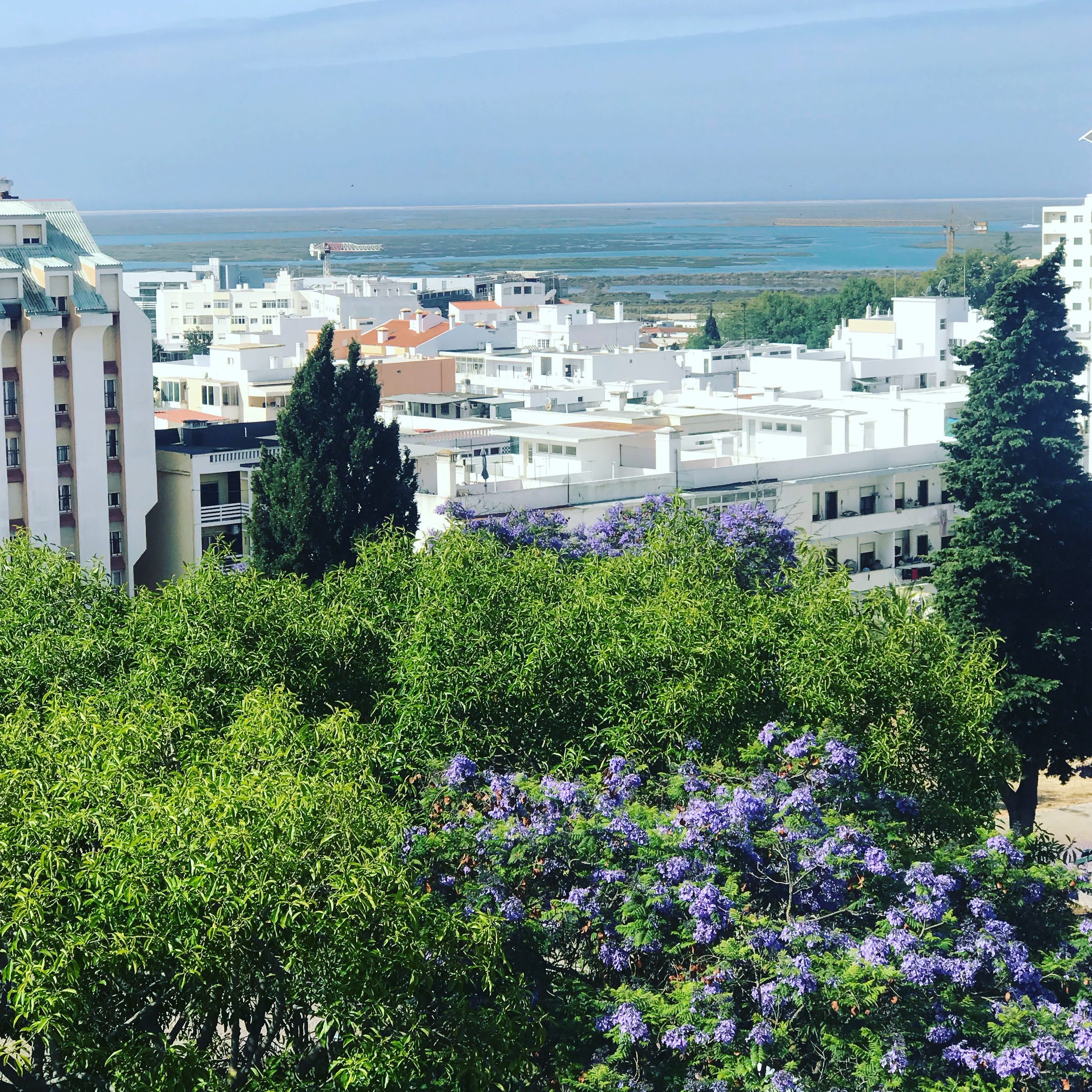
The beautiful view from my terrace. The Ria Formosa with the Atlantic Ocean beyond it.

Current State-of Mind

My sister passed this week. I have now lost five out of 10 siblings: three half and two from the same two parents. I never felt that it made a difference, half or whole. When you share your life and love from the very beginning, it’s the same. I want to honor AnnMarie by acknowledging the sacrifices she made for me, my brother and sisters, her partners and her children. She was strong but insecure, intelligent but unbending, and she was full of joy much of her life; her laugh was contagious and I loved her for it. I hope her four daughters and six grandchildren find peace in her passing.

I would like to have a break from the reminder that life is temporary and that we are not guaranteed another moment, let alone another day.

Paco had surgery to address a serious and sometimes deadly bacteria; he is fighting hard, but I fear he is not improving. I’ll write more when he is out of the woods.

Walking away from toxicity and deliberate hurtfulness, has been a difficult challenge. Until about six months ago, I didn’t feel that I was making very much progress. I’m comfortable reporting that I am taking care of myself these days. And hey, on the flip side, for those not giving up on me, thank you. I’m no piece of cake.

“Loving life is easy when you are abroad. Where no one knows you and you hold life in your hands all alone, you are more master of yourself than at any other time.” – Hannah Arendt

When Everything You Think or Feel Seems Trivial

The World’s Gone to Hell in a Handbasket (until now, I thought it was “henbasket”)

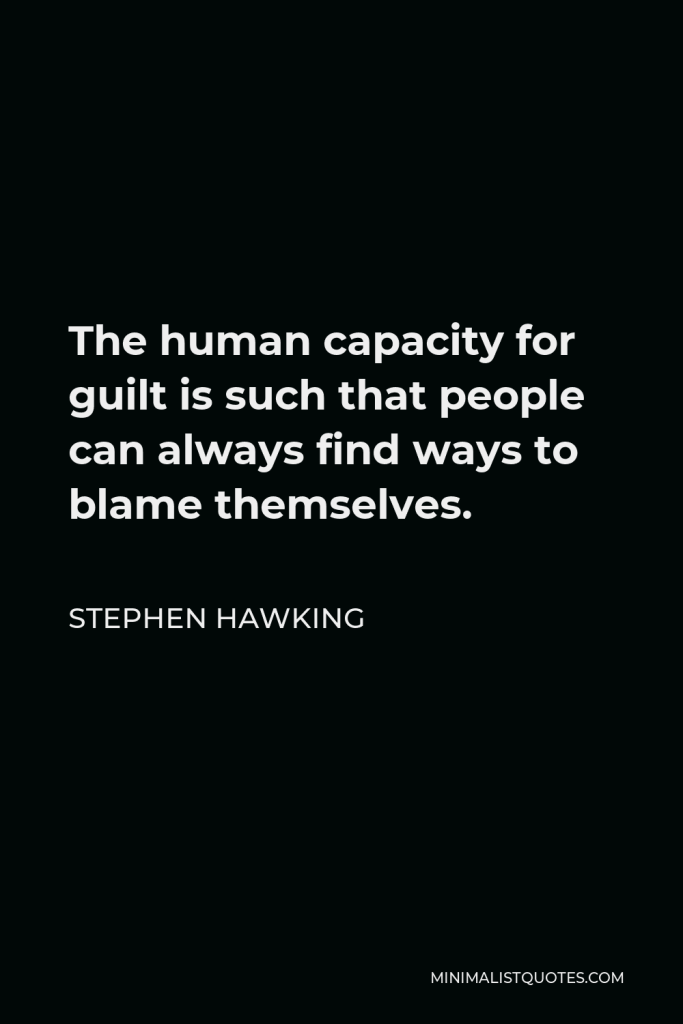
We all know about survivor’s guilt, something tragic happens to the other person and you’re guilt-ridden because it wasn’t you. This feeling can be debilitating and emotionally draining. Empathy is so strong for some of us, it prevents us from experiencing the joy we all deserve to feel.

What We See and Hear

Social media, television news, written media; 99% of it is negative and sensational. I’m not saying much of it isn’t true, but we all all know it is designed to spark interest, keep you riveted, and tap into your compassion for other human beings. What it also does is create a feeling of guilt and remorse. The heaviness we feel is created by this dark cloud of gloom and doom. It’s spiraling out of control and each of us has a responsibility to take back control. The alternative is far from desirable.

How We Process the World Around Us

When you look at news bites, it’s easy to see where racism, elitism, and nationalism lives. The amount of air time spent on Gaza versus a devastating flood in Kenya. The media is tapping into our darkest prejudices. It’s almost as if they’re telling us how to feel. I fight this internal battle daily: why do I care more about one tragedy over another? Why do I send money to some causes and ignore others? How do I change these deeply rooted biases?

It’s easy for me to understand my personal empathy toward gay youth or victims of domestic violence; when you have experienced it yourself, you hope that no one else will ever have to. However, we know that starvation is real even though you personally have never gone hungry for more than a few hours; we know that watching another human being die at the hands of a terrorist has to leave a person psychologically and emotionally damaged for life, and we know that a person seeking refuge in a place where every moment of one’s life is not spent worrying about personal safety, food security, and life-threatening illness, is valid and real; well most of us know. Where does concern for oneself end and compassion for others begin? I have a really hard time with the Kardashians deciding on a $300 pair of flip flops while children starve only miles away in Mexico. Is that anger a justification for my own complacency? There is no easy answer to these morality questions; however, we do have a responsibility to humanity and ourselves to at least try and make sense of it all.

Navigating the Future

I had to sleep on this one . . . for more than one night I’m afraid.

When I first heard friends saying, “I no longer watch the news,” it made me angry. I thought, how can you be so detached from the world around you? But now I understand why so many people feel this way. Putting aside disinformation, bias, unreliable sources, religious influence, polarization, etc. It is way too easy to be blanketed in negativity.

One of the things that travel accomplishes is the ability to see things for yourself. People throughout the world seek peace, harmony, and personal freedom. Governments, for the most part, have a different agenda; usually involving money and power. I don’t understand what motivates world leaders and I never will. I am not alone in my thoughts about this matter and what is happening all over the world is not new.

There is only one person you can truly protect and that is yourself. I have chosen to reside in a country where social democracy is the model for its citizenry. Although not perfect, it is more in line with my moral compass. If I’m going to be honest, I’m not sure perfect can ever exist where there are human beings. What empowers me is agency over my own life and the decisions I make.

Horrible atrocities will continue to take place around me each and every day. I am and will always be deeply affected by cruelty and unkindness. The best that I can do is to remain informed, be deliberate in my choices, give when I can give — when and where I can make a difference, and be kind to myself and others.

What you do makes a difference, and you have to decide what kind of difference you want to make.

Jane Goodall

Go ahead and subscribe. Add your email and my blog will be sent whenever it’s published.

Future Travel

Lyon, France for Christmas, South Africa land & sea in February, and Oslo, Norway, July 2024. Finally, a visit to the Puglia region of Italy in the spring of 2025. The United States in 2025 is likely: Brooklyn, Florida, Portland, Maine, Maryland, and North Carolina. I know you may not see it, but this is a much lighter travel schedule than the past.

My Current State of Mind

I’ve been fighting a cold for the past week. It’s been 10 years since my last cold and I had forgotten how debilitating a cold can be. Unfortunately, health issues can mess with the mind and take you to dark places: death, heartache, pain, and almost always, the worst case scenario. I texted a neighbor to tell her that if I didn’t respond to a message after 10 hours, that she should key in. Dramatic or real? My worst fear is imagining Paco without food and water and having to defecate indoors.

The good news is that I am recovering. It’s easy to wallow in self-pity and try to wash away the suffering of others by bathing in substances that quell emotional discomfort. The purpose of this blog is to remind myself that tomorrow will be better than today; celebrating that change is where my focus should be. I cannot make the Israeli Palestine problem go away, but I can live my life with hope and joy, adding to a positive collective consciousness. I can experience the gift of life without beating myself up for being alive. As we remember the greatness of Rosaylnn Carter, the example she and Jimmy set of focusing on providing shelter with Habitat for Humanity, helps one to see that the donation of time, money and commitment toward a single cause can change the world. We need to also remember that before you give oxygen to the person beside you, you have to breathe in some for yourself — you can only help fix someone or something that is broken, when you yourself are repaired.

The holiday season is challenging for me; mostly anxiety linked to socializing. I want to be with others, but I cherish my alone time. I don’t think extroverts appreciate what introverts might be feeling. I’ve learned to set boundaries and be assertive. Still, there are just too many parties, dinners, and cocktails with friends for my comfort. I love the spirit of the season and the hope that it brings.

Please forgive any grammatical or typographical errors. Rereading my work is difficult for me. Thank you.

Taught to Keep it All Inside

Topic revisited with revisions October 2023

img_2221

My mother told her children that we had it better than most. She said that we should appreciate what we had because it could be far worse. We were not permitted to discuss our lives with outsiders under any circumstances. I didn’t realize why until I learned that other children were raised with love, encouragement, and hope for the future; we had very little of any of that. The love we got at home was twisted and divisive. Coming out was the least of my worries.

You hear a lot about people “coming out” these days. There are many incredible stories; each unique and compelling. I’m looking forward to a time when these stories are all in the distant past. I fear wide acceptance of differences is a far off reality.

My story was this: I hid my sexual orientation and acted straight, married a woman, kept it from the boss, had an awakening, told my sister first; she told me she already knew (as did everyone in my family), and so it goes. What you don’t hear is that when you’re gay, you don’t come out once, you come out again and again . . . and again.

Allow me to explain: I’m at a fundraiser sitting at a table with eight strangers. They have no idea who I am, where I am from, and what I do for a living — let alone know about my sexual orientation. We all make small talk to be polite. If I brought a female friend, she was automatically my wife. I am not being critical mind you, it’s a reasonable assumption. So one of the first comments is, “So how long have you two been together?” or “Do you have any children?” I’m wondering whether or not to tell the truth. If I stay silent or play along with the charade, am I doing a disservice to all gays and lesbians? We fought long and hard to be out and proud; if I stay silent, I am complicit.

When I am open and honest with people, I sometimes get these reactions:

“You don’t look gay.”

“I had no idea.”

“But you act so straight!” (Having worked so hard at acting straight in my teens and 20’s, this is my personal favorite.)

“If you were married to a woman, you must be bisexual.”

“Are you the man or the woman in a relationship?”

“Your lucky you are gay, because all gays are smart and creative.”

“There is this scripture from the Old Testament you need to hear.”

I have learned over the years that people can say some fairly stupid and insensitive things without intentionally meaning to offend (but they often do offend). I either nervously chuckle or ignore their words. Either reaction is not very honest, is it? What I would like to say is, “Now that you’ve made your bias clear, tell me what you really think about gay people?” And then go on to tell them what I think.

Let’s put it out there, have some dialogue. But, I don’t say what I’m thinking, I keep my mouth shut, remain silent and hope that the moment passes quickly. I do this because it’s what I was taught to do since I was old enough to comprehend life lessons. Adults teach children to keep the truth inside:

  • to spare the hurt feelings of others
  • to keep them out of trouble
  • to keep them safe
  • to keep children from sharing the truth about their parent’s lives (i.e., what happens in this family, stays with this family)
  • it’s the “norm;” that’s how we’ve always done it

I hid the truth until I was 28 years old; up until that point I worked hard to hide who I was from myself and everyone else.

Being honest, telling the truth, telling the whole truth, speaking your mind, sharing secrets, whistle blowing, and so on. They’re not the same things are they? Everyone seems to define “truth” differently these days. So when someone tells you that they are telling the truth, what exactly does that mean?

I should note that there have been times when I have spoken my truth and suffered the consequences.

The Truth Can be Painful and Consequences Can be Real

Having made a conscious effort to be honest has been fairly difficult at times. People say that they want to hear the truth when in fact, they cannot handle the truth. I acknowledge that my truth may not be someone else’s truth — for example, politics:  I may believe that our previous administration was corrupt and dangerous and others might believe that it was the best leadership we’ve had in a long time. This is a difficult debate because one will argue the facts which are fairly skewed these days, depending on the reporting. This kind of truth aside, deciding to share the truth with someone can put both parties in a difficult position. The truth can do irreparable damage and that is something you may have to live with. I don’t believe examples are necessary since most people have experienced what I am referring to.

Many of us make a conscious decision to keep the truth to ourselves in order to keep the peace.  The problem with this decision is that individuals who need to be told they have an alcohol problem, or that they are being psychologically abused or that their severe weight problem is killing them, will continue to talk themselves into a lie. I have a friend who told me that her doctor told her that it is better for her to smoke cigarettes because if she quits she might have a nervous breakdown. She’s told herself this lie so many times, she actually believes that it’s true.

Conventional wisdom tells you to hold your truth close to the chest; share it with only a select few that you truly trust, otherwise, you make yourself vulnerable — open to criticism. People will think you’re weak or flawed. I’m done with conventional wisdom. Do what feels right and either suffer the consequences or discover who your allies are; who is here to support you, love you, elevate you.

Coming to Terms with the Truth you Tell Yourself

A few years ago I found myself in a toxic work environment. Telling ourselves we are no longer happy at work, I believe it is one of the most essential truths we may have to tell ourselves. It’s very easy to become comfortable and feel safe in a toxic environment; after all, it’s all you know and the alternative might be too frightening to face.

Once you are able and willing to be honest with yourself about your career or work environment, change needs to happen and the old adage that “change is good” will prove true once again.

There are many truths we keep from ourselves:  failing health, toxic relationships, financial ruin, alcohol or drug abuse, missed opportunities, why having an affair is hurting many people, etc. Facing any and all of these life issues can be challenging; however, failure to do so will only mean future problems that could very well end up being insurmountable.

My Future and How I Intend to Deal with Truth

One of my reasons for moving overseas was to find truth. Life for me was becoming mundane and way too comfortable; I was choosing the path of least resistance nearly every time. I’m not referring to seeking the truth about our existence, what I’m trying to find is my own truth:  who am I, what am I looking for, and how do I find it?

I am aware that these are big questions and finding the answers is a lifelong journey. I believe the answers lie in self-reflection, self-assessment and shaking things up. Looking in the mirror can be difficult. If you look hard enough, you might see the truth. So many are reluctant to look because they’re afraid of what they might find. I’m not so much afraid as I am concerned. I’m concerned that I will not be able to change what I don’t like. For example, I learned a while back that I can be unfairly critical. I can hold people to a standard that is unrealistic and unfair. I don’t like this one bit. The question is, can I change it? I’m not sure that I can, but I have made a commitment to try.

Other lies I tell myself:

  • One more cocktail won’t hurt you
  • You can leave your bicycle helmet home this one time
  • It’s better not to put yourself out there because men are all slime buckets
  • Trump will definitely go to jail
  • You don’t have to cover your head from the sun today
  • You can eat whatever you want and work it off at the gym
  • You will know a bad person when you meet them

Being open about these lies is a good first step; it’s time to face them. My friends and family tell me I’m too hard on myself. I believe it’s an easy out — I don’t want to face my shit so I’d prefer you didn’t face yours. I’ll have none of that:  “the truth shall set me free” (to paraphrase the bible and that may be a first for me).

Future Travel

Asia land & sea is finally happening this week, Lyon, France for Christmas, South Africa land & sea in February, and Oslo, Norway July 2024. Finally, a visit to the Puglia region of Italy in the spring of 2025. The United States in 2025 is likely: Brooklyn, Portland, Maine, Maryland, North Carolina and perhaps the west coast.

Current State-of Mind

Two eye opening things happened this week; different, but thought provoking nonetheless. I took Paco out to a local café for a home cooked lunch. I discovered that if I get there early I can avoid smokers and high school kids. When I think about this today, I honestly feel like a bitter aging man — a sad state-of-being. I had a simple, but delicious lunch; as I finished, the students started pouring in. I could feel my entire body tense-up making leaving my best option. I was at the register paying the check. I reached into my pocket and my cash was gone. Before I could panic and a teenager tapped my shoulder. I turned around ready to mouth off and he handed me my money, which I guess had fallen out of my pocket. I immediately felt terrible for judging this sub-population of individuals. With one small gesture, my faith in the youth of Portugal was restored. It was a gentle reminder to shy away from jumping to unfair conclusions about my neighborhood tennagers. I need constant reminders.

The second situation happened here in my home with a contractor working on my floors. I had a vision for how my refinished wood floors would turn out. As the work progressed I realized what I wanted was not going to happen. I had to take a deep breath and accept a different reality — a reality I have discovered I am thrilled with. I truly need to be more open to curve balls which could be brilliant opportunities.

Please forgive any and all typographical and grammatical errors.