While No One Was Watching

Peter was fortunate to have come into extreme wealth while he was young enough to enjoy it. His father, Martin Crowner was part of the Andy Warhol “Factory” crowd of the 1960s to the 80s. Among his useful friends were famous artists such as Basquiat, Herring, and Banksy. They were not famous at the time, but Martin and his wife Perdy, had a hunch about the potential of some of these pop culture trendsetters. The two of them were vanilla and inconspicuous and could allow their artist friends to be in the spotlight.

Andy Warhol liked Martin and Perdy because they never fawned over him. Both were aware that Warhol had a cult following and anything he touched seemed to turn to gold. Martin watched to see who Warhol was courting and promoting. During this very prolific period, Martin quietly collected 28 art pieces, which he stored in a secure unit in Queens, New York.

When Martin died, Peter became acutely interested in his father’s past and made it his business to learn more about who he knew, what he knew, and how he came upon such a lucrative collection. Why had he kept his ownership of the paintings and the storage of them, to himself? Peter was relentless in his pursuit of nibbles of truth he could use as a jumping off point in his very private and personal investigation.

When he was a young boy, he recalled a man coming over to the house early in the morning asking his father to “come clean.”

The angry man must have asked the same question ten times, “Where are you keeping the artwork Peter?”

He recalls his father saying he had no idea what the man was talking about. This incident seemed to take place around the time that Warhol was shot in the stomach while working in his studio. Did his father have anything to do with the shooting? Peter had a vivid imagination and his parents revealed no clues.

There were parties at Peter’s house throughout his lonely childhood. He’d wake up and see people he’d never seen before sleeping on the sofa or outside on the pool deck; sometimes sprawled out in their unfinished basement. He often felt invisible as he curiously wandered among the seemingly dead bodies. His parents would wake and coax people to the front door — never an argument or fight.

Some returned for future parties and others were never to be seen again. Peter didn’t have a sense back then that their lives were any different than anyone else’s. What he did think was strange, however, was his father’s detachment. These people were all around them, but his father seemed more an observer than a participant and his mother appeared to be, just playing along.

Sometimes Peter would ask about certain people, “Why is that man dressed like a woman?

“Do you take drugs too daddy?

His parents always had the same answer, “Keep quiet Peter, nobody we know takes drugs — mind your own business.”

Martin worked in advertising. He would often run ideas by Perdy, who was interested, but oddly aloof. His father would get frustrated and say,

“Thanks Perdy, you’re always so helpful.”

Martin, ever the sarcastic prick. Perdy rarely paid any attention to what he said. Peter, forced to remain in the shadows.

Perdy died of ovarian cancer when Peter was 12 years old. No family was allowed to visit during her illness. Martin stayed with his wife day and night; she remained stoic till the end. A small funeral followed her death; Warhol, Edie Sedgwick and a few others he recognized stopped by the house to pay their respects. None of them recognizing Peter.

Martin had been a reserved man who faded into the background, but Perdy’s death amplified his insecurities. He mostly remained home when he wasn’t at work; pouring over papers and watching hours and hours of television, probably for the advertising. Peter stayed in his room; talking to his father was not an option and Peter had no idea what Martin was thinking.

Martin, a complicated man for sure, but how did he acquire all those paintings? Was he gifted the artwork? Did he steal them? Did he have proof that he was the rightful owner? Peter had to know the truth. He hoped he would eventually learn how it all went down.

But how would he get to the bottom of it? He could no longer ask his mother, his father didn’t seem to have any real friends; the artists whose paintings he inherited were all dead, and as far as he knew there was no provenance documentation. Peter couldn’t go public until he knew all the facts and he could prove ownership of the paintings.

Peter cold called dozens of artists who may have known someone who knew the artists who painted the pieces Martin had stored. After months of getting nowhere, he finally talked to a friend of Keith Haring. Gerry Parma was Haring’s lover back in the 80s. Gerry told Peter that Keith often spoke of Martin.

“Oh yea, Keith told me more than once, that your father was a power broker in the artworld and that he hoped Martin would help him become famous. This call led him to four or five people who all said the same thing about his father. One friend of a friend agreed to meet Peter for a drink.

A few days later Peter met Will Penbrook at The Chelsea Hotel. Will introduced him to a staff member who’d been at The Chelsea for forty five years. Ron said he knew Martin and Perdy fairly well.

“I knew both your parents. Sometimes your mother would show up to pick-up packages. I’m pretty sure they were paintings, but I’m not sure.”

Helpful, however, no answers to speak of. A year after the death of his father, Peter received a letter from Chase Bank. They told Peter that his father had a safe deposit box at the bank and they were inquiring as to whether or not Peter would be renewing the rental. Peter informed the bank that he was the sole recipient of the Crowner estate, but that he did not have a key to the box. In fact, he’d never heard about this safe deposit box. The Chase manager said that as long as he could verify that he was the sole heir, he could acquire the contents of the box.

The next day Peter went into Chase to clear out the safe deposit box; he had no expectations. When he opened the box he found several things: his mother’s jewelry which he assumed his father had sold after her death, a letter addressed to Peter and proof of ownership of all 28 paintings in storage. Peter walked out of the bank in a stupor. His father´s secrecy lingered even after his death. Why had he not told Peter about any of this? Peter decided to open the letter later that evening, where he could be in a quieter place with a gin martini, his father’s favorite.

Dear Peter,

I know you’re wondering why I didn’t make you aware of this letter sooner. My attorney was not very happy with me for handling the matter this way, but as you already know, I lived life on my own terms.

First, I want to apologize for my failures as a father. Early on in our lives, without meaning to, your mother and I became involved in a dangerous, cut throat world of schemers and thieves. It was a rabbit hole we had no choice but to protect you from.

I looked around me and saw dealers exploiting the art market by bidding higher than the paintings value, creating the illusion of a frenzied market, and then stockpiling paintings until the value exploded. I couldn’t sit by without finding a way to legitimately capitalize on it. I had to be very discreet and professional in order to gain the trust of those insecure, doped-up artists. Most of them had little or no talent, but every once-in-a-great while I witnessed raw talent I knew I could exploit. With the help of your mother, who became a trusted broker, we promised fame in exchange for a painting or two. My sole responsibility was to create buzz around an artist who had potential. Our inclusive parties, dinner engagements, and artist friends, all helped to boost the fame of a select few.

Your mother was cunning and always gracious. We acquired the paintings along with signed and notarized letters gifting the paintings to you Peter. Every painting in storage has provenance and enormous value. Over time I sold off the paintings I knew would never increase in value. At the time of the writing of this letter, the value (before taxes of course) of your paintings is over a billion dollars. All legitimate, all done without bloodshed. And you were not involved in a single transaction.

We loved you very much Peter. You were our only authentic creation. We protected you from the moment of your birth until we could no longer do so. I know this treasure trove will cause you consternation, but hopefully, over time you will come to enjoy the collection. Do with it what you wish; museums, sales, hang them in your home, give them away — you decide. For your mother and I, the thrill was in the acquisition. Neither of us had any regrets. If you don’t already know this by now, the world is made up of passive bystanders and ferocious capitalists. We were the latter, and we raised you to be the former. I hope you come to appreciate our selfish intentions.

Please destroy this letter after you read it. There are some secrets better kept hidden forever.

Love,

Dad

For several years, Peter struggled with the legacy his parents left behind. They weren’t thieves or murderers, but what they did was deceptive. It was his hope to grow his fortune and use it for good. He knew his father was right about the failings of humankind; he also knew that his own legacy would one day be admired.

Insert your email address to receive the latest published story in your inbox. Thank you for subscribing.

A reminder that the story is a work of fiction.

A few more days in Oslo, Norway and then back to Faro for the rest of the summer. Krakow, Poland in the fall and Bristol, England in the winter — didn’t I tell you I wouldn’t be traveling as much this year. Faro in the fall will be glorious (I just have to get through August; hopefully with a cool breeze off of the Ria Formosa).

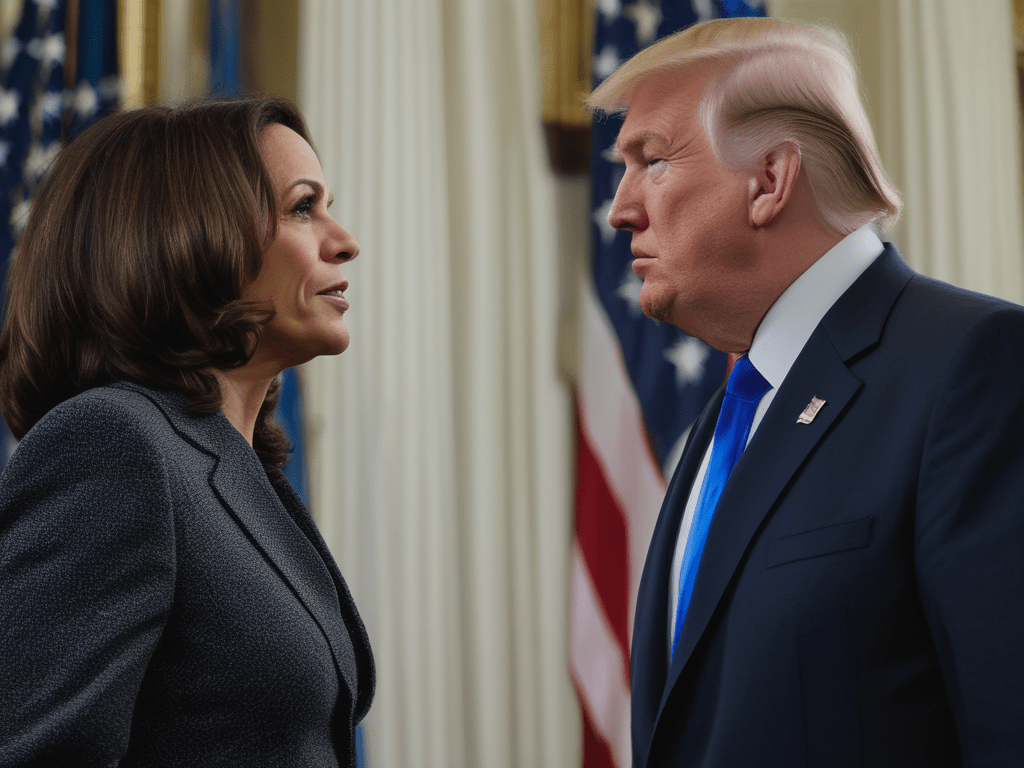
My first time using AI. I typed in Harris versus Trump for president and this is what I got. I think Trump looks more like Trump. Let the games begin!
Karma Can Be Rich

Steven dreaded the holidays with his family. He could handle the drama and the snarky comments from his older sister Claire, but the looks from Claire´s husband Roger, were always hard to take. His brother-in-law behaved as though his Harvard degree put him above the rest. He wasn’t sure this visit would end well — he wasn’t sure about anything anymore.

Christmas was a week away and Steven had not yet secured a plane ticket. He wondered if he could use the “I couldn’t get a flight,” excuse. Claire would surely cut his balls off if he failed to show up. She knew what buttons to push and how and when to push them. Steven wasn’t around when their mother was dying, Steven couldn’t afford his own rehab treatment, Steven couldn’t hold onto a job, and her list of his ineptitudes went on. She’d use sharp words and veiled threats to hammer home his failings.

It was not until 3:00 a.m. the following morning that he went on-line, secured the last ticket, and got a seat in the very back of the airplane. Dallas would not be welcoming to this northeasterner. Christmas would be all about cracked and too warm concrete and a whole lot of Texas fake charm. Being home in time for a New York, New Year’s eve celebration, would be the only thing keeping him breathing while away. He sent Claire a text to let her know his plans. Her one word, “okay,” reply only reinforced his disdain for her. He was certain Roger would be disappointed that he’d chosen to make the trip.

The reading of his father’s will was scheduled for the morning of December 26th. He booked his ticket home for that afternoon, thinking the shame he’d feel would accelerate his desire to leave as soon as he could. He didn’t share his plan with Claire knowing she would oppose his hasty exit. She and Roger sitting across from him gloating following the reading, would be way too much to bear.

He’d been thinking about his father a lot lately. He knew his independent and defiant nature was a disappointment. His father warned him that a career as an artist would be a difficult life; fighting poverty and harsh public criticism. But Steven had to follow his dream to paint, with or without his father’s approval. His father was a man of few words, always working and avoiding homelife. Now it was time to hear from his father from the grave; ultimately having to have his rejection spelled out in front of the two people he disliked most.

In the taxi on the way to Claire’s house he considered turning back and flying home. There was no law that said he was obligated to be at the reading. The voices in his head told him to grow up and face life head on — it would be over soon enough.

When he arrived at Claire’s house, at first he didn’t think they were home. He’d told her what time he’d arrive, but greeting him would have been out-of-character. He walked around the back of the house where Claire and Roger were having a drink on the patio. Claire got up to put her cheek in his face for a kiss, Roger stayed seated. They asked him about the trip south, but neither truly cared to listen to his response. After a few awkward words, they told him that his room was ready. He carried his bag up the stairs and closed the door. If he could, he would have stayed there until the day after Christmas.

The house was not decorated for the holidays, calling it sterile would be an understatement. It was soulless, lifeless and always frigid cold. As he lay in the bed staring at the ceiling, he contemplated his options. Calling his childhood friend Ben to provide an escape seemed to be the only solution he could stomach. Ben was thrilled to hear from him and they made plans for dinner that evening.

When he finally had the nerve to go downstairs, Claire asked him why he wasn’t ready for dinner. Steven attempted to tell her that he was unaware of dinner plans, but she screeched, scolded and told him that he was insensitive. He canceled his plans with Ben and went back upstairs to change. He wished he could have a shot of something strong to take the edge off, but Claire and Roger were way too righteous to drink.

Steven ordered a cocktail at the restaurant and they both gave him a judgmental look. They talked about the weather; he hoped Claire wouldn’t bring up their dad, but his hopes were quickly squashed.

“Don’t you even care about what he was like at the end?”

“I know what he was like Claire, you’ve told me numerous times.”

“And you think I’ve told you everything?”

“I think what you shared was sufficient.”

“Did I tell you that during his final moments he asked where you were. You disappointed him right to the very end.”

“Thank you for that Claire. You know very well that I had flown here twice before only to learn that he could live that way for months and in fact he did.”

“But why didn’t you come when it was certainly the end? Why did you leave everything to me like you always did?”

“Because Claire, you do whatever you want to do. You act as if I’m not even in the room. It’s pointless for me to even try. But does any of it matter now? Let’s just leave it Claire.”

Roger sat seething until Steven tried to put a stop to the badgering. He was waiting for the last word.

“You have no idea how pathetic you sound Steven. Your father never had to look very hard for reasons to resent and dislike you, you made it easy. You were a terrible son and you’ve been a useless brother. You’re a failure at everything you attempt.”

Steven slowly folded his napkin and motioned for the check. He threw down cash to cover the bill and started for the door.

“You’re not going to wait for us to drive home?”

“No Claire, I’ll walk back. Please leave the door open, I’ll see you the day after Christmas. I’ll be out tomorrow.”

Claire threw back her chair and stood up as Steven walked away. She didn’t try to stop him, knowing that Roger had gone too far. She didn’t mind it though, she hoped he’d spend Christmas somewhere else.

Steven tried his best to enjoy Christmas at Ben’s house. It was warm and welcoming, just the kind of Christmas he’d never had with family. He and Ben talked a bit about the reading of the will. Steven assured him that Claire would walk away with the house, the money, and God knows what else — Steven didn’t know what his father had accumulated in his mostly hidden life. For him, the will would be closure. He wasn’t angry. Relief was closer to what he knew he’d feel. The death of his mother Sheila, two years prior, was difficult. She was a woman who wore resentment like a badge of honor. She never wanted children and marriage was a ball and chain. She and Claire battled to the end; Steven did everything he could to stay invisible. Their father turned a blind eye and never said a word. His mother’s bitterness robbed his father of any happiness he hoped to enjoy. They were four people searching for anything other than what they had.

Steven woke early the day after Christmas. He grabbed his overnight bag. When he went downstairs, Claire was waiting.

“What do you think Dad will leave you Steven? Are you here because you think you deserve something? Why did you come? Why show up now?”

“Are you ready to go, Claire?”

“Answer me Steven, do you think you earned dad’s money? I’m certain Dad wished you’d died before him.”

Steven held his tongue. He knew Claire was doing her best to twist the knife so that she could watch him squirm. The last comment was a zinger, but he wouldn’t give her the satisfaction of a reaction.

Roger drove silently to the attorney’s office. Steven’s bag was next to him in the back seat of the car. Neither Claire nor Roger had commented on it. Steven carried into the office.

The attorney, Mr. Brenner, seated them facing his desk, Roger in the middle of his wife and brother-in-law. There was no small talk, no questions, and no smiles. Attorney Brenner explained that the will had been written by Steven Sr., after their mother’s death; updated two months before their father’s death. Their father, Mr. Steven Forrester, was of sound mind and body when he updated the will. There were two witnesses who could attest to the aforementioned. Steven was struck by the absence of emotion on the part of Mr. Brenner. He was well aware that this man and his father had attended Yale undergrad together, played golf, and remained good friends throughout their lives. Claire had contact with Mr. Brenner through the years, but you’d never know it based on their interaction. The attorney had left Steven a message urging him to attend the reading and he didn’t understand why it was so important.

Mr. Brenner asked if there were any questions and all three shook their heads from side-to-side. The first three sentences were standard legalese. Steven noticed Claire tapping her left shoe against the desk. Roger also seemed anxious as Mr. Brenner continued reading.

“I am well aware that my decision regarding my belongings and holdings will not please everyone. Therefore, I would like to state the following: I have known that our family has not been a happy one for a very long time. Mistakes were made and resentment built up over the years. I unfortunately had very little say as it concerned your upbringing, your daily life, and your education. Had I been able to, I may have chosen a different path for all of us as a family. That being said, I believe I did my best to provide for the family and keep you out of harm’s way. It is my assessment that Steven got the worst of it. Sheila never truly acknowledged her son and from where I was sitting, never showed him the love and affection a mother normally shared. Claire on the other hand, at least experienced a fraction of Sheila’s guarded mothering.

Steven’s path, although unorthodox, was authentic and brave. Without any support at home, he thrived and remained true to himself. In an effort to provide ammunition for a future legal battle, I will leave it at that. To make up for what Steven had to endure, I am leaving the house, valued at three million dollars, to Steven. To Steven I also bequeath all my art collection, valued at six million dollars (all vaulted for safe keeping), and stock holdings valued at four million dollars. I leave my life insurance policy valued at $200,000 to Claire. I appreciated the care she gave me over the last few months.”

The room was silent for several seconds.

Claire stood, turned toward Steven, pointed her finger into his stunned face and said,

“I will fight this until I am certain you do not see one cent of dad’s money. He hated you Steven, mother told me so.”

She motioned for Roger to stand and the two of them walked out and slammed the door behind them.

Mr. Brenner looked at Steven and asked if he was okay. Steven just stared straight ahead.

“Your father didn’t know how to be a father Steven, but he told me that he loved you and he was very proud of you. It is his hope that you will find joy in life and ultimately, share some of this money with those who have had to fight like you have fought since the day you were born. As a friend of your father’s, I’ve watched you grow up from the sidelines, I have no doubt you will make good use of his money.”

Steven shook Mr. Brenner´s hand, grabbed his suitcase, and walked out into a future he never could have anticipated. There were children whose lives would improve due to his father’s generosity. He could see all clearly now.

As he waited to board his flight, Steven couldn’t help but think about Claire and Roger and what it must be like in that loveless house at that very moment. He didn’t feel sorry for his sister, in fact, he felt nothing.

Enter your email address in order to have my stories sent to your mailbox when published. Thank you.

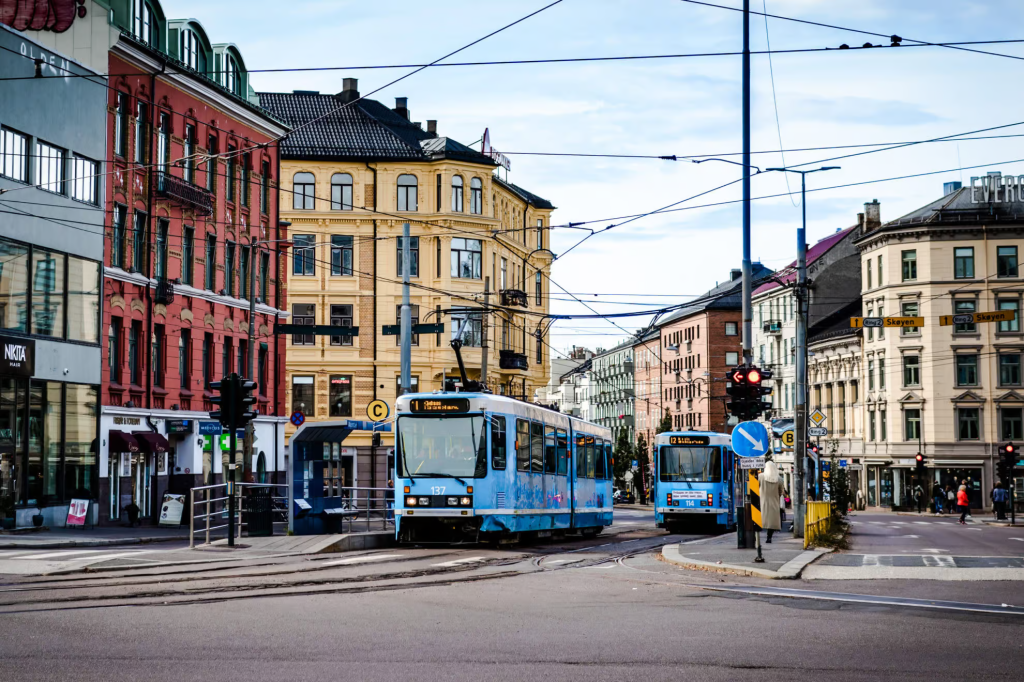
Writing to you from cozy Oslo. July and I’m sleeping under a down comforter.

Majorstuen, Oslo, where I will be for all of July.