Five Years In

My Politically Motivated Move to Portugal

Views from my terrace or spots not far from home

I have no doubt some of the other immigrants in my circle of friends and acquaintances, will read this blog and disagree with some of my thoughts and observations. Please keep in mind that this is my experience, not yours.

The Best of Relocation

The weather — I could not have asked for better weather than what I have experienced in the Algarve. We have four seasons, but they are mild compared to what I experienced in the States. Fall is cool, with some (not a lot) of rain and a bit of humidity; winter is a bit colder, however, never below 45◦ (F) after sunset and often above 60 degrees during the day — some rain, but never enough for me; spring is glorious, with an abundance of sunshine, a cool breeze and great sleeping weather; and lastly, summer is dry and hot, with temperatures often above 90◦. I don’t like July and early August; extreme temperatures make me uncomfortable. I also miss thunderstorms, we have very few of those here.

The Southern Portugal way of life — there are certain things that Europeans do that make a lot of sense. The pace of living is slower and less motivated by packing as much into a 24 hour period as possible. Life is more leisurely and less stressful. Lunch is the biggest meal of the day and more time is spent eating it. The abundance of sunshine sends people outdoors. The Portuguese are pleasant, but private. Children are free to play in yards and parks; their laughter fills the air (I live a block away from a large nursery school).

Food — the freshness of most foods is one of the first things about Portugal I noticed and embraced. Portuguese people practiced the “buy local” concept long before it became trendy in the States. The seafood is amazing, and although there is some farm raised fish, most of it is done in natural waters and well regulated for sustainability.

Healthcare — Aging is not pretty, therefore, I’ve needed several specialists over the last five years. I have not been disappointed. My visa comes with a private healthcare mandate and I happily comply. I’m paying 1400 euros a year — a co-pay of 35 euros for a visit to a specialist, whom I can usually see anywhere from the same day to two weeks. I’m impressed that surgery has not been the go-to answer to any issue. If I did end up needing surgery, the out-of-pocket expense would be reasonable. Actually, I did need some skin cancer surgery which cost me 80 euros. Medicines are inexpensive and most are over-the-counter. The only pill I currently have to take is a prostate pill and it’s over-the-counter for 4 euros and change a month.

Dental care is also excellent. I needed an implant a couple of years ago; all-in 1100 euros. I had an implant done in the U.S. for $4,000.

Open Space — Simply put, most of southern Portugal is spread out and well planned. There is a bit of traffic during the summer months, but it is light in comparison with most of the U.S.

English Speakers — Although I am struggling to learn Portuguese (it gets better everyday), I am grateful that so many people here speak English. I was at an auto body shop on Thursday and I typed my question into Google translator, showed it to the receptionist who then replied, “Would you like to speak in English?” We both laughed.

I love my gym and for 250 euros a year I can visit the gym up to six days a week from 6:30 a.m. to whenever they close — I have no idea when they close because I always go early.

The Challenges

Smoking and Men’s Cologne — These two things make me crazy. There are way too many smokers here, often making outdoor dining unpleasant. Young men bathed in cheap cologne is a sad realty I will never understand. I want to yell and scream, but I learned that my opinion is not the popular opinion and so I suffer in silence. My friends who spoke would never light-up during a meal.

The Roundabouts — I have two minds about roundabouts. I know that they make driving easier; however, many people have no idea how to drive in them, making them dangerous and scary. I have some thoughts on who the worst drivers are in Portugal, but I’m going to keep this bit to myself.

Taxes — I received a take break for my first ten years in Portugal; an incentive by the Portuguese government for relocation. This being a social democracy with a very different tax structure, I do not know what my tax liability will be after 10 years. I know that I will not be taxed on the taxes I have already paid; however, some taxes are higher and I will be taxed on income the U.S. will not tax me on. I guess I’ll have to wait and see. To be honest, I’m happy to contribute to a system that takes care of its own citizens. I do not see people living on the streets in Faro and there are very few beggars.

Little Humidity Most of the Year — I’ve been forcing myself to drink water my entire life. Summers here are hot and dry and unfortunately, I have allowed myself to become dehydrated several times. This will become more dangerous as I get older. I’m going to have to start setting a calendar reminder in order to hydrate. I’d rather be where humidity is low.

What I Might Have Done Differently

Rent first — I love my apartment, but only after a bit of anxiety and trial by fire. It would have been smarter for me to rent for a year and view many different properties. I recommend that you review your buildings financials prior to purchasing.

Language — I started a Portuguese language course as soon as I knew that I was moving overseas, but I knew very little Portuguese when I moved here. Take a language course just as soon as you know you are moving to a non-English speaking country. Memrise is inexpensive and easy to follow.

Transportation — I went without a car for five years in order to do my part in saving the planet. After experiencing numerous train strikes and unreliable bus schedules, I purchased a car. Life is easier with a car, even when you live in the center of a city. Travel outside of your city requires you to have a vehicle.

Dollars to euros — if you don’t mind checking the value of the dollar frequently, there are times you can get a decent exchange rate. I haven’t been very good at making transfers when the dollar was stronger than it is right now (it’s still better than when I purchased my condo six years ago). Last year there were a couple of days when the dollar was actually stronger than the euro.

What’s Next

  • I will continue to travel for as long as I can. Travel has been one of the best things about retirement. I am much closer to many of my favorite places and there are several competing budget airlines that help make it affordable.
  • I am struggling not to overplan and to allow life to be more organic. An almost impossible goal for me.
  • Trying not to pay too much attention to U.S. news. I’m finding the media’s portrayal of life in the States to be difficult to take in at times. I think I might have a healthier state of mind if I detach a bit more.
  • I am developing a “go with how you feel, when you feel it” attitude. If I’m itching for some travel, I book a trip. I believe that if I’m suddenly motivated to move to another country, I will just do it. Once you’ve done it successfully, you know in your heart that you can do it again.
  • Spending more time at home with Paco has been my best plan of action over the past few years. There is a 10 acre park across the street from my apartment that was just recently beautifully renovated. I’m enjoying spending time there with Paco and I know he’s enjoying it as well.
  • The friends I have made here make living in Portugal one of the greatest experiences of my life.
This overview is not all inclusive. There are the feelings of others to be saved, challenges I have not met, and issues that are more my problem than anyone else’s.

Future Travel

I’m spending a few days in Ayamonte, Spain this week. It’s only an hour from Faro by car and has a lot to offer. After that a return Nantes and Pornic, France, then Belgium; on to Marseilles, then Oban, Scotland, and finally a 2023 long awaited trip to Dubai and Asia.

Will I stay put in Faro or will I relocate once again?

I AM NOT GOING ANYWHERE . . . for now.

Here I am celebrating my birthday in Liverpool last week. This is a Swedish drag queen who was on season one of RuPaul’s Swedish Drag Race. I’d share her name if I knew it. I could go to a drag show in Liverpool at 2:00 p.m.; if I wanted to go to a drag show in Faro, I’d have to be awake at 1:00 a.m. and that’s not happening.

Once again, please forgive spelling and grammatical errors.

Gay Life in New York City in the 80s & 90s

Photo by FransA on Pexels.com

I asked and you told me: this blog request comes from a good friend. Patrick asked me to write about being gay in NYC in the 80s and 90s and so here goes.

Some people crawl out of the closet, some burst out, others start with a toe; I did it out of desperation. I have regrets, who doesn’t. This post will be more about what life was like for a gay man in NYC during the time of AIDS and paradoxically a good deal of sexual freedom. I should state up front that what I am writing is my very subjective perspective on what life was like during this time in my personal gay history. I’m going to begin by making a confession:

I apologize for holding back some of what I experienced and witnessed. Although I have been honest in my blogs, I firmly believe that some aspects of one’s life are meant to be kept to oneself. These truths about my past are not shameful, criminal, or up for debate; these truths are my truth. What I choose to share is my business and should be respected.

New York City

NYC has always been a place for decadence and tolerance. I feel fortunate to have been raised in such a place. Having done my undergraduate studies and master’s degree in the south, I returned hyper-aware of my newfound freedom. Like a kid in a candy store, I overindulged. Being who I am, I was also fairly reserved. We’re all very complicated and I am no exception. Just a few stories about the gay 80s and 90s from my perspective:

Wigstock on the Christopher Street Pier

This will not be a history lesson; therefore, I cannot tell you how Wigstock started or why it came to be. It is a dragfest. I believe it still exists, however no longer at the Christopher Street Pier. Lady Bunny, the past MC, always wears a very big blond wig and I believe she is one of the founders. She’s a rather large drag queen with a funny voice. She was and is self-deprecating and playfully cruel to just about everyone. I loved her then and I love her now.

The Christopher Street Pier was known for being a hangout for gays, drug addicts, and the people of NYC who live on the fringe. I was drawn to the place, but only during daylight when I felt safe. Wigstock allowed you to go to the Pier and express yourself openly, no matter who you were. Wigstock usually took place in the hot, humid summer, rendering all homosexuals and their allies, shirtless; often showing off defined torsos. I’m a shameless voyeur; therefore, I never missed it.

One particular year stands out: I was in my 20s, in fairly good shape, and super curious. I’ve heard that men give off some sort of scent when they’re in heat; I must have reeked. I assume this what happens when you quash your sexuality for a long time. I had overalls that I dared not wear because farmers were frowned upon in the big city. What possessed me to darn them for this event I do not know. Not only did I put them on, but I wore them commando; nothing underneath. My memory on this is weak, however, I do believe I had been dating someone who gave me some lame excuse for not being able to attend. Truth be known, he preferred his freedom over a date with me that day. He once casually informed me that he could not be with me 24/7. Had I known better, I would have dumped him then and there.

So there I was at Wigstock in a sea of sexually charged gay men, feeling resentful and vulnerable; I wanted revenge. What better way to get back at that jerk than to attract a far more fetching suitor. I arrived at Wigstock unfashionably early — not uncommon for me. I believe there may have been some sort of leather festival the same day. I wouldn’t swear by it because I tend to mix-up my gay events. No matter, I do recall lots of men in chaps showing off my favorite body part. There has hardly been an exposed derriere I have not admired.

This one fella caught my attention about an hour after I had arrived. He was young and fetching and I felt bold in my revealing overalls. I introduced myself to him after a few minutes of shameless flirting. He was friendly enough, but also somewhat aloof; typical gay man in New York City — you could say hello, perhaps even share a few moments of intimacy, but beyond a first name and country of residence, you dare not get too close.

Knowing he could quickly disappear into the crowd, I suggested we go to my place. He agreed; however, making it clear, 30 minutes tops was about all he could spare. This was a tenuous hook-up at best. As we walked on Christopher Street I noticed his eyes and thoughts were elsewhere. I stopped and asked him if he was certain that he wanted to do this. He hesitated for a few seconds, hence I knew this wasn’t meant to be. I made an excuse about forgetting my roommate would be home and he shrugged. Disgusted with him, gay men in general, and the whole fucking world, I went home. I dare say, this sort of thing happened to me repeatedly.

Out at New York University

Two situations of significance occurred while I was studying and working at NYU. I was a full-time Resident Manager in the 90s and I was completely open about my sexuality. At the time I was dating and enjoying NYC gay life.

The Associate Director of my department was gay. He pretty much had a stick up his ass and not many people liked him. I mostly avoided him and hoped that he would avoid me. At the end of resident assistant training, we would have a celebratory party with skits from each residence hall, eating and non-alcoholic beverages. The staff from my building were mostly film or theater majors; very creative and very bold. We planned a skit where I would play a female role. I honestly never felt comfortable in drag; I thought I was way too masculine to pull it off. I agreed to do it if I could wear a colorful wig and no makeup. We performed, got lost of laughs and that was that. The next day I was summoned to the Associate Director’s office (I’m not using his name because I believe he died a tragic death a few years ago). He was angry about my performance. He said it was one thing for undergraduates to behave this way, but completely inappropriate for a professional to perform in drag. I stayed very quiet for fear of saying something I would regret.

When I asked him if we were done, he said, “How can I help you find another job.”

I will never forget those words because they cut through me like a sharp knife. I had never been asked to leave a job in my life (since then I have one other time). I got up from my chair and walked out. He never brought it up again and I remained employed for Residence Life at NYU until I decided to move on. I think he was jealous of my legs.

The second situation was harder for me to swallow. After six years of doctoral study, it was time to complete my dissertation. My study looked at tolerance and exposure to homosexuals. My random sample were a percentage of freshman undergraduates from each school at NYU. I had to write to the school Deans in order to get permission to send out a questionnaire to their students. Every school except the Stern School of Business agreed to the study. I was devastated by this decision and went before my dissertation committee with the news. Apparently, the Stern School was concerned that their students might be offended by my survey. My committee was angered and disheartened, however, not surprised. They approved the student sample without the students from Stern. The whole ordeal just made me more determined to succeed and prove to the Stern School that none of the students (over 300) involved were offended by my questions. At the end of my study I was happy to report that there had not been a single complaint about the survey. In the end I failed to prove that exposure to homosexuality made one more tolerant. My committee agreed that had I been able to track students throughout their undergraduate studies, I would have proven that the longer one is exposed to homosexual individuals and a gay lifestyle, the more tolerant that individual would be. I learned that working on a dissertation is more about learning how to do research than proving your hypotheses.

Hard to believe we are talking about the 90s in New York City. Young people today have no idea what life was like just a short time ago. Just as I have no idea what it was like before my time. In some parts of the world, there is still little or no tolerance; this makes me sad and angry.

The Bar and Club Scene

First let me say there were lots of choices. Depending on where you were in the city, you could choose a fairly close gay bar or club. Many of the bars had a drag night or several drag nights. I always found the crowd to be friendlier when drag shows were scheduled — perhaps it loosened people up. There was one very large and contemporary bar near Union Square that stood out among the rest; they had a large stage where they featured beautifully sculpted men showering. I imagine that they sold a higher volume of cocktail when these shows were going on.

These places notoriously had back rooms where gay men were known to have fun. AIDS changed all that for gay men. Unsafe sex was killing thousands of New Yorkers and had to be prohibited in public places. I had moved back to NYC during the height of the devastating effect of AIDS. I witnessed a robust bar and club scene practically come to a halt. As AZT and protease inhibitors were introduced, the scene slowly re-emerged, however, it was and never will be what it was in the 60s and 70s — I will not comment on morality or blame, perhaps another blog.

The NYC Population in General

New Yorkers are a very unique and special sub-population of the world. I think it has a lot to do with cramming 8.5 million people from all over the world into a tiny space. If you did not or do not develop a certain amount of tolerance for different cultures, you were and are most certainly not at home in NYC. That doesn’t mean that homophobia did not exist in the 80s and 90s. There were certain parts of the city that were considered unsafe for gay people. There were reported gay bashings where gay people were killed or seriously injured. I was careful; going to and from a nightclub in the wee hours of the morning, could be scary. I never carried more money than I needed and the only jewelry I usually wore was a cheap watch.

To be honest, most of the time I felt very safe and somewhat invisible. New Yorkers were busy people going about their daily lives. I don’t think they paid much attention to me; my sexuality, where I was going or what I was doing. I never before felt that kind of anonymity and freedom in the south and I certainly do not feel that way now in Portugal. New York City draws people from all over the world; people who want to be themselves, without fear of ridicule or persecution. That is how it was then and that is how it is now. There is no city anywhere like it. I was born a New Yorker and I will die a New Yorker. Most of my fellow New Yorkers feel the same way.

I did quite a bit of volunteer work to help the LGBT population further the cause and gain the rights that we justly deserved; however, I was not an activist. I have no regrets about this, we all choose our own paths. Because I was immersed in the world of academics, I personally knew scholars, literary giants, speakers, and journalists who were activists and moved the needle for gay rights in this country. For this, I am grateful to have lived during this time and I feel fortunate to have resided in New York City.

Articles

High Jinks and Hard Knocks: New York in the 70s, 80s, & 90s: https://www.theguardian.com/artanddesign/gallery/2018/feb/27/new-york-70s-80s-and-90s-carrie-boretz-in-pictures

The Queer History of NYC

New York Narratives: How NYC’s LGBT Scene Changed One Queens Native’s Life

One of the writers/scholars I was happy to know and work with (on Amazon):

Has the Gay Movement Failed?

by Martin Duberman | Jun 8, 2018


Andrea Dworkin: The Feminist as Revolutionary

by Martin Duberman | Sep 8, 2020


Black Mountain: An Exploration in Community

by Martin Duberman | Mar 13, 2009


Stonewall: The Definitive Story of the LGBTQ Rights Uprising that Changed America

by Martin Duberman | Jun 4, 2019


The Rest of It: Hustlers, Cocaine, Depression, and Then Some, 1976–1988

by Martin Duberman | Mar 6, 2018

I was also privileged to know and spend time with Larry Kramer, whose work is much more difficult to digest.

Laurence David Kramer was an American playwright, author, film producer, public health advocate, and LGBT rights activist. He began his career rewriting scripts while working for Columbia Pictures, which led him to London where he worked with United Artists. Wikipedia. Born: June 25, 1935, Bridgeport, Connecticut, United States Died: May 27, 2020, Manhattan, New York, United States. SpouseWilliam David Webster (m. 2013–2020). MoviesThe Normal HeartHow to Survive a Plague.

The Normal Heart changed how I viewed the world and gay culture.


How My Childhood Experiences Shaped Who I am

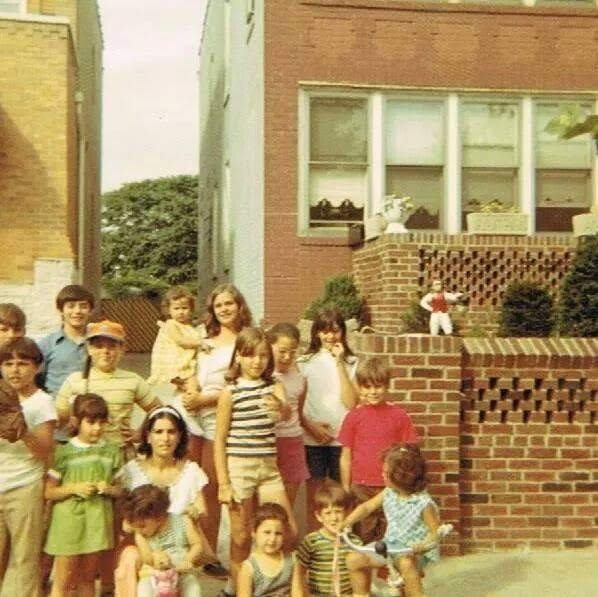
img_4518-1
Bensonhurst, Brooklyn, where I grew up. That’s me top, far left. I tried to hide as much as I could.


Home Life

My earliest memories are of physical and emotional abuse, alcohol abuse, racial tension, divisive and foul language, death, family turmoil, drug abuse, illness, and poverty; all at extremely damaging proportions.

Conversely, I witnessed love, sexual freedom, a struggle to rise above socio-economic barriers, an acceptance of alternative sexual and gender orientation, and ethnic diversity.

I was profoundly affected by what I saw and heard, how could I not be? In what ways did it shape who I am, determine my values, inform my capacity to love and be loved, create a roadmap for what my life might be like, provide tools for survival, determine my biases, my political beliefs, my predilections, my sexual tendencies, my fancies, my relationships, and my truth.

Psychologists have researched and reported on how your childhood experiences shape and determine who you are as an adult for just about as long as the discipline has existed. About three months ago, Howard Stern interviewed Anderson Cooper (you can Youtube the entire interview; for some reason YouTube does not allow you to post the link). Among the many things they discussed was analysis and how it can help you alter who you are. At one point Anderson asks Howard a very direct question:

“Did therapy save your life.”

Howard quickly answers, “Yes.”

I would respond yes as well. Two of my siblings died as a result of mental dysfunction; one from an eating disorder and the other from an overdose. My deceased sister struggled with poor self-esteem her entire life; the eating disorder was just one manifestation of her numerous problems. My brother, who overdosed, turned to drugs as his only escape. Other siblings struggle with issues I am not at liberty to discuss. I am fairly certain that without therapy, I would have been fucked.

Howard and Anderson spoke about how childhood experiences affect you and how the damage (unless dealt with), remains with you your entire life. I knew early on that I was not in great shape emotionally and psychologically. Doubts about my sexuality and major sleep issues were the first couple of things to haunt me. My first thoughts of suicide were when I was ten years old and I hoped that I would die before my next birthday — I wrote about this in detail in an earlier blog. I did not share these destructive thoughts with anyone until I was well into my twenties. I was ashamed of my feelings/thoughts and did not want to burden anyone in my life.

When I look back on my childhood, I recall that teachers noticed that I was often melancholy and distant. I was frequently asked about how things were at home, how I felt, and did I need to talk about it. I would just brush it off and deny that anything was wrong. Teachers would ask to see my mother knowing she was a single mom with a house full of children. I’m not sure what was discussed, but my mother would just say to me, “Chris you need to smile more and try to have more fun in school; your teachers think I’m abusing you.” I assured my mother that I was well behaved in school (claiming to be happy would have been a stretch).

I loved school. It was the only time I could truly escape from the dysfunction that was taking place at home. I would always arrive early and stay late. After school theater activities were my early therapy. These days, school psychologists spend time with troubled kids; fifty years ago these professionals did not exist on school grounds (at least not in Brooklyn). My teachers coddled me — that only made it worse. The other children bullied me because I was perceived as the teacher’s pet and a “goody-goody.” Admittedly, I did seek the approval and praise of my teachers as a result of not getting it at home; it made me feel special, but I paid the price.

I’m sixty years old and I am who I am. I assure you that this is not a “poor me” moment in my life. I know that understanding where my issues originated helps me to understand and appreciate others. So much of life is about forgiveness; forgiving yourself for characteristics that were born out of adversity and forgiving others for their insecurities, mishaps and home environments.

I had friends here from New York over the last few days. My friend Julie is a very bright woman and we go back many years. She knew me when I had just completed my doctorate (we had this in common). I was passive aggressive, cocky and way too angry for a young man. Julie put up with a lot of nonsense from me back then. We talked about our history while she was visiting me here in Portugal. Julie helped me understand how she perceived my behavior and why she accepted it. I explained how I viewed the dynamic between us. It was interesting to discuss our thirty year friendship and share gratitude for what it is today. Clearly, we have both worked hard to examine who we are and who we’d like to be. This is one of the best things about a long term friendship, you experience life together and apart and revisit what attracted you to the other person to begin with. Too often in relationships, we forget where we came from.

Image may contain: Christopher Papagni and Julie Ratner, people smiling, sunglasses, plant and outdoor
Julie and I capturing a moment in our 30 year friendship. The similar sunglasses was a total accident, but I love it.


A Quick Story (over 50 years ago)

It was just an ordinary Saturday night and this happened:

We were sitting around our small television watching some banal comedy show on a very fuzzy screen when three woman strolled into our basement; nobody knocked when they came to our house. Today we call drag queens who dress in women’s clothes, women, because they prefer that we refer to them as woman; they use feminine pronouns. But back in Coney Island in the 60s, they were men dressed up as women and they were, for the most part, rejected by society.

These men in women’s clothing came by to see my mother before stepping out into the Manhattan club scene. These were my mother’s friends and they knew my mother (she was about 30 years old) couldn’t join them because she had small children, but she could help them with their hair and make-up. What I remember was a lot of laughter, a great deal of compassion and complete acceptance; my mother did not judge. To my eyes, she admired and fully embraced their alternative lifestyle. These individuals were colorful, funny, talented, brave, and present. I realize that I have not had a lot of nice things to say about my mother; however, to be fair, this sort of role modeling is the reason I have always been accepting of differences — it’s what I was taught as a child. My mother loved people; people of all shapes and sizes, race, and sexual orientation.

I have learned that individuals who are not very tolerant of differences, more than likely, were raised in a home where differences were shunned, not celebrated. I don’t believe we are genetically wired to hate; hate is something we are taught.


People and Places I have Sought Out in Order to Grow

I knew early on, that the only way I would survive would be to find normalcy and attach myself to it. My childhood friend Joey’s parents were happily married and he had grandparents. Grandparents were nurturing and supportive and I wanted that. I endeared myself to Joey’s family and spent as much time at his house as I possibly could.

Education was an essential part of my early survival. Anyone having to do with teaching seemed well adjusted and were almost always helpful. I was always eager to learn and well-prepared — educators appreciated that. I was somewhat aware of my ability to manipulate certain situations; being quiet, complimentary and naive (sometimes I faked this), helped get me a place at the table.

Friends throughout my life have been supportive and loving. I knew that unless you nurtured your friendships, they would not last. Many of my friends have been a part of my life for many, many years; they are my family and I am grateful to them.

I hired a life coach about 10 years ago. Betsy had a profoundly positive influence on my life and I cherish our professional and personal relationship. Having someone ask the right questions can never be a bad thing. If you can afford coaching, I definitely recommend it.

I have had the good fortune to meet and get to know some very bright people in my life:  authors, teachers, artists, creative and caring individuals. These people have helped me to be a better person. Lately, I am more discriminating and selective about who I spend my time with. Part of being more secure and better adjusted, is making the most of your time and life experiences. There is no longer any place in my life for toxic, angry people. No matter how long I have I left, I want to die knowing that I lived life to the fullest. There is nothing wrong with a laugh or two along the way; oh and a really good meal.

Examine where you came from and choose where you want to be. We don’t have much say in our early experiences, however, we do get to pick and choose how we live our lives as adults. Using a bad childhood as an excuse for poor behavior is not always valid. There are certainly times when early imprinting has an impact on our lives, but hard work, some solid therapy and the desire for change, can help you shape your own present and future.

The best thing about this work is that it never ends. Each day brings new lessons and new beginnings. Start the day with gratitude and hope; a lifeline worth preserving.

Namaste.

couple holding hands
Photo by Luis Quintero